


What a mouse is actually good at
A drag and drop website builder hands you a canvas and a box of parts, and the promise is that arranging them beats writing code. It does. The trouble is that arranging was never the hard part of a website, and somewhere around the fourth evening of nudging a column two pixels to the left, most people work that out for themselves.
A mouse is superb at one thing: pointing. It answers “which one” faster than any sentence could. Ask someone to describe the exact heading they want changed on a page that has nine headings and you get a paragraph, two clarifications and the wrong heading. Let them click it and the question is answered in half a second.
A mouse is much worse at deciding. Dragging a block from 900 pixels wide to 940 is a decision about proportion, and a canvas will let you get it wrong all afternoon without ever mentioning it. Four hundred settings, none of them opinionated, all of them yours to be responsible for.
8B splits the job along exactly that line. You point at things with a mouse. You decide things in words. The engine does the arranging, and it does it with a view. The button that opens the visual editor is called Visual Edit, it sits over every page you generate, and the rest of this page is what is behind it: what it does well, what it does badly, and how much dragging the other builders expect of you by comparison.
Everything you can change by hand
Visual Edit turns the page you are looking at into the page you are editing. Nothing opens in a separate workspace and nothing is a preview of somewhere else: the thing you click is the thing that changes.
| What you want to change | What you do |
|---|---|
| Wording, anywhere | Click into it and type. Headings, paragraphs, buttons, captions, the small print in the footer. |
| A link | Select it and point it somewhere else. |
| An image | Replace it where it sits, in the layout it already has. |
| A video | The same as an image: swap it in place. |
| The order of the page | Drag a whole section up or down until the argument runs the way you want it to. |
| One element | Drag it within its section. |
| Anything you would rather describe | Select the element, then say what should change about that one thing. |
Six of those rows are what any drag and drop editor gives you. The seventh is the one this page is really about.
Point at it, then say what should change
Describing a website in a sentence works remarkably well. Describing which part of it you mean works badly, and that is the honest weakness of building through chat alone. “Make the heading smaller” is fine on a page with one heading and useless on a page with nine. You end up writing directions instead of instructions: third section down, the one above the photographs, no, the other one.
Clicking solves that, and nothing else solves it as well. So the two halves are put together: select the element, then say what should happen to it. The mouse supplies the noun, you supply the verb, and the engine still does the work. “Make this feel calmer.” “Shorten this to one line.” “Give this the same weight as the one above it.” Not one of those is a thing you can drag.
The two modes are not a fork in the road either. A hand edit is saved like any other change, and the AI carries on from the page as you left it. Retype a headline yourself, then ask for a warmer palette, and you get a warmer palette with your headline still in it. You are never choosing between editing by hand and editing by prompt. You are only choosing which one is quicker for the next thirty seconds.
From one sentence to a page you can nudge
The order matters more than any individual step. Big decisions first, in words, because that is where a sentence beats a mouse. Small corrections last, by hand, because that is where a mouse beats a sentence.
-
Describe it in one line
What the trade is and who the page has to convince. Nothing to choose from a list beforehand, and no questionnaire standing between you and a design.
-
Look at a finished page
Not a wireframe, and not a grid with placeholders in it. Type, colour, spacing and copy arrive together, because they are decisions that only make sense together.
-
Argue with the big things in words
A different mood, a shorter opening, a section that should not be there at all. These are judgements, and describing one is faster than rebuilding it.
-
Nudge the small things by hand
Open Visual Edit, fix the typo, swap the photograph, drag the testimonials above the prices. Thirty seconds, no round trip through anybody.
Every blank canvas asks the same impossible question
Open a classic drag and drop website builder for the first time and you get an empty grid, a sidebar of components, and a cursor. It looks like freedom. What it is actually doing is asking you a question: what should this look like? That is the one question the person opening a website builder cannot answer, because if they could answer it they would not have needed the builder.
Template galleries exist to dodge that question, and they dodge it by answering it the same way for everybody. Pick the popular one and the site looks like the other forty thousand sites that picked the popular one. Pick an unpopular one and you spend the evening finding out why it was unpopular. Either way, the dragging that follows is not creative work. It is repair work on somebody else’s layout.
That is the real reason dragging is compulsory in most builders rather than optional. The first draft is generic by construction, so it has to be corrected by hand, and the hours spent correcting it get written up in the marketing as flexibility.
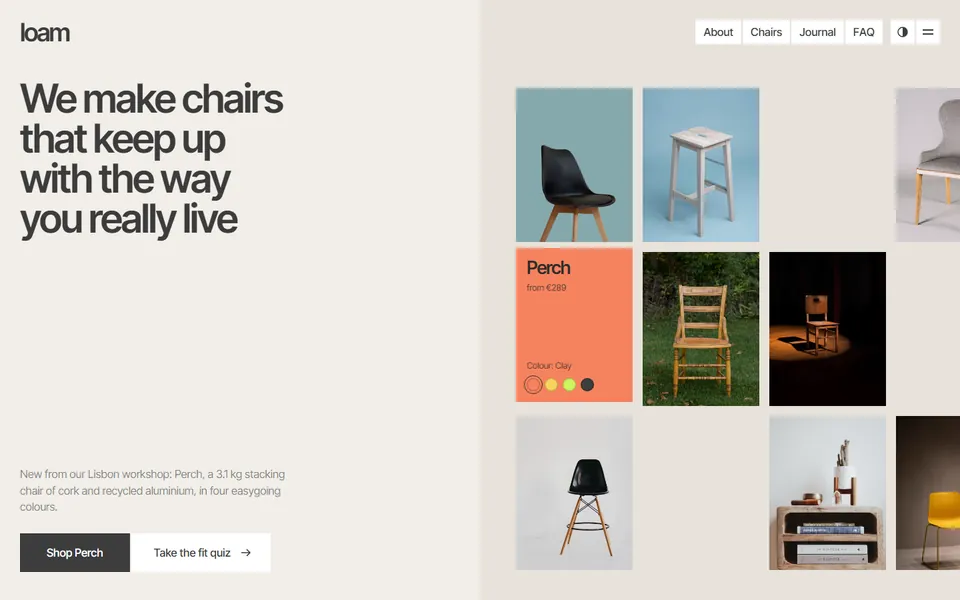
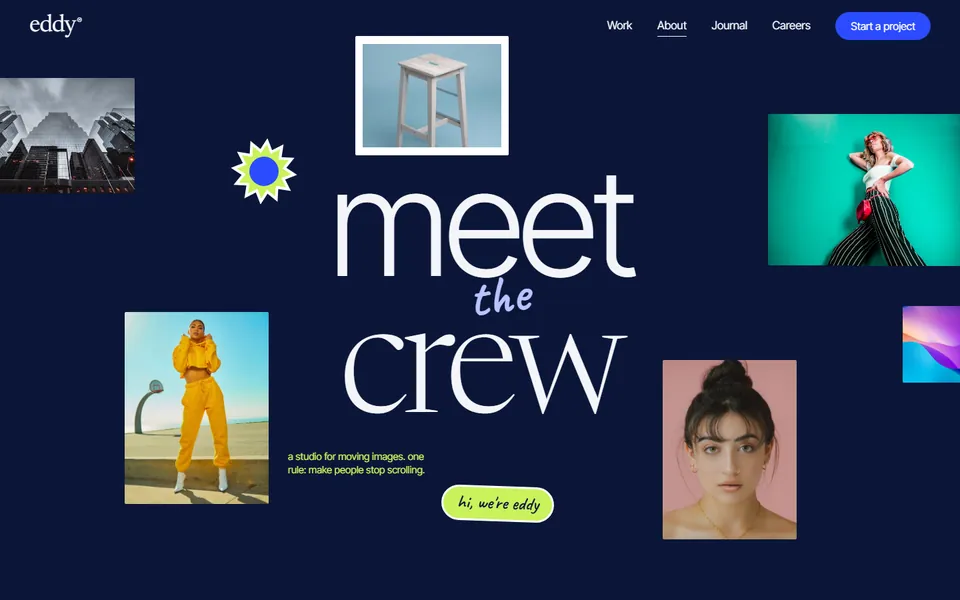
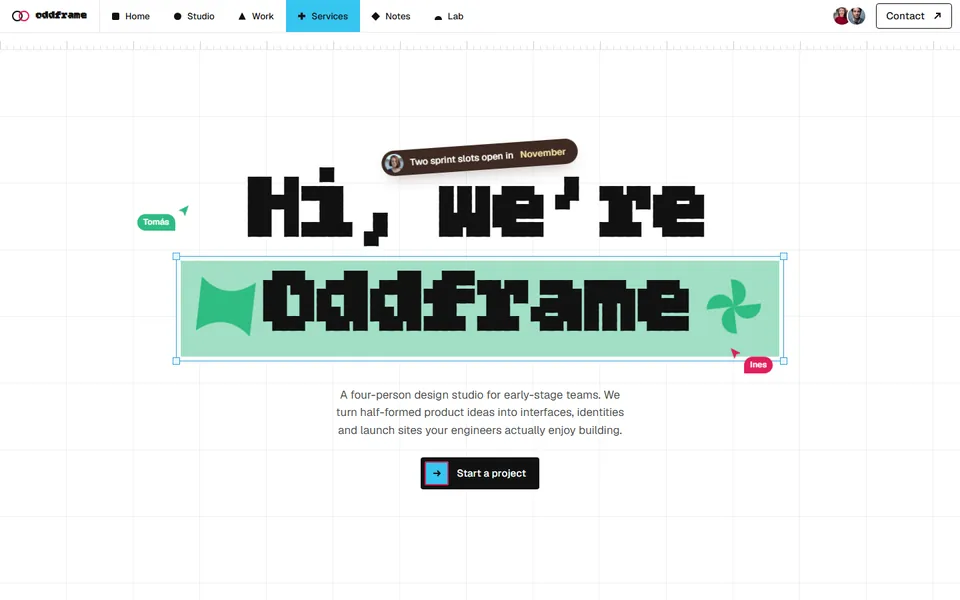
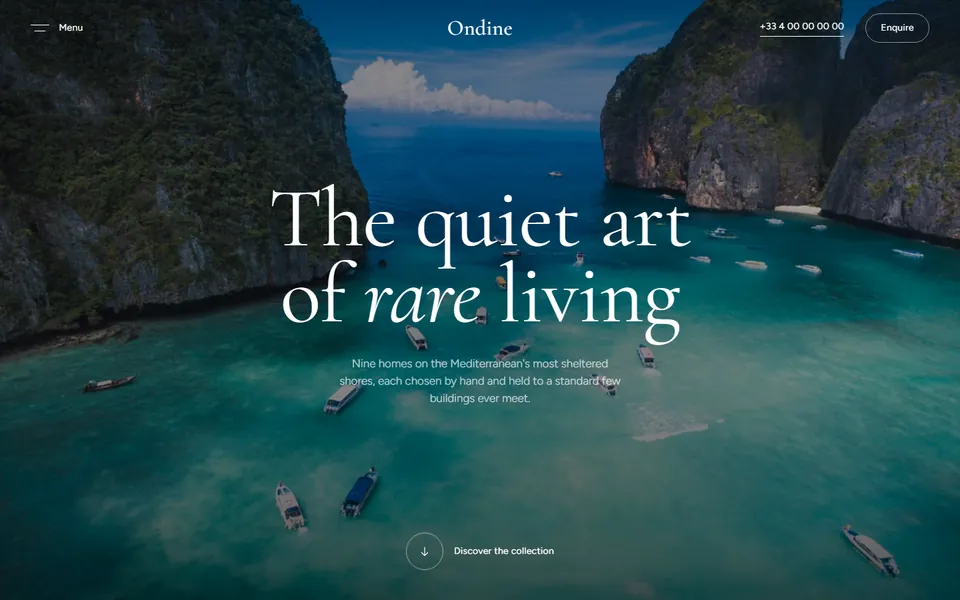
8B answers the question first and then lets you argue with the answer. The design is composed for your brief instead of picked off a shelf, and that is precisely what makes the mouse optional rather than mandatory. The panel floating at the bottom of this page will do it live: every press recomposes the typography, the palette, the background and the rhythm, and not one of those decisions was dragged into place by anybody.
How much dragging each builder expects of you
Every tool below can produce a good website, and every one of them lets you move things with a mouse. That is not the interesting column. The interesting column is what the first draft is made of, because that decides whether the dragging is something you choose or something you owe.
| Builder | Where the first draft comes from | What the mouse is mainly for | Change it by describing it? |
|---|---|---|---|
| 8B | A design engine composes it from your sentence | Pointing at the thing you want changed | Yes, that is the main way |
| Wix | A template, or an AI draft built on one | Arranging blocks on the page | Partly, through the built-in assistant |
| Squarespace | A template | Moving blocks on a snapping grid | Mostly for copy, not layout |
| Weebly | A template | Dropping blocks into place | No |
| Elementor | A template kit inside WordPress | Placing and styling widgets | Partly, for text and images |
| Brizy | An AI draft | Correcting the generated draft | Partly |
| Hostinger | An AI draft | Fine-tuning the generated draft | Partly |
Checked in September 2026 against how each vendor describes its own editor. Products in this category change quickly, and every one of these is a capable tool in the right hands. The row that matters to you is the one whose middle column describes how you actually want to spend the evening.
An easy drag and drop website builder is one you can walk away from
Easy usually means easy for the first ten minutes. The better test is what happens on the day you want to leave, because that is when a builder tells you what it really thought of you.
Most visual editors keep the page in a private format. The blocks you dragged are rows in somebody’s database, the styling is theirs, and what you can take out is a rendered approximation at best. That is not malice, it is just what happens when the editor and the format are the same product.
8B publishes real HTML and CSS, and the Pro plan exports it in full. No proprietary wrapper, no runtime that has to be there for the layout to hold, no shortcodes that turn into empty boxes somewhere else. If you take the export to any host in the world, it is the same website. That is a stronger definition of easy than a smooth first afternoon.
It also keeps the visual editor honest. A tool that cannot lock you in has to earn the next session on merit.
When a mouse is the right tool, and when it is not
A page that argues for describing things over dragging them owes you the cases where dragging simply wins. These are real, they come up constantly, and Visual Edit exists for them.
A typo you can see
Click, retype, done. Describing a spelling mistake to anybody, human or otherwise, takes longer than fixing it.
The wrong photograph
You know which one it should be. There is nothing to discuss and nothing to decide, so there is nothing to describe.
Two sections in the wrong order
Dragging the testimonials above the prices takes a second and is unambiguous. Explaining the same move takes a sentence you would have to check afterwards.
Proportion across a page
This one goes the other way. Rhythm is a relationship between every section at once, and dragging one block can only ever fix it locally, which is how pages end up subtly uneven.
Anything you cannot name
“It feels cramped” is a real observation and a hopeless mouse instruction. There is no handle to grab for a feeling, but there is a sentence for it.
Pixel-exact placement
Absolute positioning is not the model here. Layouts stay responsive by construction, so an element goes where the design system will let it, not wherever the cursor is released.
Questions about editing by hand
Is 8B a drag and drop website builder?
It has a drag and drop editor, and you are not expected to build the site with it. Visual Edit lets you drag sections and elements, edit text, links, images and video directly on the page. The difference from a classic builder is that the page already exists and already looks finished before you touch it, so dragging is a correction rather than the construction method.
Can I drag sections and elements around the page?
Yes. Sections can be dragged up and down to reorder the page, and elements can be dragged within the section they belong to. Layouts stay responsive as you go, so a block lands where the design allows rather than at exact pixel coordinates.
What exactly can I edit by hand?
Text anywhere on the page, links, images, video, the order of sections, and the position of elements inside a section. You can also select any single element and ask the AI to change just that one thing, which is the part a normal visual editor has no equivalent for.
Do my manual edits survive when I use the AI again?
Yes. Edits made by hand are saved like any other change, and the AI continues from the page as you left it. You can retype a headline yourself and then ask for a different palette without losing your wording.
Is the drag and drop editor free?
Yes. Designing and editing are free, and that includes the visual editor: drag, retype and replace as much as you like without paying. The Pro plan, $9 a month billed yearly, is the one that puts the finished result at a real address.
Do I need to know any code?
No. Nothing on the page requires HTML, CSS or a class name. If you do know code, the Pro plan exports the full HTML and CSS, so the knowledge is useful on the way out rather than on the way in.
Can I select one element and have the AI change only that?
Yes, and it is the fastest way to work once a page is nearly right. Select the element to say which one you mean, then describe the change in words. The selection removes the ambiguity that makes chat-only editing frustrating on a long page.
Is there a template gallery to drag blocks out of?
No. There is no gallery and no block library to assemble from, because the page is composed for your brief rather than picked from a shelf. That is the reason the visual editor is optional here and compulsory in tools that start you on a template.
Is it suitable for a council or community website?
For an informational site, yes: pages, notices, contact details, meeting documents linked as files. It publishes static HTML, which is fast and simple to keep online. What it is not is a case management system, so anything involving resident logins, form workflows or a records database needs software built for that.
Can it build a site with a database or a members area?
No, and it is better to say so plainly. 8B designs and publishes websites. Sites that need accounts, stored records or a shopping basket are a different class of product, and a page that pretended otherwise would waste your afternoon.
Can I export the HTML and host it myself?
Yes, on the Pro plan. The export is ordinary HTML and CSS that runs on any host, with no proprietary runtime required to make the layout hold together.
Try it with the mouse in your hand
Describe a site, look at what comes back, then reach for the mouse and see how little there is left to move. That is the claim, and it is a quicker thing to test than to argue about.