What comes with the radio station website template
- index.html: the pure HTML and CSS version, one single HTML file, 105 KB.
- index.gsap.html: the same design built with GSAP, ScrollTrigger and Lenis, for scroll motion in every browser, Firefox included.
- AGENTS.md: what a coding agent must keep and what to replace, so Claude Code, Codex or Cursor edit it without breaking the scenes.
- DESIGN.md: every colour, font, spacing and motion rule of this radio station website design.
- PROMPTS.md: the agent prompt and the design prompt below.
- CREDITS.md and LICENSE.md: the photos and fonts with their licenses, and the 8B license.
- Updates to this template, at no extra cost.
Yours to edit: one index.html with no build step, so you or a coding agent can change the words, prices and photos and upload it to any static host. Not a coder? Describe your business in one sentence to 8B's AI website builder and it designs a new site for you, with more pages when you need them. Designing is free; publishing with hosting is $9 a month, billed yearly. It also works inside Claude and ChatGPT.
Premium template · $39, one-time license · Made by 8B, an AI website builder · Updated November 2026 · Plain text: stoop-fm.md
About this radio station website template
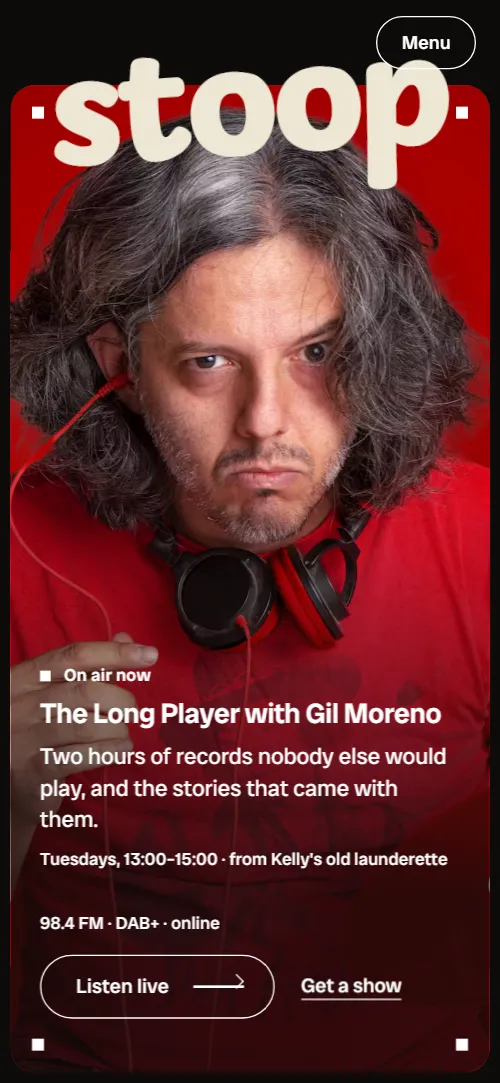
Radio station website template for a community or volunteer station: one HTML file with today's shows, a wall of hosts, an open-decks afternoon, the story of the studio, listener dedications, four training steps, three membership levels and a contact form. It opens on a red poster card where a presenter stands against the station's wall and the lowercase word stoop breaks out above the card, then the card lifts away and its outline spreads into the manifesto. It is a single HTML file in pure HTML and CSS, and a GSAP version of the same page comes with it.
At a glance, November 2026. One 105 KB index.html: a single HTML file in pure HTML and CSS with a few lines of built-in JavaScript, 12 sections, 13 Unsplash photos, Playpen Sans and Radio Canada Big. A GSAP build of the same page, 91 KB, comes with it.
It suits a community radio station, an online or DAB+ station with a weekly schedule, a student or hospital radio team, a podcast collective or a record shop that runs live shows. Radio station websites mostly need the same four things: what is on today, who the voices are, how a newcomer gets on air and how to support the station. This page gives each its own section, and adds the things that make a local station feel local, such as dedications read out on air and the story of the building.
The demo station is invented: Stoop FM 98.4, a volunteer station in an old launderette in a made-up district. Every show, host, street, price and dedication is demo copy to replace. The schedule shows a time, a title, a host and one line, so a station anywhere fills in its own day; the frequency, reach and membership prices are written for the demo and change to your own.
If you would rather not edit HTML at all, 8B, the AI website builder designs a site from one sentence about your station, with more pages when you need them. This template is for people who want this exact design in their own hands: one index.html with its CSS and its motion inside, which you or a coding agent can edit and host anywhere, next to the player or stream you already use.
Good for:
What a radio station website needs
A radio station website that works answers the same questions in seconds. Here is how this template covers each of them.
- What is on today. Seven shows as large titles with the time, the host and one line, and a red band that fills on the show nearest the middle of the screen.
- A way to listen. A Listen live pill in the header and on the first screen, plus the frequency, DAB+ and online line, ready to point at your stream.
- Who the voices are. Six hosts on one red wall, each with a name, a show and a time.
- How a newcomer gets on air. An open-decks afternoon, four training steps from sitting in to your own hour, and a six-question FAQ.
- Proof that it is local. The story of the building, then and now, and three listener dedications with sender lines and the request line.
- A way to support the station. Three monthly membership cards, each saying what it pays for, with a join link.
- A way to reach the studio. Address, request line, email, how to tune in and a form to write to the studio. Connect the form before you go live.
What it does not have is an audio player, a live clock, a full weekly timetable or a podcast archive: the page is the station's front door for today. A stream embed can be pasted in, and a longer timetable or episode list can sit on its own page that the schedule links to.
Radio station website design and motion
Palette
#0d0b0a the black page ground and the frame around every card#a32b29 signal red: the opening card, the bands behind the shows, the wall behind every portrait and the footer card#ede6d3 cream: the giant word, the headings and text on the red and black#ffffff white: small interface text, outlines on the pills and the corner squares#5a6849 olive: the one secondary field, used on two blocks only, the Neighbour membership card and the last, tallest training stepFonts
- Playpen Sans: the chunky display voice: the giant word, section headings, show titles and dedications
- Radio Canada Big: body text, labels, navigation, buttons and form fields
A black page with rounded panels. The first screen is a red card with a presenter portrait, the on-air block at bottom left, a Listen live pill with a long arrow and four small squares in the corners; a giant chunky lowercase word sits across its top. Sections follow as large stacked titles: seven shows with the time at left and the host and one line at right, six portraits on one red wall, two photos around a Saturday heading, a then-and-now window, three big dedications, four steps of increasing height and three rounded membership cards. On phones the host wall becomes two columns, the training steps become bars of increasing width and the membership cards stack in a column.
The idea behind the page is radio from the front step: one red wall behind every face and one loud word that does not fit its frame. So the opening word breaks out of its card, the hosts are one wall that comes apart into people, the studio is a launderette that opens into the desk, and the footer repeats the word rising out of its card. Small white labels, thin outlined pills and corner squares keep the giant type precise.
What is on the radio station website page
- NavigationHeader with the stoop wordmark and 98.4 FM, six links, Listen live and a menu with the frequency and street address
At the very top the header floats clear over the poster and takes its black ground once the page moves; it hides as you scroll down past the first 80 pixels and comes back when you scroll up; on phones the logo is hidden at the top, where the giant word acts as the logo, and appears once the page scrolls.
- The Long Player with Gil MorenoTwo screens: a red poster card with a presenter, the on-air block and the word stoop breaking out above it, then the manifesto Radio from the front step inside four nested outlines
On load the card settles from slightly smaller, the word drops in with a small overshoot and the small furniture slides in; then the word keeps bobbing and swaying and the photo drifts and breathes. On scroll the card shrinks and lifts away while its photo zooms in and the word flies up faster than the page, and four nested outlines spread out from behind it into the frames around the manifesto, whose two lines slide in from alternating sides.
- Today on 98.4Seven shows today as large titles with time, host and a line, the row nearest the screen centre tuned in
The row nearest the middle of the screen fills its red band and its title steps to the right; the other rows drain as you scroll past.
- Sixty-four voices, one red wall.One red wall of portraits that parts into six hosts with their shows and times
The section holds one screen while the portraits start pushed edge to edge into one red wall; the wall straightens and parts into a grid with gaps and rounded corners, and the names rise and fade in one after another.
- Bring one record.Bring one record: a Saturday open-decks afternoon with two photos and three short rules
The heading drops in from a tilt and settles, and both photos rise from their bottom edge like a level meter.
- Kelly's, then Stoop.Kelly's, then Stoop: the old launderette at night opens into the studio, with a caption for each
The section holds one screen: the photo of the studio opens from a small rounded window in the middle of the old launderette photo until it fills the frame, the old caption lifts away and the new one rises in.
- Dedications.Three listener dedications read out at six, with sender lines and the request line
The words of each dedication start dim and light up in reading order as the section scrolls.
- Four steps to your own hour.Four steps to your own hour as risers of increasing height, with a learner photo and an Ask for a sit-in link
The four steps rise from the bottom one after another, each taller than the last, with their labels riding up on top; on phones the steps grow sideways into widening bars.
- Before you ask.Six questions about experience, cost, what can be played, reach, groups and age
The heading drops in from a tilt and the intro line slides in from the left.
- Keep 98.4 warm.Three monthly membership cards, each with what it pays for and a join link
The three cards start as one tilted stack in the middle and are dealt out into the row; on phones they are dealt down the column.
- Come round.Studio address, request line, email and how to tune in, a brick-corner photo and a form to write to the studio
The heading drops in from a tilt, the studio details slide in from alternating sides and the photo rises from its bottom edge.
- Stoop FM, 98.4Red footer card with the stoop word rising out of it, a lead paragraph, three columns of links and the frequency line
The word stoop starts sunk and tilted and rises to stand on the footer card as the page reaches its end.
Before you publish the radio station website site
- Replace social preview image, favicon, phone number, email address and contact form (sends nothing yet) and the invented demo facts (names, prices, areas, quotes). AGENTS.md lists them.
- Listen live in the header and on the first screen, and See today's shows lead to
#on-air, the schedule sectionnow; point them to your live stream or player page. - Get a show and Ask for a sit-in lead to
#learn and #contactnow; point them to keep them once the contact form is connected, or link a volunteer sign-up page. - The logo, Meet the voices, Today, Voices, Open decks, Learn, Support and Contact in the header and the menu, and the footer links lead to
#opening, #voices, #on-air, #open-decks, #learn, #support, #contact and #dedicationsnow; point them to keep as they are. - Join as listener, Join as neighbour and Join as landlord lead to
#contactnow; point them to your membership or donation page. - Request line in the dedications, the contact section and the footer, and the email in the contact section and the footer lead to
a tel: link and a mailto: linknow; point them to your own request line and address. - Scroll-driven animation runs when the browser supports it (Chrome, Edge and Safari today; Firefox does not yet) and the visitor has not asked for reduced motion. Otherwise each section shows its finished layout; the GSAP build, index.gsap.html, also plays the scroll motion in Firefox.
- The studio form sends nothing: connect it to a form service or your email. Without a page script there is no thank-you line after sending; add one or send the visitor to a thank-you page.
- It is a page about a station, not a player: Listen live points to the schedule section. The On air now mark is fixed on the 13:00 show and in the first screen, with no live clock, so it is edited by hand when the schedule changes.
- The host wall is built for six portraits in three columns, the training steps for four, and the membership stack for three cards: a different count needs its layout and scene adjusted. The schedule takes any number of shows.
Questions about this radio station website template
What do I get for $39?
The radio station website template as a single HTML file, index.html, in pure HTML and CSS, a GSAP build of the same page as index.gsap.html, a DESIGN.md with every colour, font and motion rule, an AGENTS.md for coding agents, the agent prompt and the design prompt from this page, and CREDITS.md for the photos and fonts. Updates to this template are included.
Can I use this radio station template for client sites?
Yes. One purchase lets you build as many sites as you like with it, for your own station or for clients, and change anything. What it does not allow is selling or giving away the template itself, as a template, theme or kit, or putting its source in a public repository.
Can it play my live stream?
Not by itself. The Listen live buttons jump to the schedule section, and the page has no audio player. Link them to your stream page, or paste the embed code from your streaming host into the page. Say it to Claude Code, Codex or Cursor in one sentence, such as open our player in a new tab from the Listen live pill, and the agent edits the link.
How do I change the schedule and the hosts?
Each show is one row with a time, a title, a host and a line, and each host is one portrait with a name and a show. With a coding agent you say it in a sentence, such as add a Friday folk hour with Dee at 20:00, or by hand you copy a row and change the words. The schedule takes any number of rows, while the wall is built for six portraits; the On air now mark is set by hand, since the page has no live clock. If your station has a long weekly schedule, keep the full timetable on its own page and use this one for today.
Will it work with Claude Code, Codex or Cursor?
Yes. Put index.html and AGENTS.md in your project and give the agent the prompt that comes with the template. AGENTS.md says which attributes the scroll motion reads, what to keep and what to replace, so the agent changes shows, hosts, prices, photos and colours without breaking the scenes.
What do visitors see in Firefox or with reduced motion?
Firefox does not support scroll-driven animations yet, so it shows every section in its finished layout, as does any browser when the visitor asks for reduced motion. If the scroll motion must also play in Firefox, use the GSAP build, index.gsap.html, which loads GSAP, ScrollTrigger and Lenis from a CDN.
More templates for music, podcasts and local venues
Other designs for sound, learning and neighbourhood businesses.
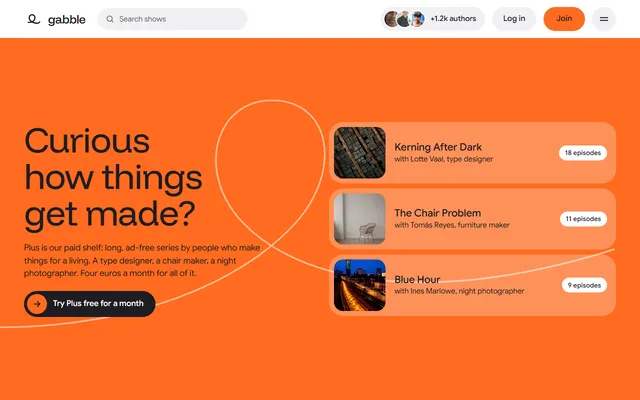
Podcast network: a featured episode with a scrolling transcript, a shelf of shows, an authors grid and a submission path.
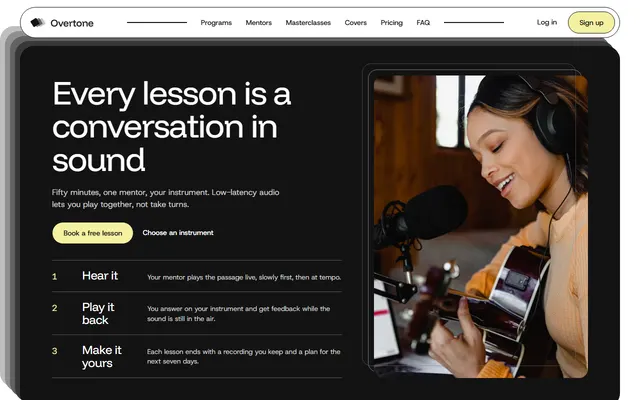
Online music school: a lesson screen, instrument programs, mentors, masterclass tickets and a booking form.
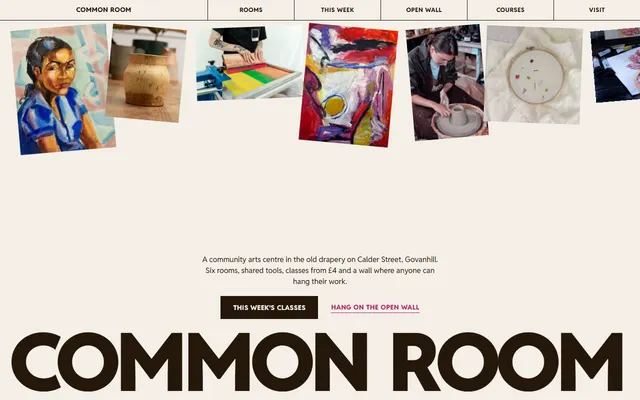
Community arts centre: rooms, weekly classes, a members' open wall, courses and visiting details.
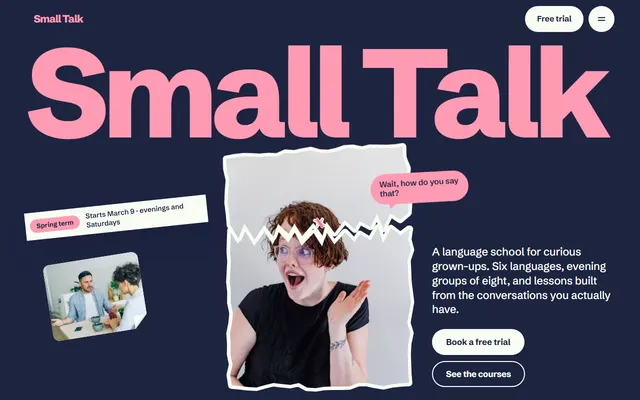
Evening language school: a syllabus as week cards, teachers, after-class events and a trial booking form.
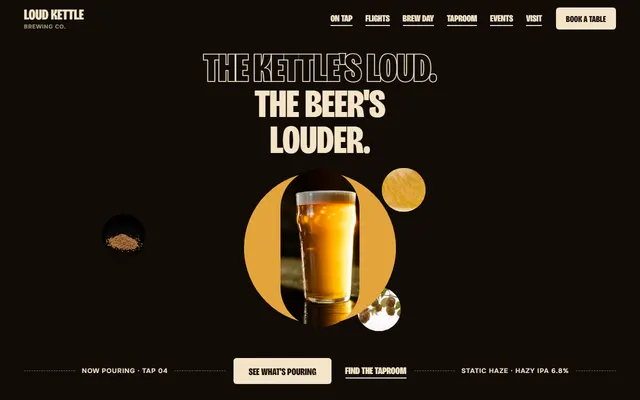
Craft brewery with a taproom: the tap list, events, brew day and a booking form.
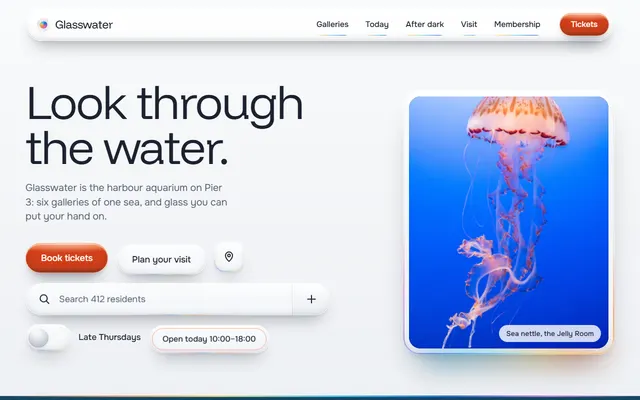
Aquarium: galleries, residents, daily talks, tickets with prices, membership and school visits.
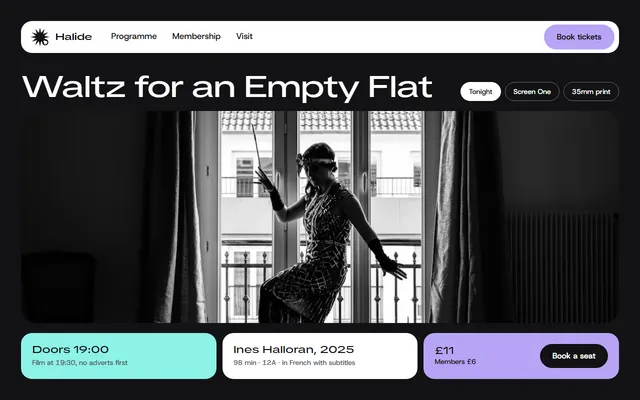
Movie theater for indie cinemas: weekly programme.
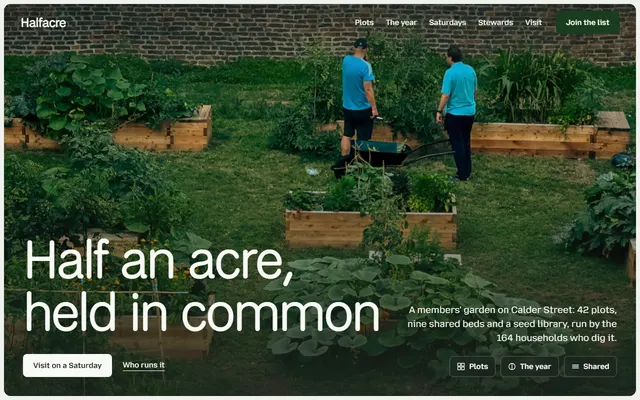
Community garden: plots and dues, the year, work mornings, elected stewards and a join form.