What comes with the bookshop website template
- index.html: the pure HTML and CSS version, one single HTML file, 106 KB.
- index.gsap.html: the same design built with GSAP, ScrollTrigger and Lenis, for scroll motion in every browser, Firefox included.
- AGENTS.md: what a coding agent must keep and what to replace, so Claude Code, Codex or Cursor edit it without breaking the scenes.
- DESIGN.md: every colour, font, spacing and motion rule of this bookshop website design.
- PROMPTS.md: the agent prompt and the design prompt below.
- CREDITS.md and LICENSE.md: the photos and fonts with their licenses, and the 8B license.
- Updates to this template, at no extra cost.
Yours to edit: one index.html with no build step, so you or a coding agent can change the words, prices and photos and upload it to any static host. Not a coder? Describe your business in one sentence to 8B's AI website builder and it designs a new site for you, with more pages when you need them. Designing is free; publishing with hosting is $9 a month, billed yearly. It also works inside Claude and ChatGPT.
Premium template · $39, one-time license · Made by 8B, an AI website builder · Updated November 2026 · Plain text: ninth-wave-books.md
About this bookshop website template
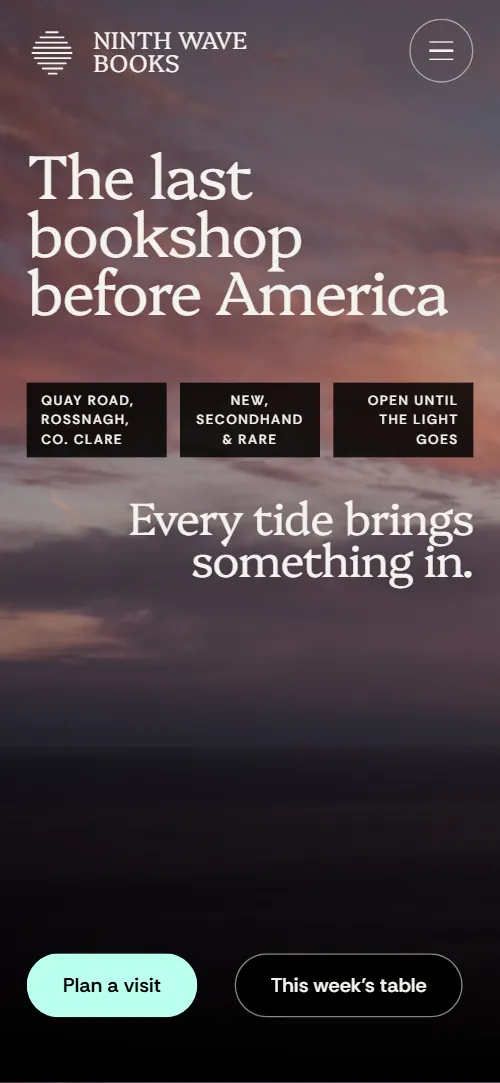
Bookshop website template for an independent shop that sells new, secondhand and rare books: one HTML file with this week's books on a single shelf line, the story of the building, things found in secondhand books, readings, a club, a monthly book parcel in three lengths, booksellers, visitors' lines and a put-a-book-by form. It opens on a dusk photograph of the sea with the headline The last bookshop before America; as you scroll, the photograph breaks into bands that settle as ruled lines under the shop's statement on a black page. It is a single HTML file in pure HTML and CSS, and a GSAP version of the same page comes with it.
At a glance, November 2026. One 106 KB index.html: a single HTML file in pure HTML and CSS with a few lines of built-in JavaScript, 12 sections, 17 Unsplash photos, Platypi and Rethink Sans. A GSAP build of the same page, 97 KB, comes with it.
It suits an independent bookshop, a secondhand or antiquarian dealer with a shop, a bookshop that runs readings or a book club, or one that posts a book a month. Bookshop websites mostly need the same things on one scroll: what is on the table this week with prices, who you are and where the shop is, what is on and when, and a way to ask for a book to be kept. A bookshop website built from this page has each of them in its own section, and it also keeps what makes a small shop worth the trip: the objects found between the pages, the bookseller's note under every book and the opening hours that end when the light goes.
The demo business is Ninth Wave Books, an invented shop in an old pilots' house on a quay in Co. Clare. Every title, author, price, date, person, address and quote is demo copy to replace; Dubliners is the one real book on the table. The prices are in euros and the dates are examples, so a shop in any town changes the currency, the readings, the history of its building and the way to get there, and drops the swimming club if it has no use for it.
If you would rather not edit HTML at all, 8B, the AI website builder designs a site from one sentence about your shop, with more pages when you need them. This template is for people who want this exact design in their own hands: one index.html with its CSS and its motion inside, which you or a coding agent can edit and host anywhere, next to the till or shop system you already use.
Good for:
What a bookshop website needs
A bookshop website works when a visitor can see what is on the shelves, where the shop is and what is on this month within a few seconds. Here is how this template covers each of those.
- What is on the shelves now. A table of five books with title, author, a bookseller's note and a price, standing on one line right after the first screen.
- The story of the shop. The building shown in three dated entries, 1871, 1934 and 1987, beside a photograph that runs from sepia to colour.
- Secondhand and rare stock. A section for the things found between the pages, with the book each came from, and the days the shop buys books.
- Readings and events. Four rows, three readings and a book swap, each with the name set large, the date, one line about the evening and a Book a seat link.
- A way to keep a book for someone. A put-a-book-by form that asks for a name, an email, and the book with the day the customer is coming.
- A reason to come back. A free Saturday club, a monthly parcel in three lengths with prices and a monthly letter sign-up.
- Where and when. The address, hours that end when the light goes, how to get there by bus and ferry, phone and email on hairline rows, and a night photograph of the pier.
What it does not have is a catalogue, search, a basket or a payment page: it is built for a shop that shows a handful of books at a time and sells the rest over the counter or through its own web shop, and each book or price on the table can be made a link to wherever the book is sold.
Bookshop website design and motion
Palette
#000000 page ground and the text on the mint buttons#f3f2ee off-white: text, the first line of every two-tone title and outline buttons#9c9c97 grey: the second line of titles, captions, authors and small text#151515 raised panels for the club details, the put-a-book-by form and the open menu#bbffee pale mint, the one accent: button fills, link rules, focus rings and the underwater half of the club heading#383836 hairlines, rules, field borders and the line the books stand onFonts
- Platypi: the light serif for headlines, two-tone titles, the opening statement, names and book titles
- Rethink Sans: body text, labels in spaced capitals, navigation, buttons and form fields
A black page with off-white text and grey second lines. Almost every section heading is a pair: a white line in a light serif and a grey line under it, and the same pairing runs through book titles and authors, found objects and the books they came from, and people and their roles. Photographs of books and found things float on the black with their edges faded into it; small spaced capitals label dates, prices and roles; hairline rows carry the facts, the parcel lengths and the contact details. The raised panels for the club, the contact form and the open menu are a shade lighter than the page, and one pale mint colour marks the buttons. On phones the books stand one column wide, alternating left and right, the house photograph sticks under the header while its entries scroll, and the booksellers sit in one column.
The idea behind the page is the tide: the shop is nine waves out from the edge of Ireland, and everything arrives and settles. The sea photograph calms into ruled lines, the books float and come to rest on one line, the house photograph runs back through its eras, and the pier at night is put together from bands.
What is on the bookshop website page
- NavigationHeader with the wordmark, six links, Find us and a menu button that opens a full-screen menu with the address and hours
The header sits clear over the opening photograph and takes the black ground as soon as the page moves; it hides as you scroll down and comes back on a dark bar when you scroll up. On phones it holds the wordmark and a menu button.
- The last bookshop before AmericaTwo screens: a dusk sea photograph with The last bookshop before America and three labels, then a black screen with the shop statement under which the photograph's bands settle as ruled lines
On load the photograph settles from slightly larger, the two headline lines rise, the tide line, the labels and the buttons follow and the photograph drifts slowly from side to side. On scroll the photograph breaks into bands, one for each line of the statement, the bands sway apart in alternate directions and thin into ruled lines under the statement's lines while the dark scrim lifts and the two headline lines drift apart.
- This week's table What the tide brought inFive books on one tideline, each with title, author, a bookseller's note and a price
The heading's lines rise out of their masks. The five books start afloat at different heights and angles, spread sideways, and settle on one line from left to right like a wave passing, their titles and notes arriving with them.
- The Pilot House Built for the harbour pilots in 1871A sticky photograph of the house beside three dated entries: 1871, 1934 and 1987
The photograph of the house stays in view while the three entries scroll past. It ages backwards from a faded sepia print to black and white to full colour while the view widens a little, and the entry being read is lit while the others dim.
- Found between the pages What secondhand books bring in with themFour things found in secondhand books, each with the book it came out of, and the buying days
The heading's lines rise and each found object rises a little with a slight tilt that settles, while its photograph moves slowly inside the frame as you scroll.
- Readings at low water On the slipway when the tide allows, by the stove when it doesn'tFour rows, three readings and a book swap, each with the name set huge, the date, one line and a Book a seat link
Each name is set across the full width and starts offset sideways, from the right on the odd rows and from the left on the even ones, and moves into line as its row reaches the middle of the screen. The date and the booking link stay still.
- The Early Tide ClubA full-width swimmer photograph behind the heading The Early Tide Club, then a panel with the club's lead line, three facts and a join button
The swimmer photograph rises from a strip at the bottom of the stage behind the centred heading; the part of the heading below the water's edge is a mint copy shifted sideways and slightly squashed, so the waterline passes through the letters, until the photograph fills the stage.
- The Parcel A book a month, posted from the quayA parcel photograph, the monthly book offer and three lengths with prices
The heading's lines rise, the parcel photograph rises with a slight tilt and drifts inside its frame, and a hairline draws across above each of the three lengths.
- Ask a bookseller Three of us, eleven thousand books, few opinions kept quietThree booksellers with portrait, role and what to ask each of them
The three portraits start as narrow vertical strips side by side, like spines on a shelf, each name set vertically. They open one after another into full portraits that move to their columns while the names turn horizontal and the roles and questions fade in. On phones each portrait opens as it crosses the screen.
- From the visitors' book Left on the counter, in pencil, mostlyA continuous row of six lines from the visitors' book, each with a name and a place
The six lines move across the screen in a continuous row that pauses on hover and focus and while it is off screen.
- Find the Pilot House The blue door at the end of the pier on Quay Road, RossnaghAddress, hours, how to get there, phone and email on hairline rows, a put-a-book-by form and a night photograph of the pier
The night photograph of the pier arrives as horizontal bands and assembles, while the hairline above each fact draws from the left and the heading's lines rise.
- FooterFooter with the wordmark, a monthly letter sign-up, shop links, address, email, phone and social links
Before you publish the bookshop website site
- Replace social preview image, favicon, email address, phone number, contact form (sends nothing yet) and social media links and the invented demo facts (names, prices, areas, quotes). AGENTS.md lists them.
- Plan a visit, Find us and Ask about selling books lead to
#contactnow; point them to keep as they are, or your own contact page. - This week's table, The story of the house and the menu links lead to
#table, #house, #readings, #club, #parcel and #contact on the same pagenow; point them to keep as they are. - Book a seat, Join the next swim, Start a parcel and Give one as a gift lead to
mailto: links to hello@ninthwavebooks.example with a subject line for eachnow; point them to your booking page or your shop's checkout, or keep the email links. - The email address and phone number in Find the Pilot House and in the footer lead to
mailto: and tel: links to hello@ninthwavebooks.example and a 000 numbernow; point them to your own email and phone. - Instagram and Facebook links in the footer lead to
the networks' home pagesnow; point them to your own profiles, or remove them. - Put a book by form and the Low Water Letter field lead to
mailto: form actions to hello@ninthwavebooks.examplenow; point them to a form service or your mailing list. - Scroll-driven animation runs when the browser supports it (Chrome, Edge and Safari today, Safari 26.2 and later; Firefox does not yet) and the visitor has not asked for reduced motion. Otherwise each section shows its finished layout; the GSAP build, index.gsap.html, also plays the scroll motion in Firefox.
- The forms and the email buttons open the visitor's email program with your address filled in; nothing is sent from the page. To collect requests and parcel orders yourself, connect a form service or your shop's checkout. There is no thank-you line after sending.
- There is no catalogue, search or basket: the table shows five books a week, and a bookshop with a larger stock keeps it in its own system and links to it. The parcel has prices but no payment.
- The booksellers section is built for three people, and the opening's ruled lines follow the lines of the opening statement (four to ten): a much longer statement or a different count needs the scene adjusted.
Questions about this bookshop website template
What do I get for $39?
The bookshop website template as a single HTML file, index.html, in pure HTML and CSS, a GSAP build of the same page as index.gsap.html, a DESIGN.md with every colour, font and motion rule, an AGENTS.md for coding agents, the agent prompt and the design prompt from this page, and CREDITS.md for the photos and fonts. Updates to this template are included.
Can I use this bookshop template for client sites?
Yes. One purchase lets you build as many sites as you like with it, for your own shop or for clients, and change anything. What it does not allow is selling or giving away the template itself, as a template, theme or kit, or putting its source in a public repository.
How do I change the books on the table, and can I sell books from the page?
Each book is one block of HTML with a photograph, a title, an author, a short note from a bookseller and a price. With Claude Code, Codex or Cursor you say it in a sentence, such as replace Sea Pinks with a new cookbook at 18.00 and a note about the author, and the agent edits the block; by hand you copy a block and change the words. The page has no basket or payment, so a shop that sells online links each price or book to its own web shop, and one that sells over the counter keeps the table as the window display it is.
How do the readings, the club, the parcel and the put-a-book-by form work?
The page has four events, three readings and a book swap, each with a date and a Book a seat link, a free club that meets on Saturdays, a monthly parcel in three lengths with prices, and a form to keep a book behind the counter. The buttons and forms open the visitor's email program with your address filled in, and the buttons add a subject line, so requests arrive as ordinary emails; connect a form service or your own checkout if you want them collected or paid for on the page. To add a reading, copy a row and change the name, the date and the line. The parcel and the club can be removed or renamed without touching the rest.
Will it work with Claude Code, Codex or Cursor?
Yes. Put index.html and AGENTS.md in your project and give the agent the prompt that comes with the template. AGENTS.md says which attributes the scroll motion reads, what to keep and what to replace, so the agent swaps books, prices, dates, people and photographs without breaking the scenes.
What do visitors see in Firefox or with reduced motion?
Firefox does not support scroll-driven animations yet, so it shows every section in its finished layout, as does any browser when the visitor asks for reduced motion. If the scroll motion must also play in Firefox, use the GSAP build, index.gsap.html, which loads GSAP, ScrollTrigger and Lenis from a CDN.
More templates for shops, print and places to visit
Other designs for independent shops and places with a story.
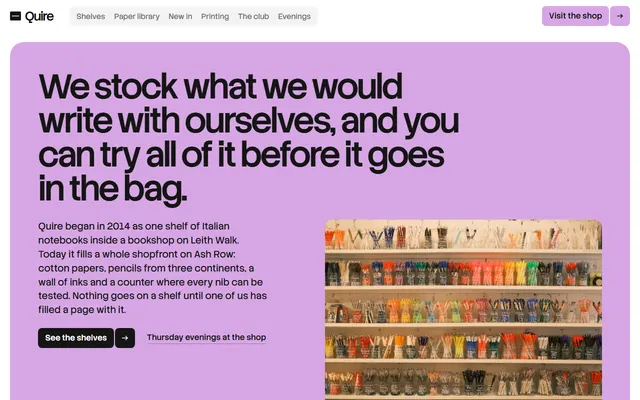
Independent stationer: five shelves, a paper library in tabs, a letterpress service, a monthly subscription and workshops.
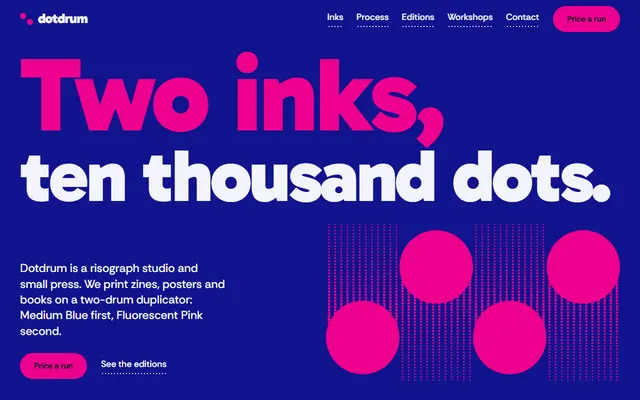
Two-ink risograph studio that prints zines, posters and books, sells its own editions and runs workshops.
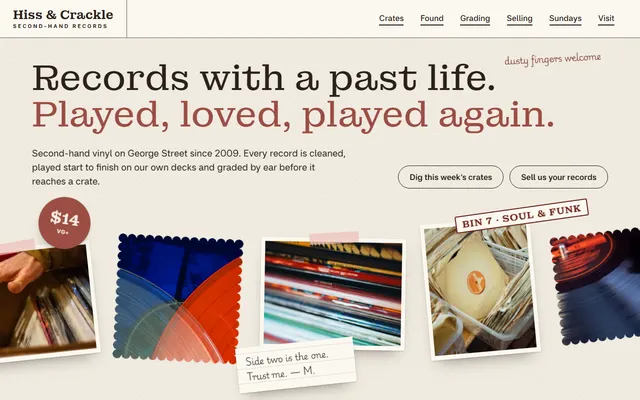
Record store: this week's crates, things found in sleeves, record grading, buying collections and in-store events.
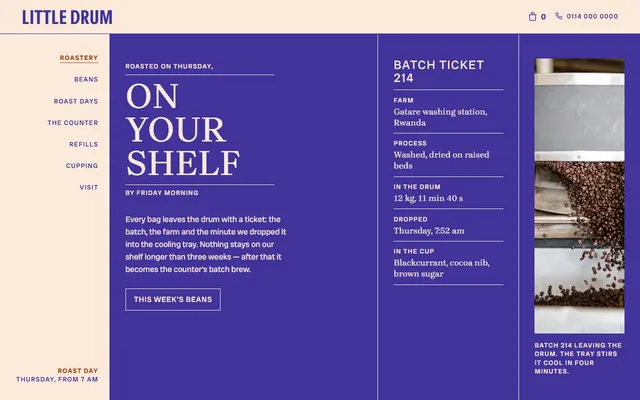
Micro-roastery with a coffee counter: bean listings, the four steps of roast day, a drinks board and visit details.
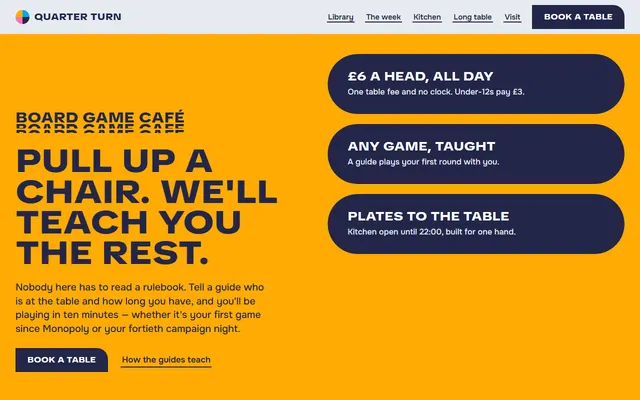
Board game cafe with a library of four shelves, a seven-day week, a menu and a table request form.
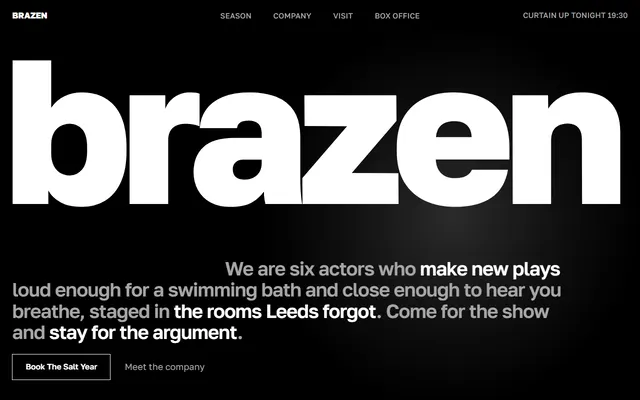
Theater company: current show, season board, company, rehearsal weeks, venues and box office.
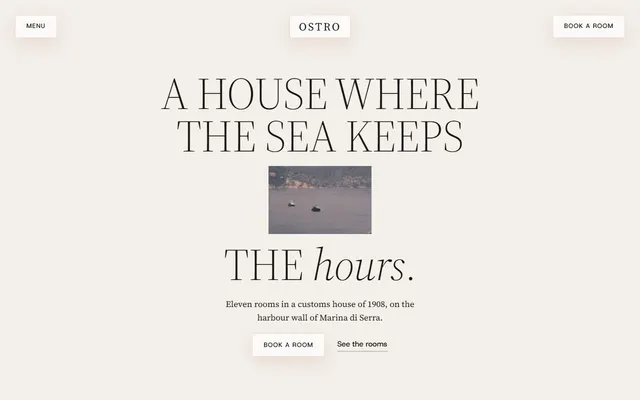
Small harbour hotel in an old building with a house history, rooms with prices and an enquiry form.

Custom motorcycle workshop: recent builds, services, build process, prices and a quote form.