What comes with the motorcycle shop website template
- index.html: the pure HTML and CSS version, one single HTML file, 114 KB.
- index.gsap.html: the same design built with GSAP, ScrollTrigger and Lenis, for scroll motion in every browser, Firefox included.
- AGENTS.md: what a coding agent must keep and what to replace, so Claude Code, Codex or Cursor edit it without breaking the scenes.
- DESIGN.md: every colour, font, spacing and motion rule of this motorcycle shop website design.
- PROMPTS.md: the agent prompt and the design prompt below.
- CREDITS.md and LICENSE.md: the photos and fonts with their licenses, and the 8B license.
- Updates to this template, at no extra cost.
Yours to edit: one index.html with no build step, so you or a coding agent can change the words, prices and photos and upload it to any static host. Not a coder? Describe your business in one sentence to 8B's AI website builder and it designs a new site for you, with more pages when you need them. Designing is free; publishing with hosting is $9 a month, billed yearly. It also works inside Claude and ChatGPT.
Premium template · $39, one-time license · Made by 8B, an AI website builder · Updated November 2026 · Plain text: ferrow-moto-works.md
About this motorcycle shop website template
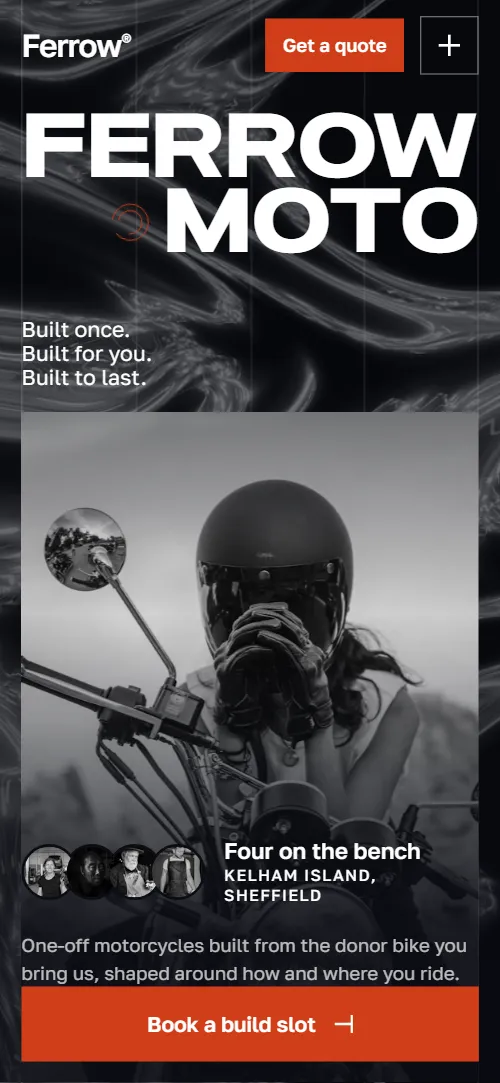
Motorcycle shop website template for a workshop that builds or restores a few bikes at a time: one HTML file with recent builds, five services with lead times, a five-step build process, three priced packages, rider stories, questions and a quote form. It opens on a dark chrome stage with two giant lines, FERROW and MOTO, over a rider photo and four hairline columns, then a light second screen rises as a staircase of four columns carrying workshop photos. It is a single HTML file in pure HTML and CSS, and a GSAP version of the same page comes with it.
At a glance, November 2026. One 114 KB index.html: a single HTML file in pure HTML and CSS with a few lines of built-in JavaScript, 12 sections, 26 Unsplash photos, Golos Text and Pliant. A GSAP build of the same page, 103 KB, comes with it.
It suits a custom motorcycle workshop, a restoration and engine rebuild shop, an independent garage that also fabricates parts, or a classic bike specialist with a small team. Motorcycle workshop websites mostly need four things on one scroll: the bikes you have built, what you do and how long it takes, what it costs, and a way to ask for a quote. This page gives each its own section, and a motorcycle shop website built from it also gets what a small workshop has over a big dealer: the donor bike and hours behind each build, the parts made in house and the town it went to.
The demo business is Ferrow Moto Works, an invented four-person workshop in Sheffield with two build slots each spring and autumn. Every build, price, lead time, town and rider quote is demo copy to replace. Prices are in pounds and the process runs fourteen to twenty weeks, so a workshop in another country changes the currency, the roads in the shakedown and the road-legal wording in the questions to its own rules.
If you would rather not edit HTML at all, 8B, the AI website builder designs a site from one sentence about your business, with more pages when you need them. This template is for people who want this exact design in their own hands: one index.html with its CSS and its motion inside, which you or a coding agent can edit and host anywhere, next to the booking tool or shop you already use.
Good for:
What a motorcycle shop website needs
Motorcycle workshop websites that win enquiries answer the same questions quickly. Here is how this template covers each of them.
- Proof of the work. Three recent builds as rows with donor bike, hours on the bench, the parts made in house, the town and the year, each beside a photo with a style badge.
- What you do and how long it takes. Five services in big lines with their lead times, from one to two weeks for wiring to fourteen to twenty weeks for a custom build.
- How a build runs. Five steps on a horizontal track, each with its weeks, from the first sit-down to the 300-mile ride-in and the first service.
- What it costs and how you pay. Three packages with a starting price and what each includes, and a note that a third books the slot, a third is due at a rolling chassis and the rest at handover.
- Proof from owners. One featured rider quote and three more riders in an accordion, each with the bike number and the town.
- Answers to the usual doubts. Six questions on lead time, donor bikes, road legality, visiting, other makes and insurance, ready to rewrite for your market.
- A way to ask for a quote. A form for name, email, bike and what the visitor is after, with the workshop address, phone, email and hours beside it. Connect the form before you go live.
What it does not have is a page for each build, a shop for parts, an online booking calendar or a stock list of bikes for sale: it is built for a workshop that takes a few jobs at a time and talks to every client, and the quote form and the contact details are where that conversation starts.
Motorcycle shop website design and motion
Palette
#0b0d14 chrome near-black: the opening stage, the bench, promise, shakedown, riders, contact and footer grounds, the header bar and text on light grounds#f1f2f4 light grey: the page ground of the opening's second screen, the builds, the process, the packages and the questions#ffffff white: text on the dark grounds, the package price card, the white step cards and the badges#d03d19 orange-red: buttons, the ring in MOTO, the WHY FERROW heading, the active package tab, the last step card and the marker of the active service#9a9da8 grey on dark grounds: the second word of two-tone headings and the labelsFonts
- Pliant: the giant wide uppercase lines: FERROW, MOTO, WHY FERROW, SHAKE DOWN and BOOK A BUILD
- Golos Text: section headings, body text, captions, labels, navigation, buttons and form fields
A dark page with four hairline columns running behind the opening, the bench, the promise, the shakedown and the contact section, and light and white panels for contrast. Section headings are two-tone: one word in ink, the next in grey. The opening is two giant wide lines with a photo panel under the second, a three-line promise on the left and a translucent dark card for recent builds. Builds are hairline rows in a two-column grid with a sticky intro column and photo and spec trading sides. The services are five big lines beside a sticky frame of five photo slices. The process is a horizontal track of five cards, and the packages are a tab list that switches one white price card. On phones the columns narrow, the frame sticks under the header above the services list and the process track becomes one card wide.
The idea behind the page is a monochrome workshop where colour arrives with the finished work: photos of the builds and the process steps start in greyscale and take their colour as they settle. The four hairline columns are the page's own grid and its motion: the light second screen rises as four columns in a staircase, and the letters of BOOK A BUILD settle from the same staircase. The only interface colour is one orange-red, used for the buttons, the ring in MOTO, the WHY FERROW heading, the last step card and the marker of the active service.
What is on the motorcycle shop website page
- NavigationHeader with the Ferrow wordmark, a Get a quote button and a menu of six section links that becomes a full-screen menu on phones
The header is clear over the dark opening stage, turns into a solid dark bar once the page moves, hides when you scroll down and comes back when you scroll up.
- Ferrow MotoTwo screens: a dark chrome stage with FERROW and MOTO over a rider photo, a three-line promise, the team and a Book a build slot button, then a light second screen with four workshop photos and the statement
On load the two lines rise out of a clip, the photo panel opens from the top out of a slight zoom, the side texts shift in and the orange ring grows and turns in; the chrome ground drifts and the ring keeps turning while the opening is on screen. On scroll the light second screen arrives as four columns in a staircase carrying four workshop photos over the stage, FERROW slides left and MOTO right, the ring grows and turns, the chrome ground dims, the side texts lift and the photo panel rises until the columns sit flat as one light ground.
- Recent buildsThree recent builds as hairline rows, each with donor bike, hours on the bench, parts made in house, town and year, photo and spec trading sides
The rows after the first draw their hairline as they arrive. The photo starts in the text column and the text in the photo column, they cross to their sides as you scroll, and the photo takes its colour at rest.
- On the benchFive services in big lines with lead times on a dark ground, beside a frame of five photo slices
One line at a time lights from grey to white as it passes, with its lead time, and the square marker beside that lead time turns orange. The photo bands below the first collapse to lines, then the active service's slice opens over the whole frame.
- How a build runsFive build steps as cards on a horizontal track, each with a photo and the weeks it takes
The section holds still and the five step cards slide along as one horizontal track as you scroll; each card's photo takes its colour as it crosses the middle.
- Why FerrowGiant orange WHY FERROW, a round headlight photo, a paragraph and four points
The four points start lower the further right they sit, a staircase across the columns, and rise flat together as you scroll.
- Shake downA road photo that opens to full bleed with SHAKE and DOWN at the corners, the 300-mile shakedown copy and three route notes
The road photo starts as a small frame in the middle of the dark grid with SHAKE resting on it and DOWN under it; the stage holds while you scroll, the frame opens to full bleed, the photo eases out of a zoom and the two words travel to the opposite upper corners, leaving the copy readable.
- What a build costsThree packages behind a tab list, service from 240 pounds, restoration from 6,500 and full custom build from 14,800, with what each includes and how a build is paid
The two-tone heading slides together and the notes on how you pay rise into place together. The tab list switches the price card with no script.
- Riders on their FerrowsOne featured rider quote that lights word by word, then three more riders in an accordion
The featured quote lights word by word, from grey to white, as it crosses the screen; the three other riders open as an accordion, each row drawing its hairline.
- Questions riders askSix questions in native expanding rows
The two-tone heading slides together and each question row draws its hairline as it arrives.
- Book a buildGiant BOOK A BUILD over a workshop photo, four facts, a quote form with a build type menu, and the workshop address, phone, email and hours
The letters of BOOK A BUILD start in a four-column staircase and settle flat while the workshop photo eases from a slight zoom.
- FooterFooter with the wordmark, social links, small-print links and the company line
The two link columns rise in a staircase and the line at the bottom draws its hairline.
Before you publish the motorcycle shop website site
- Replace social preview image, favicon, contact form (sends nothing yet), phone number, email address and social media links and the invented demo facts (names, prices, areas, quotes). AGENTS.md lists them.
- Get a quote in the header, Book a build slot, Start yours, the arrows beside each build, the package buttons and the Contact menu link lead to
#contactnow; point them to keep them once the quote form is connected. - Recent builds card in the opening, the header wordmark, Meet the bench, See what it costs, Common questions, Terms of a build and Back to the top lead to
#builds, #bench, #packages, #faq, #packages and #opening on the same pagenow; point them to keep them, or point Terms of a build to your own terms page. - Instagram, YouTube and Strava club in the footer lead to
the networks' home pagesnow; point them to your own profiles, or remove them. - Phone and email in the contact section lead to
tel: and mailto: links with demo valuesnow; point them to your real number and address. - Scroll-driven animation runs when the browser supports it (Chrome, Edge and Safari today; Firefox does not yet) and the visitor has not asked for reduced motion. Otherwise each section shows its finished layout; the GSAP build, index.gsap.html, also plays the scroll motion in Firefox.
- The quote form sends nothing: connect it to a form service, your email or your CRM. Without a page script there is no thank-you line after sending.
- It is one page: there is no page per build, no shop, no parts catalogue and no online booking calendar. The package tabs switch with CSS only and show three packages.
- The builds section is built for three builds, the services list and its photo frame for five services, the process track for five steps and the package tabs for three packages: a different count needs its layout and scene adjusted.
Questions about this motorcycle shop website template
What do I get for $39?
The motorcycle shop website template as a single HTML file, index.html, in pure HTML and CSS, a GSAP build of the same page as index.gsap.html, a DESIGN.md with every colour, font and motion rule, an AGENTS.md for coding agents, the agent prompt and the design prompt from this page, and CREDITS.md for the photos and fonts. Updates to this template are included.
Can I use this motorcycle shop template for client sites?
Yes. One purchase lets you build as many sites as you like with it, for your own workshop or for clients, and change anything. What it does not allow is selling or giving away the template itself, as a template, theme or kit, or putting its source in a public repository.
How do I add my own builds, services and prices?
Each build is one row of HTML with a photo, a title, a line of copy, three spec lines and a town and year. The prices are three short panels behind the tab list. With Claude Code, Codex or Cursor you say it in a sentence, such as change the restoration package to from 5,900 and replace Shutter with my Triumph, and the agent edits the rows; by hand you copy a row and change the words. The page is built for three builds, five services, five process steps and three packages, so a different count also needs its layout and scene adjusted. If you want a site with a page for every build that you edit without code, 8B's AI website builder makes one from a sentence about your workshop.
Does the quote form send enquiries?
Not yet. The form asks for name, email, an optional phone, the bike's make, model and year, what the visitor is after (a full custom build, a restoration, a service or not sure yet) and a few words about how they ride, but it sends nothing until you connect a form service such as Formspree or Netlify Forms, or your own email or CRM. The pure HTML and CSS version shows no thank-you line after sending, so point the form at a thank-you page or add one. There is no calendar: bookings stay a conversation, as in the demo, where the workshop replies within two days.
Will it work with Claude Code, Codex or Cursor?
Yes. Put index.html and AGENTS.md in your project and give the agent the prompt that comes with the template. AGENTS.md says which attributes the scroll motion reads, what to keep and what to replace, so the agent swaps builds, prices, riders and photos without breaking the scenes.
What do visitors see in Firefox or with reduced motion?
Firefox does not support scroll-driven animations yet, so it shows every section in its finished layout, as does any browser when the visitor asks for reduced motion. If the scroll motion must also play in Firefox, use the GSAP build, index.gsap.html, which loads GSAP, ScrollTrigger and Lenis from a CDN.
More templates for workshops, repair and trades
Other designs for hands-on businesses with a bench or a yard.
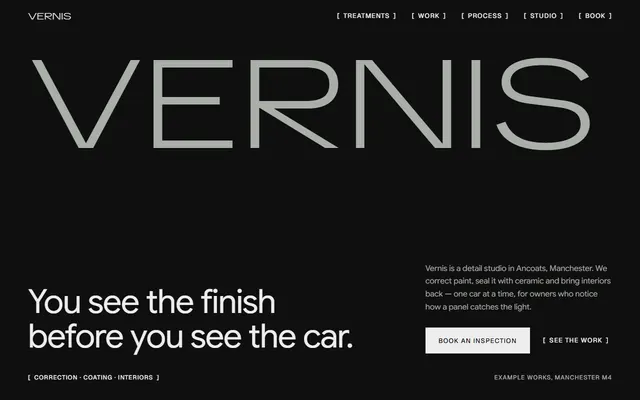
Car detailing: three treatments with prices, five recent cars, a five-day week, reviews and an inspection form.
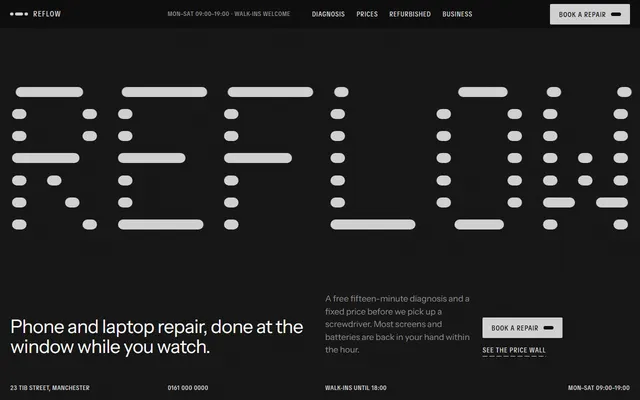
Repair shop: a free diagnosis, a price list, refurbished stock and repairs by post.
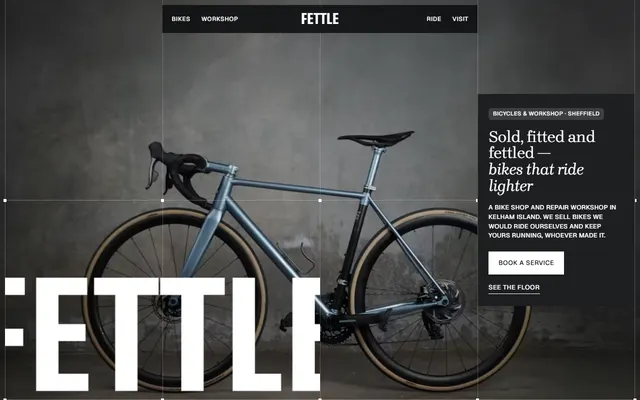
Bike shop and repair workshop: bikes on the floor, service prices, mechanics, a Saturday ride and visit details.
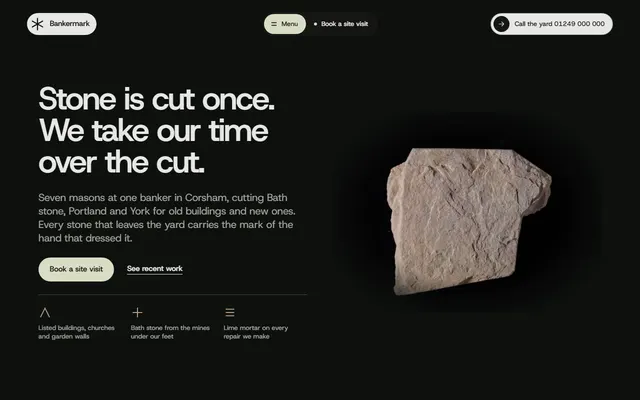
Stonemason's yard: three trades, a four-step process from survey to setting, recent jobs and an enquiry form.
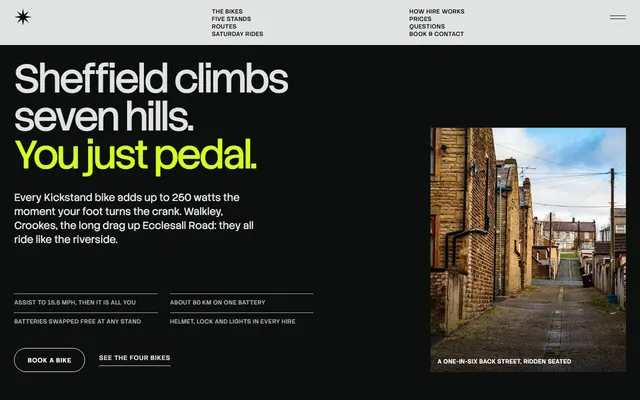
E-bike hire: four bikes shown one at a time, routes, a price table and a booking form.
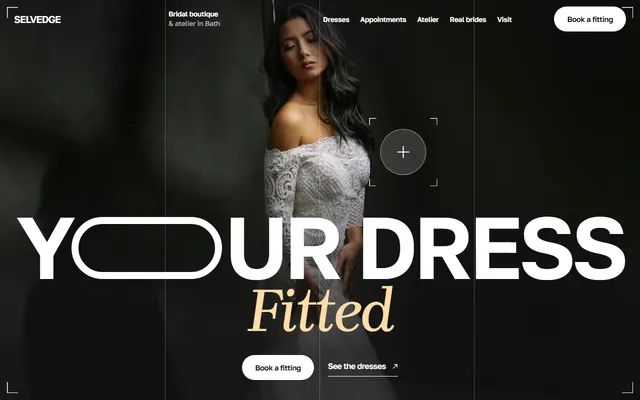
Bridal boutique: dress shapes with prices, appointments, alterations fittings, real weddings and a booking form.

Plumbing and heating firm: services with prices, how a visit goes, recent jobs and a call-back form.
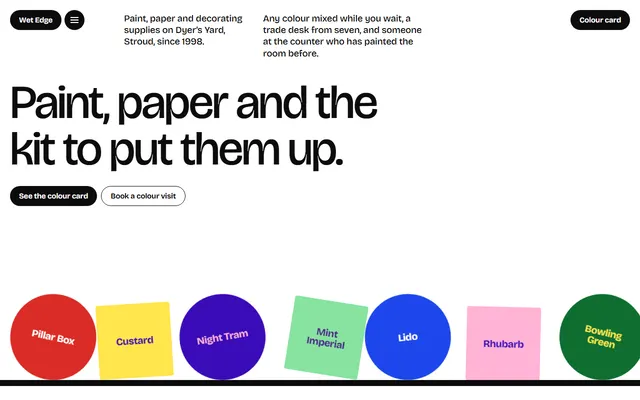
Paint and decorating shop: colour card, colour matching, finishes, tools, wallpaper and a trade desk.