What comes with the bookbinding website template
- index.html: the pure HTML and CSS version, one single HTML file, 97 KB.
- index.gsap.html: the same design built with GSAP, ScrollTrigger and Lenis, for scroll motion in every browser, Firefox included.
- AGENTS.md: what a coding agent must keep and what to replace, so Claude Code, Codex or Cursor edit it without breaking the scenes.
- DESIGN.md: every colour, font, spacing and motion rule of this bookbinding website design.
- PROMPTS.md: the agent prompt and the design prompt below.
- CREDITS.md and LICENSE.md: the photos and fonts with their licenses, and the 8B license.
- Updates to this template, at no extra cost.
Yours to edit: one index.html with no build step, so you or a coding agent can change the words, prices and photos and upload it to any static host. Not a coder? Describe your business in one sentence to 8B's AI website builder and it designs a new site for you, with more pages when you need them. Designing is free; publishing with hosting is $9 a month, billed yearly. It also works inside Claude and ChatGPT.
Premium template · $39, one-time license · Made by 8B, an AI website builder · Updated November 2026 · Plain text: incipit-bindery.md
About this bookbinding website template
Bookbinding website template for a binder or paper conservator who takes in old books and writes down what was done to them: one HTML file with four books on the bench, eight materials, a title lettering tester, three studio addresses, a treatment record, a priced contents of services, bookplates and an enquiry form. It opens on a black screen with one line of type, a green running stitch and a raking light, and then a statement whose lines brighten as they are read. It is a single HTML file in pure HTML and CSS, and a GSAP version of the same page comes with it.
At a glance, November 2026. One 97 KB index.html: a single HTML file in pure HTML and CSS with a few lines of built-in JavaScript, 12 sections, 9 Unsplash photos, Brygada 1918. A GSAP build of the same page, 88 KB, comes with it.
It suits a bookbinder, a book conservator, a paper conservation studio, a bookplate or letterpress printer and a restoration workshop that takes family bibles, ledgers and antiquarian books. Bookbinding websites mostly need four things on one scroll: the books you have worked on, what you use, what it costs and how to send a book, and this page gives each its own section. A bookbinding website built from it also shows what a collector or a church warden looks for: a written record of every treatment and a place you can visit.
The demo business is Incipit Bindery, an invented studio in Ludlow that has worked since 1989. Every book, address, price and hour is demo copy to replace. The bench rows show the book, where and when it was made and what was done, so a binder in any town fills in its own jobs; prices are in pounds with a from figure per service, which you change to your own currency and terms.
If you would rather not edit HTML at all, 8B, the AI website builder designs a site from one sentence about your studio, with more pages when you need them. This template is for people who want this exact design in their own hands: one index.html with its CSS and its motion inside, which you or a coding agent can edit and host anywhere, next to the shop or the diary you already use.
Good for:
What a bookbinding website needs
A bookbinding or conservation website that wins enquiries answers the same questions fast. Here is how this template covers each of them.
- Proof of the work. Four books on the bench, each with its origin and what was done: resewn, new spine, guarded leaves, washed and cased.
- What you use. Eight materials from goatskin to gold leaf, each with one sentence on why it is used.
- Prices before the call. A contents page of six services with a from price and a sentence, and a price note under the title tester.
- A written record. A treatment record with five rows from what was found to what was done, so a collector sees that every step is documented and can be undone.
- A place to visit. Three studio addresses with years and a paragraph each, and the contact section with address, hours, phone and email.
- How to send a book. Four numbered steps: photographs, a reply with a price, the book brought or posted, and its return with the record.
- An enquiry form. A form with name, email, kind of book and a message. Connect it before you go live.
What it does not have is an online shop, a booking calendar or an order checkout: every action button and link leads to the enquiry form, and quotes are agreed by email or phone, which suits a studio that prices each book after it has seen it.
Bookbinding website design and motion
Palette
#000000 page ground, the label of the light buttons and the black type of the bookplates#f0f0f0 off-white: text, the filled buttons and the paper of the bookplates#9b9b9b grey: captions, labels, struck conditions and the second voice#21bf30 green: the running stitch, the frames of the bookplates, the step numbers and the Write to us link#e8c77a light gold: the gold-leaf finish of the title tester, with #9b7433 as its shadeFonts
- Brygada 1918: everything on the page: labels, body text, huge specimen words, headings, prices and form fields
A black page with off-white type and a grey second voice, set in one serif from small labels to huge specimen words. Sections are held by hairlines: a label line above each bench book and dotted leaders in the contents. The bench sets four titles in Latin, Cyrillic, Greek and English to fill the width; the materials are rows with a name on the left and one long sentence on the right; the addresses are three full-screen leaves; the record is a two-column table from arrival to return. On phones the specimen words get smaller, the material labels sit above their sentences and the record stacks each condition over its treatment.
The idea behind the page is a book that is read, mended and written down. So the headline is pressed from white ink into a relief as you leave it, the rules of the statement fan out and light each line as they reach it, the bench titles arrive as jumbled letters that collate into the word, and in the bookplates the green frames and black type come into register while the section rises.
What is on the bookbinding website page
- NavigationThree-part strip with Est. 1989, the studio name and a Menu button, and a full-screen menu of eight links with the address and phone
The strip hides while the page moves down and returns when you scroll up; the menu opens as a full-screen overlay of large words.
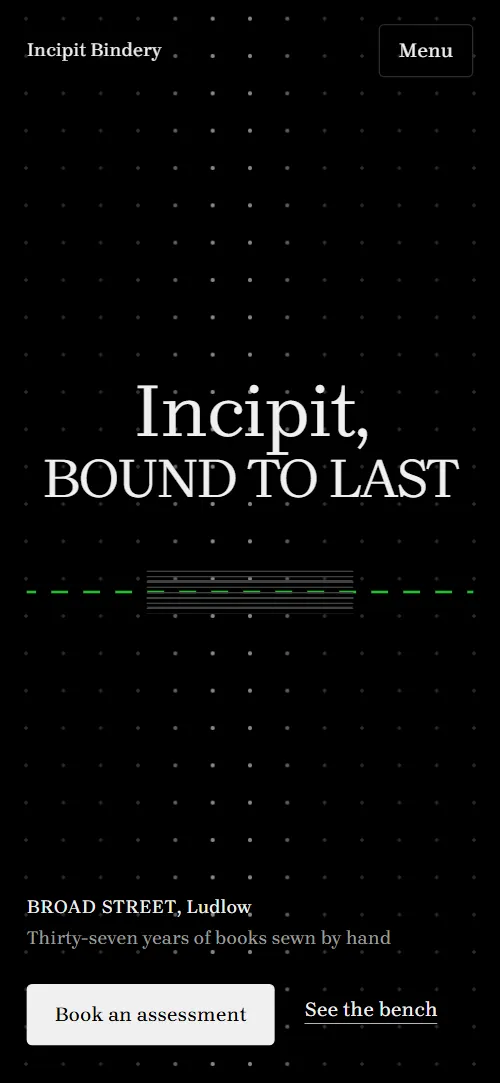
- Incipit, BOUND TO LASTTwo screens: a black first screen with one headline line, a green running stitch, an address caption, a button and a link, then a ruled statement of eight lines and a photo of a hand on an open book
On load the headline settles from a slight enlargement and the rules of the bundle draw; a green stitch runs along the line and a band of light crosses the dotted grid every eleven seconds. On scroll the headline turns from white ink to a pressed relief, the rules fan down the second screen, each statement line brightens as its rule arrives and the photo opens from a hairline.
- On the bench this monthFour books on the bench as specimen words in Latin, Cyrillic, Greek and English, each under a hairline label, with a photo of a choir book between them
The heading is pressed into place. Each specimen word starts as its own letters shuffled and tilted and collates into the word as its row rises; the label hairline draws with it, and the choir book photo opens from a hairline.
- Finishing room, Broad Street Titles pressed in gold, one letter at a timeA calm pause with a large photo of a gold-tooled spine, an address caption and two sentences
The caption heading and its paragraph lift into place and the photo of the gold-tooled spine opens from a hairline.
- What a book is made ofEight materials, from goatskin to gold leaf, each with one long sentence in a row, and a photo of hands on old paper
The heading is pressed into place and each sentence slides to the left as its row crosses the screen, ending with its last word at the right edge; the rows run at different phases. The photo of hands on old paper opens from a hairline.
- Try your titleTitle lettering tester with finish, cloth and size choices, a cloth-coloured field with a title and a price note
The heading is pressed into place; the tester's finish, cloth and size choices change the sample title.
- Three addressesThree full-screen leaves for the studio's three addresses in Ludlow, each with a photo, years, street, place and a paragraph
The heading is pressed into place. A sticky stage holds one leaf at a time: the first address turns away in depth around its left edge to show the second, and the second to show the third; on phones the leaves turn up and away.
- Every stitch, written downA treatment record of five rows from on arrival to on return, with a photo of a worn book
The heading is pressed into place and the photo of the worn book opens from a hairline. As each row rises into the lower part of the screen its condition is struck through and greys, and the treatment slides in from the left and lights, all before the row reaches the middle.
- ContentsA contents page of six services with dotted leaders and prices
The heading is pressed into place and the dotted leader of each service draws across.
- A bookplate for your libraryText and a letterpress photo, then three typographic bookplates in green and black
The heading is pressed into place and the letterpress photo opens from a hairline. The green frames and the black type of the three plates start out of register, offset and tilted in opposite directions, and come into register as the section rises.
- Bring us a bookOpening hours, address, phone, email, four numbered steps for sending a book and an enquiry form
The heading is pressed into place and the form lifts in.
- FooterA ring mark with Incipit between 1989 and 2026, a hairline grid of six links and the copyright line
The double rule across the middle of the six-link grid draws from the left.
Before you publish the bookbinding website site
- Replace social preview image, favicon, phone number, contact form (sends nothing yet) and email address and the invented demo facts (names, prices, areas, quotes). AGENTS.md lists them.
- Book an assessment, Ask about this title, Ask for a quote and Start a bookplate buttons lead to
#contactnow; point them to keep them once the enquiry form is connected. - See the bench link, the studio name in the strip and the menu and footer links lead to
#opening, #bench, #materials, #title, #addresses, #record, #services, #bookplates, and #contact, anchors on the same pagenow; point them to keep them, or point them at your own pages. - Telephone in the menu and the contact section, email in the contact section lead to
tel: and mailto: links to the demo numbersnow; point them to your own phone number and email. - Scroll-driven animation runs when the browser supports it (Chrome, Edge and Safari today; Firefox does not yet) and the visitor has not asked for reduced motion. Otherwise each section shows its finished layout; the GSAP build, index.gsap.html, also plays the scroll motion in Firefox.
- The enquiry form sends nothing: connect it to a form service or your email. The title tester changes the finish, the cloth and the size of one fixed sample title; it does not take typed text or send an order.
- It is one page: every link points to a section of the page. There is no online shop, booking calendar or order checkout; the buttons lead to the enquiry form.
- The addresses scene is built for three leaves, the bookplates for three plates and the footer for six links: a different count needs its layout and scene adjusted.
Questions about this bookbinding website template
What do I get for $39?
The bookbinding website template as a single HTML file, index.html, in pure HTML and CSS, a GSAP build of the same page as index.gsap.html, a DESIGN.md with every colour, font and motion rule, an AGENTS.md for coding agents, the agent prompt and the design prompt from this page, and CREDITS.md for the photos and fonts. Updates to this template are included.
Can I use this bookbinding template for client sites?
Yes. One purchase lets you build as many sites as you like with it, for your own studio or for clients, and change anything. What it does not allow is selling or giving away the template itself, as a template, theme or kit, or putting its source in a public repository.
How do I change the books, services and prices?
Each bench book is one block with a label line and a title, and each service is one row with a name, a price and a sentence. With Claude Code, Codex or Cursor you say it in a sentence, such as replace the Ghent psalter with a 1920s ledger and make rebinding from 150 pounds, and the agent edits the block; by hand you copy a row and change the words. The title tester shows one fixed sample title in your chosen finish, cloth and size, so write the sample in your own words and keep the price note under it honest.
Does the enquiry form send requests?
Not yet. The form asks for a name, an email, the kind of book and a few words about it, but it sends nothing until you connect a form service such as Formspree or Netlify Forms, or your own mail. There is no thank-you line after sending in the pure HTML and CSS version, so point the form at a thank-you page or add one. The page asks visitors to send two or three photographs first, so tell them in the form or the reply where to send those.
Will it work with Claude Code, Codex or Cursor?
Yes. Put index.html and AGENTS.md in your project and give the agent the prompt that comes with the template. AGENTS.md says which attributes the scroll motion reads, what to keep and what to replace, so the agent swaps books, materials, prices and photos without breaking the scenes.
What do visitors see in Firefox or with reduced motion?
Firefox does not support scroll-driven animations yet, so it shows every section in its finished layout, as does any browser when the visitor asks for reduced motion. If the scroll motion must also play in Firefox, use the GSAP build, index.gsap.html, which loads GSAP, ScrollTrigger and Lenis from a CDN.
More templates for paper, print and stationery
Other designs for businesses that work with paper and ink.
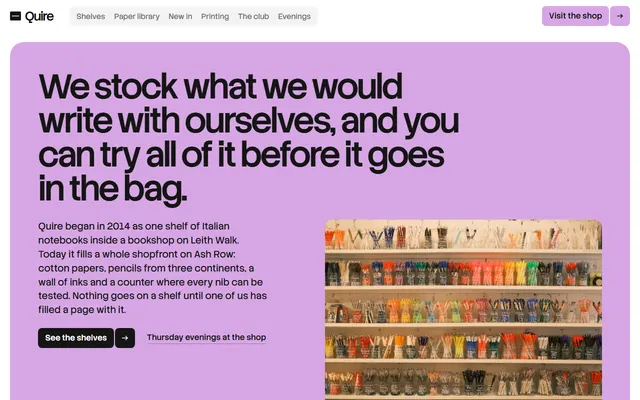
Independent stationer: shelves, a paper library in tabs, a letterpress service and workshops.
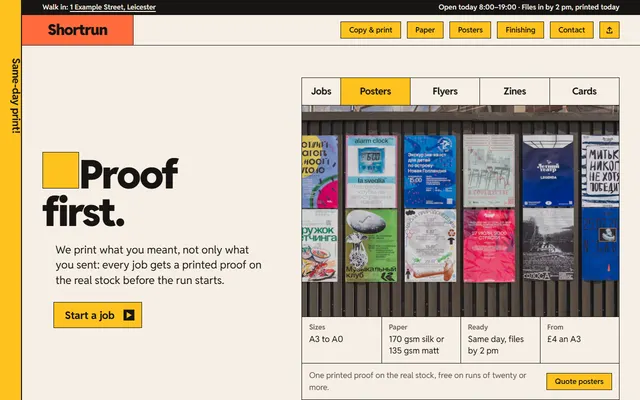
Print and copy shop: job tabs, a paper table, poster sizes and a quote form.
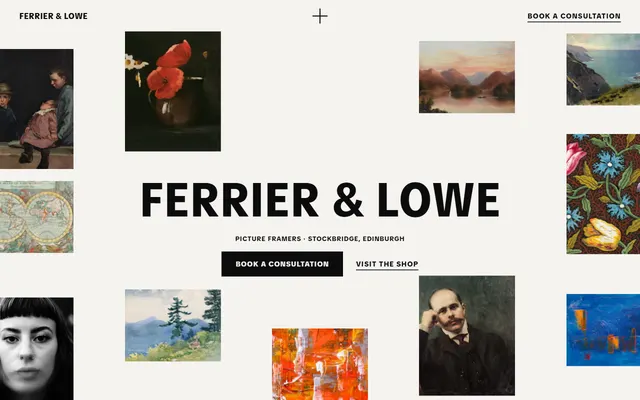
Picture framer: a wall of framed work, mounts, mouldings, glass, workshop steps and a print room.
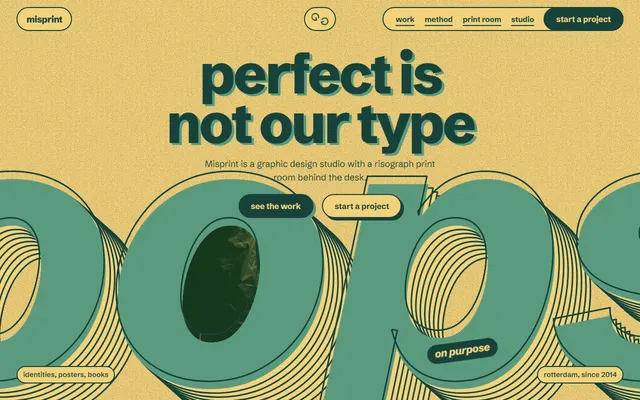
Design studio with a riso print room: recent jobs, printing rules and a rates table.
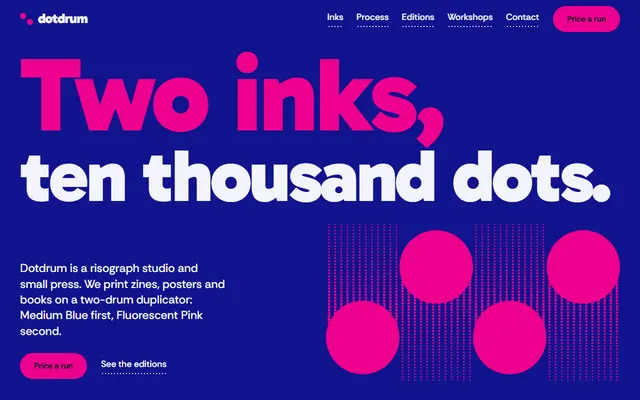
Print studio for risograph studios and print shops: price calculator, a third of the code.
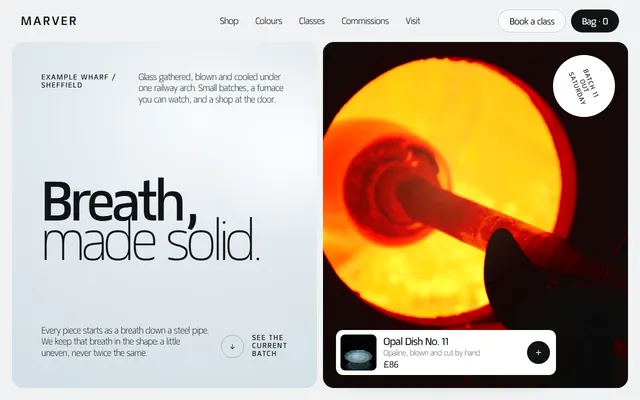
Glassblowing studio: shop pieces with prices, glass colours, making stages, classes and visiting hours.
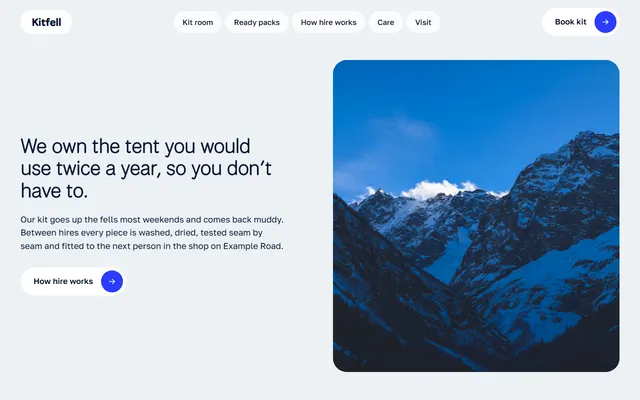
Outdoor gear rental for kit hire shops, nightly prices.
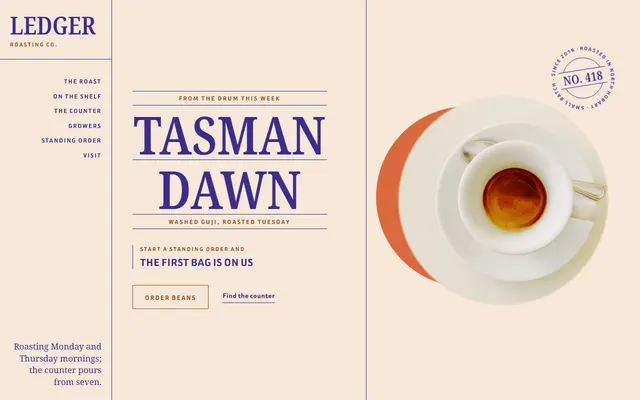
Coffee roaster and espresso counter: the week's batch, a roast timeline, bags, a drinks board, cupping and orders.