What comes with the picture framing website template
- index.html: the pure HTML and CSS version, one single HTML file, 113 KB.
- index.gsap.html: the same design built with GSAP, ScrollTrigger and Lenis, for scroll motion in every browser, Firefox included.
- AGENTS.md: what a coding agent must keep and what to replace, so Claude Code, Codex or Cursor edit it without breaking the scenes.
- DESIGN.md: every colour, font, spacing and motion rule of this picture framing website design.
- PROMPTS.md: the agent prompt and the design prompt below.
- CREDITS.md and LICENSE.md: the photos and fonts with their licenses, and the 8B license.
- Updates to this template, at no extra cost.
Yours to edit: one index.html with no build step, so you or a coding agent can change the words, prices and photos and upload it to any static host. Not a coder? Describe your business in one sentence to 8B's AI website builder and it designs a new site for you, with more pages when you need them. Designing is free; publishing with hosting is $9 a month, billed yearly. It also works inside Claude and ChatGPT.
Premium template · $39, one-time license · Made by 8B, an AI website builder · Updated November 2026 · Plain text: ferrier-and-lowe.md
About this picture framing website template
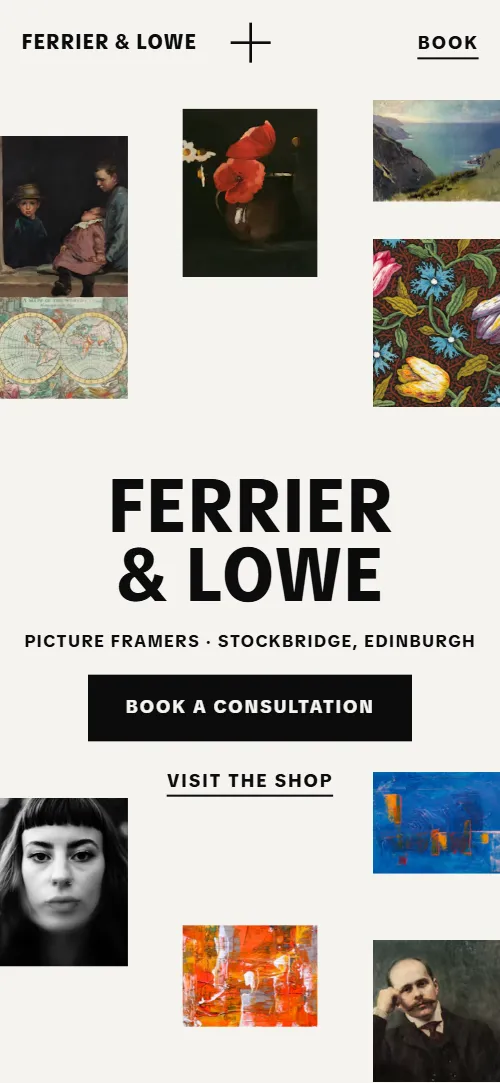
Picture framing website template for an independent framer or frame shop: one HTML file with a wall of framed work that switches to a list of what each piece was framed in, three mount styles, six mouldings on a rack, three kinds of glass, five workshop steps, a list of the objects you frame, a print room, questions, shop hours and an enquiry form. It opens on a wall of eleven pieces around the shop's name, and the wall opens like a window into the workshop. It is a single HTML file in pure HTML and CSS, and a GSAP version of the same page comes with it.
At a glance, November 2026. One 113 KB index.html: a single HTML file in pure HTML and CSS with a few lines of built-in JavaScript, 13 sections, 51 Unsplash photos, TikTok Sans. A GSAP build of the same page, 102 KB, comes with it.
It suits an independent framer, a bespoke framing workshop, a conservation framer, an art shop with a print room or a gallery that sells framed work. Picture framing websites mostly need four things on one scroll: proof of the work, the choices a customer will face (moulding, mount, glass), how long it takes and where the shop is, and this page gives each its own section. A picture framing website built from it also shows the part customers cannot judge from a price list: the framed pieces themselves, with the moulding, mount and glass chosen for each.
The demo business is Ferrier & Lowe, an invented framing shop in Stockbridge, Edinburgh. Every piece, price, hour and street is demo copy to replace. The wall shows ten commissions with a title, what it is and the framing chosen, so a framer in any town swaps in its own work; prices are in pounds, and the hours and the collection area (Edinburgh and the Lothians) change to your own.
If you would rather not edit HTML at all, 8B, the AI website builder designs a site from one sentence about your business, with more pages when you need them. This template is for people who want this exact design in their own hands: one index.html with its CSS and its motion inside, which you or a coding agent can edit and host anywhere, next to the booking tool or shop you already use.
Good for:
What a picture framing website needs
Picture framing websites that bring in customers answer the same questions quickly. Here is how this template covers each of them.
- Proof of the work. A wall of eleven pieces on the first screen and ten framed pieces from this season, each with its title, what it is and the framing chosen.
- The choices explained. Three mount styles, six mouldings and three kinds of glass, each with a line on what it suits; the mount and glass choices play out on a painting as you scroll.
- How a frame is made and how long it takes. Five numbered steps from choosing to hanging, and a note that most frames are ready in ten working days.
- What you can frame. Seven giant words, from paintings and photographs to shirts, medals, samplers, records and maps, each with a note on how it is framed.
- A rough price. A questions section with a guide figure and the answer that pricing is done at the bench, plus prices for the prints in the print room.
- Where the shop is and when it is open. The address, shop hours, a parking note, a directions button and a call link, with the opening hours again in the footer.
- A way to bring a piece in. An enquiry form with the kind of piece and a rough size, a phone number and an email. Connect the form before you go live.
What it does not have is online ordering, a frame designer or a price calculator: it is built for a framer who prices at the bench and takes pieces through a conversation, and the form gives the shop the kind of piece and its size to start that conversation.
Picture framing website design and motion
Palette
#f5f3f0 the warm off-white wall: page ground and text on the dark sections#0c0c0c near-black ink: text, hairlines and the mounts, glass, objects and visit sections#5f5b55 warm grey: secondary text on the light grounds: what each piece is, the moulding, mount and glass lines, the print artists and the answers to questions#ffffff mount white: the mount board, the glare over the glass and the print room ground#a9a49c light grey: secondary text and hairlines on the dark sections and the footerFonts
- TikTok Sans: everything: the heavy condensed to extended uppercase wordmark and giant words, headings, captions, buttons, the menu and form fields
A warm off-white page with near-black type, and four near-black sections (mounts, glass, objects and the visit section) and a near-black footer for contrast. Everything is set in one heavy variable sans, in uppercase for the wordmark and the big words. The first screen is a staggered wall of pictures in five columns with the outer columns cut by the screen edges; the season's wall is a three-column hang with the middle column dropped and a grid and list switch at the bottom; the rack is six bands of different heights, each a label beside a strip of material that runs to the right edge; the objects are seven giant words that fill the width, alternating sides, each with a small photo; the print room is six prints of different sizes on a white ground. On phones the opening wall shows nine pieces in three columns and the wall becomes two columns.
The idea behind the page is a wall of real work with the framing decisions made visible: a picture grows into its mount, a rack of lengths squares up, glare clears off glass. So the first screen is the wall itself, which opens into the workshop, and the mount, mouldings and glass sections each show one choice as a change in the picture.
What is on the picture framing website page
- NavigationHeader with the name, a menu button and Book a consultation, and a full-screen menu with eight links, the phone and two social links
The header is clear over the opening, turns into a bar after a few pixels of scroll and hides on the way down, coming back when you scroll up. The menu opens full screen with huge uppercase links, and links underline from the centre outward on hover.
- Ferrier & LoweTwo screens: a wall of eleven framed pieces around the wordmark FERRIER & LOWE with two buttons, then a workshop photo with the statement We frame what you keep.
On load each of the eleven pieces opens from a small window while its image settles, one after another, and the two halves of the wordmark rise into place. The pieces then float slowly up and down, not all in the same direction. On scroll a window opens from the centre of the screen and grows into the workshop photo, the statement scaling up inside it, while the wordmark's halves ride off to the sides (up and down on phones), the line and buttons ride the bottom edge and the pieces are pushed outward from the centre and grow.
- Framed this seasonTen framed pieces in a staggered hang, each with a title, what it is and a grid and list switch showing moulding, mount and glass
The heading rises line by line and each piece arrives through a window that opens outward to its edges while the picture settles from slightly enlarged. The grid and list switch re-sets the hang as rows of title, moulding, mount and glass.
- Room to breatheA dark section with one painting growing into its mount beside three statements: flush, an even mount, bottom-weighted
On wider screens one painting stays on the screen while you scroll: it starts small and flush, an even white mount grows round it as the painting grows, and it ends full size in a bottom-weighted mount. The statement for the current state is bright and the other two dim. On phones the same change plays as the picture crosses the screen.
- Lengths on the rackA rack of six bands, each a photo of a material with its name and a line on what it suits
Each band slides in from the right by its own distance while the photo of its grain pans left or right in turn, and squares up flush with the page as it reaches the middle of the screen.
- Glass you stop seeingA dark section with a painting under glare and haze beside three kinds of glass: clear float, UV-filtering, museum glass
The painting starts under heavy glare and haze; as you scroll, two bands of glare slide across and thin out while the three kinds of glass light in turn, clear float first and museum glass last, and the picture ends clear.
- How a frame is madeFive numbered steps with photos, from choosing to hanging, alternating sides
The heading rises and each step's photo opens through a window as it arrives.
- Not only picturesA dark list of seven giant words, from Paintings to Maps, each with a note and a small photo
The heading rises line by line. Each giant word starts condensed and stretches to its full width as it moves up the screen, while its photo opens from the centre outward.
- Upstairs: the print roomSix prints with title, artist, medium and price, hung on a white ground, and an Ask about a print button
The heading rises line by line. The six prints start spread apart, lower and slightly turned, then gather into a straight hang as you scroll.
- Asked at the counterSix questions that open on a click, on timing, cost, old frames, deep objects, safety and collection
The heading rises line by line; each question opens on a click and its plus turns into a cross.
- Visit the shopA dark section with the address, shop hours, a note on parking, a Get directions button, a call link and three photos
The heading rises, and the three photos start in a pile at the centre of their row, slightly turned and smaller, then are dealt out to their places.
- Bring it in.A short note with phone and email, and an enquiry form with name, email, kind of piece, rough size and a message
The heading rises line by line.
- FooterFooter with the name across the width, address, opening hours, contacts, two social links and a back to the top link
Before you publish the picture framing website site
- Replace social preview image, favicon, phone number, social media links, map, email address and contact form (sends nothing yet) and the invented demo facts (names, prices, areas, quotes). AGENTS.md lists them.
- Book a consultation in the header and the opening lead to
#contactnow; point them to keep it once the form is connected, or point it to your booking page. - Visit the shop, How a frame is made, Ask about a print lead to
#visit, #workshop and #contact on the same pagenow; point them to keep them, or link Ask about a print to your own shop page. - Menu links: The wall, Mounts, Mouldings, Glass, Workshop, Print room, Visit, Contact lead to
the sections of the pagenow; point them to keep them; remove a link when you remove its section. - The name in the header and Back to the top in the footer lead to
#openingnow; point them to keep them. - Get directions, the phone and the email links lead to
a Google Maps search for the street address, tel: links and mailto: linksnow; point them to your own address in the map link, your own number and email. - Instagram and Facebook links in the menu and the footer lead to
the networks' home pagesnow; point them to your own profiles, or remove them. - Scroll-driven animation runs when the browser supports it (Chrome, Edge and Safari today; Firefox does not yet) and the visitor has not asked for reduced motion. Otherwise each section shows its finished layout; the GSAP build, index.gsap.html (GSAP 3.13), also plays the scroll motion in Firefox.
- The enquiry form sends nothing: connect it to a form service, your email or your CRM. Without a page script there is no thank-you line after sending.
- It is one page with no shop checkout: prices appear only in the print room and the questions, and the Book a consultation and Ask about a print buttons lead to the contact form. The framing prices in the questions are demo figures to replace.
- The opening wall is built for eleven pieces (nine on phones), the mount and glass scenes for three states each, the print hang for six prints and the visit photos for three: a different count needs its layout and scene adjusted.
Questions about this picture framing website template
What do I get for $39?
The picture framing website template as a single HTML file, index.html, in pure HTML and CSS, a GSAP build of the same page as index.gsap.html, a DESIGN.md with every colour, font and motion rule, an AGENTS.md for coding agents, the agent prompt and the design prompt from this page, and CREDITS.md for the photos and fonts. Updates to this template are included.
Can I use this picture framing template for client sites?
Yes. One purchase lets you build as many sites as you like with it, for your own shop or for clients, and change anything. What it does not allow is selling or giving away the template itself, as a template, theme or kit, or putting its source in a public repository.
How do I change the framed pieces, mouldings and prices?
Each piece on the wall is one block of HTML with a photo, a title, what it is and three lines for moulding, mount and glass. With Claude Code, Codex or Cursor you say it in a sentence, such as replace the harbour painting with a signed lithograph in walnut with an ivory mount, and the agent edits the block; by hand you copy a block and change the words. The mouldings, glass kinds, workshop steps and prints are blocks in the same way. There is no shop checkout: the print room shows prices and an Ask about a print button that leads to the contact form, so sales stay a conversation, which suits made-to-measure framing. If you want a site with more pages that you edit without code, 8B's AI website builder makes one from a sentence about your shop.
Does the enquiry form send requests?
Not yet. The form asks for name, email, what the piece is (a painting, a photograph or print, a shirt or object, a textile or something else), a rough size and a message, but it sends nothing until you connect a form service such as Formspree or Netlify Forms, or your email or CRM. The pure HTML and CSS version shows no thank-you line after sending, so point the form at a thank-you page or add one.
Will it work with Claude Code, Codex or Cursor?
Yes. Put index.html and AGENTS.md in your project and give the agent the prompt that comes with the template. AGENTS.md says which attributes the scroll motion reads, what to keep and what to replace, so the agent swaps pieces, mouldings, prices and photos without breaking the scenes.
What do visitors see in Firefox or with reduced motion?
Firefox does not support scroll-driven animations yet, so it shows every section in its finished layout, as does any browser when the visitor asks for reduced motion. If the scroll motion must also play in Firefox, use the GSAP build, index.gsap.html, which loads GSAP, ScrollTrigger and Lenis from a CDN.
More templates for galleries, craft and print
Other designs for makers, galleries and shops of the same kind.
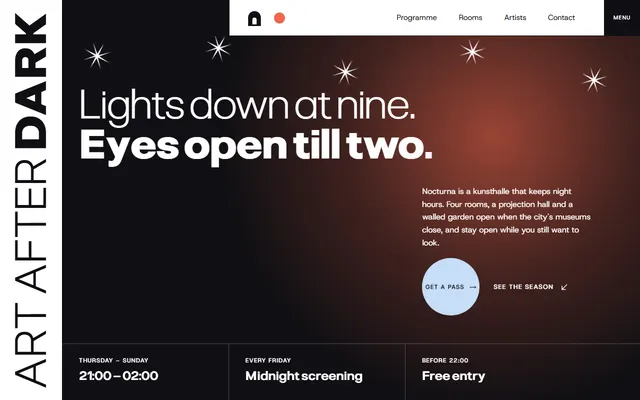
Art gallery: a six-night programme, four rooms, resident artists, passes and a visit form.
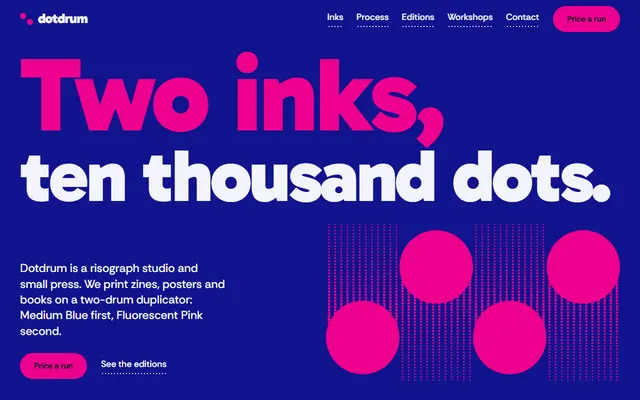
Print studio: two flat inks, editions for sale and workshop dates.
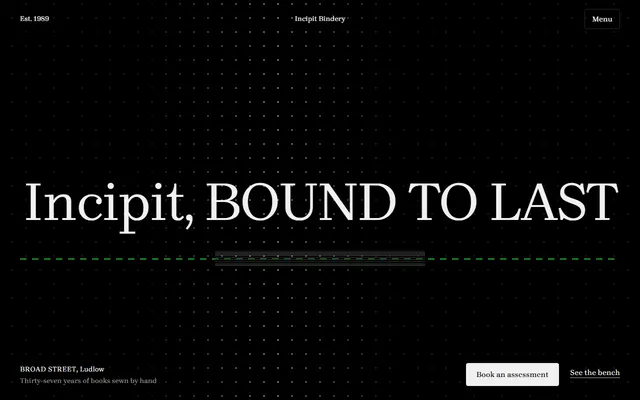
Bookbinder or paper conservator: the bench, materials, a title tester, addresses, prices and an enquiry form.
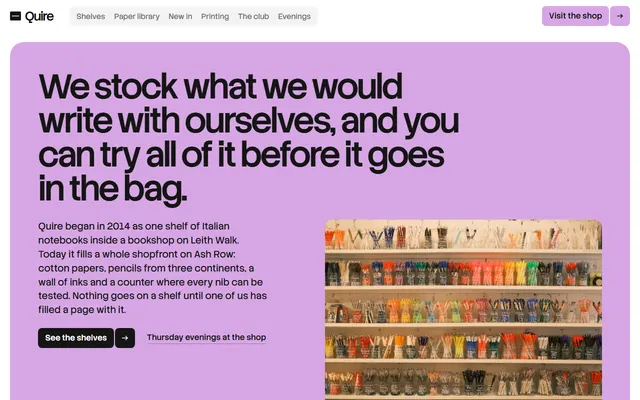
Stationery shop: five shelves, a paper library, a letterpress service and workshops.
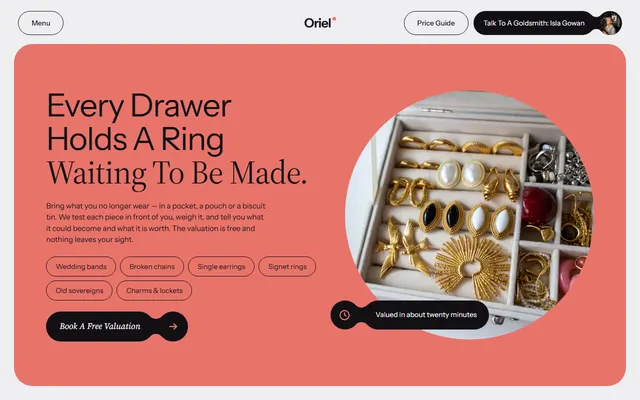
Jewelry studio: what the bench makes with prices, five sittings and a booking form.
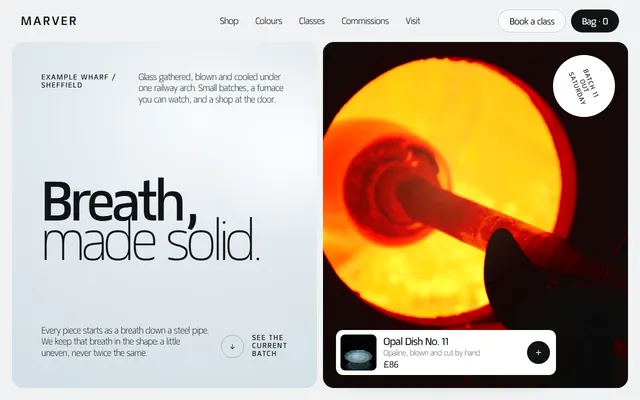
Glassblowing studio: shop pieces with prices, glass colours, making stages, classes and visiting hours.
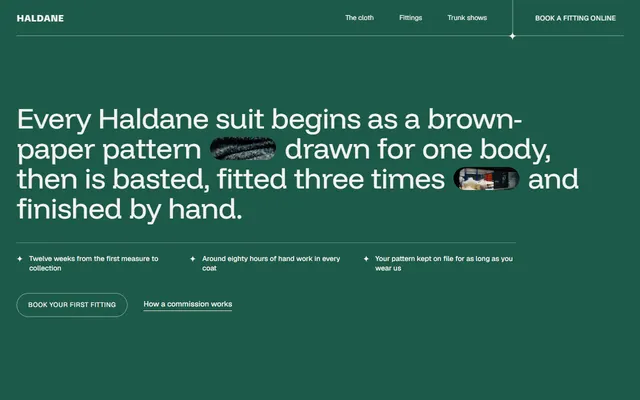
Bespoke tailor: a cloth library, three fittings, a price list and a fitting request form.
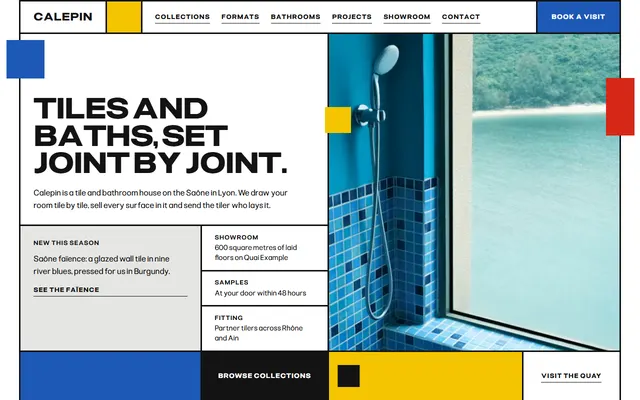
Bathroom or tile showroom: tile collections, formats, a fittings sheet, process, projects and a plan request form.