What comes with the vintage clothing store website template
- index.html: the pure HTML and CSS version, one single HTML file, 93 KB.
- index.gsap.html: the same design built with GSAP, ScrollTrigger and Lenis, for scroll motion in every browser, Firefox included.
- AGENTS.md: what a coding agent must keep and what to replace, so Claude Code, Codex or Cursor edit it without breaking the scenes.
- DESIGN.md: every colour, font, spacing and motion rule of this vintage clothing store website design.
- PROMPTS.md: the agent prompt and the design prompt below.
- CREDITS.md and LICENSE.md: the photos and fonts with their licenses, and the 8B license.
- Updates to this template, at no extra cost.
Yours to edit: one index.html with no build step, so you or a coding agent can change the words, prices and photos and upload it to any static host. Not a coder? Describe your business in one sentence to 8B's AI website builder and it designs a new site for you, with more pages when you need them. Designing is free; publishing with hosting is $9 a month, billed yearly. It also works inside Claude and ChatGPT.
Premium template · $39, one-time license · Made by 8B, an AI website builder · Updated November 2026 · Plain text: twice-told.md
About this vintage clothing store website template
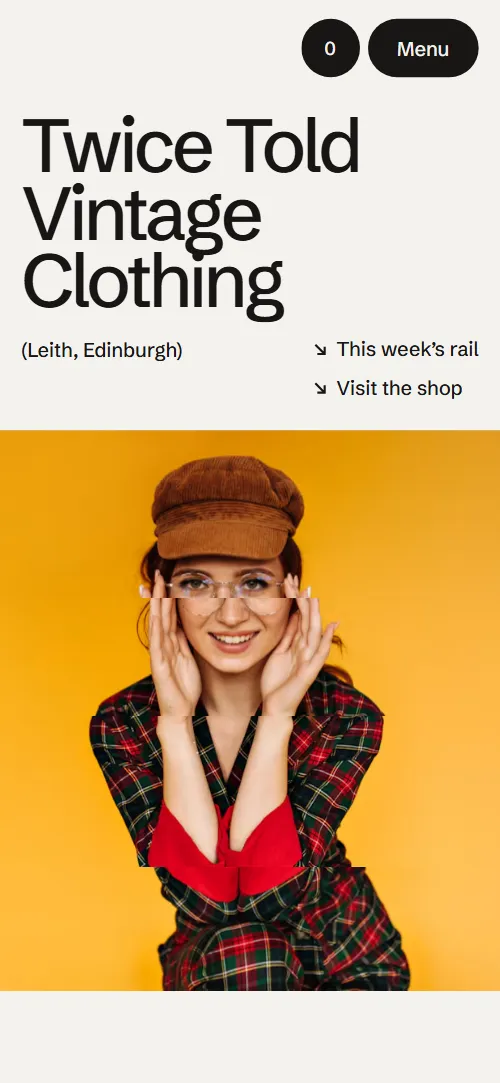
Vintage clothing store website template for a shop that sells one of each piece: one HTML file with a rail of four pieces with decade, size and price, three garments told from first owner to second, what the shop buys, a floor sorted by colour, the mending back room, opening hours and a hold and contact form. It opens on a two-line title over a photo band cut into strips that slide through three looks as you scroll, and the floor section tints itself pink, mustard and blue as you pass each colour run. It is a single HTML file in pure HTML and CSS, and a GSAP version of the same page comes with it.
At a glance, November 2026. One 93 KB index.html: a single HTML file in pure HTML and CSS with a few lines of built-in JavaScript, 12 sections, 16 Unsplash photos, Schibsted Grotesk. A GSAP build of the same page, 83 KB, comes with it.
It suits a vintage or secondhand clothing shop, a thrift or resale boutique, a consignment store that buys wardrobes, a costume and clothing rental or a market stall that wants a real home on the web. Vintage clothing store websites mostly need four things on one scroll: the pieces with their decade, size and price, the story that makes a garment worth buying, what you will buy from visitors and where and when to find the shop. This page gives each its own section, and adds the quiet details that set a small shop apart, the back room where every piece is mended and the hand-written tag.
The demo business is Twice Told, an invented shop in a former bakery in Leith, Edinburgh. Every piece, price, story, hour and street is demo copy to replace. Each piece shows a decade, a size and a price in pounds, so a shop in any city lists its own clothes in its own money; the colour runs, the buying hours and the tram directions are the parts to rewrite for your own floor and your own town.
If you would rather not edit HTML at all, 8B, the AI website builder designs a site from one sentence about your business, with more pages when you need them. This template is for people who want this exact design in their own hands: one index.html with its CSS and its motion inside, which you or a coding agent can edit and host anywhere, next to the Instagram account or the shop you already use.
Good for:
What a vintage clothing store website needs
Vintage clothing shop websites that bring people through the door answer the same questions quickly. Here is how this template covers each of them.
- Pieces you can look at properly. Four full-width photos, each with its name, decade, size, price and a short note on where it came from and what was mended, right after the services.
- The story of a garment. Three garments told twice: who wore it first and when, who wears it now, with the photo turning from grey to colour between them.
- Honest sizes. Every piece carries its own size line, and the questions explain that older sizes run small and that every tag gives true measurements.
- What you buy and how you pay. A dark section with the buying hours, cash or shop credit, a list of what the shop takes and a list of what it passes on.
- How the shop works. A floor sorted by colour in three runs, and four mending steps, wash, mend, press and tag, so people know what they are buying.
- Hours and where to find you. A giant address, a photo of the floor and a row with hours, directions and what the inside of the shop is like.
- Easy to refresh each week. Each piece is one short block: a coding agent swaps this week's rail from a sentence or a list, and the Instagram links can point to the account where new pieces go up.
What it does not have is a cart, stock levels or a full catalogue of every garment: it is built for a shop that shows a handful of pieces at a time, holds them for a visitor and sells in person, and a payment link or reservation link added to a piece takes online orders where you need them.
Vintage clothing store website design and motion
Palette
#f4f2ef page ground and text on the dark sections#171615 ink: text, the story thread, field lines, buttons, the menu, the buying section and the footer#a6a29c grey for hairline rules, empty photo frames and the hold list outline#5b5853 soft grey for small text such as tag notes and slip copy#dc9fb1 pink: the first colour run, and the floor section's ground as it passes#e2a640 mustard: the second colour run and the hover fill of buttons and round icons; in the GSAP version also the hold count once a piece is held#97bbe0 blue: the third colour runFonts
- Schibsted Grotesk: the only family: the giant title and rows, headings, labels, buttons and body text, at weights 400 and 500
A warm grey page with near-black type and hairline rules. Headings are large, medium weight and tightly set, and small parenthesised labels such as (What we do) name each section, in their own side column for the services, the stories and the questions.Services are a ruled two by two grid, each item with a thin vertical rule; the pieces are full-width photos under one giant row of names, each with a tag line of name, decade, size, price and a hold button; the stories are three rows of first owner, photo and second owner; the buying section is the one dark block before the footer, with a photo and two lists.The floor is a heading beside three photos with coloured panels, the mending is four ruled slips in a row, and the visit section is a giant address over a full-bleed photo. On phones the services, stories, lists and runs stack in one column, the footer goes two by two, the opening band, the pieces and the shop photo turn to portrait and the mending slips go two by two.
The idea behind the page is that every piece has been told twice. The photo band slides through three looks strip by strip, the piece photos arrive as strips that start out of register and slide into place, the stories turn a grey photo into colour as the thread is drawn from the first owner to the second, the mending slips are dealt out of a pile like tags on a counter, and the shop floor is introduced by colour, not by size.
What is on the vintage clothing store website page
- NavigationA fixed top-right bar with the hold count and a Menu button that opens a full-screen overlay with seven links, the address and the hours
The top bar with the hold count and the Menu button hides when you scroll down and comes back when you scroll up; the menu opens as a full-screen overlay.
- Twice Told Vintage ClothingTwo screens: Twice Told Vintage Clothing in giant type with a photo band of three looks, then a statement, a vertical hairline and a short shop note with three round links
On load the two title lines rise out of a clip and the photo band opens from its top edge, while its strips drift slightly apart and back. On scroll the strips slide sideways in alternating directions, so the band breaks into misregistered slices of two looks and settles on the next, three looks in all, while the title's two lines drift apart; then the statement's lines slide in from alternating sides and the vertical hairline grows.
- (What we do)A side label and a ruled two by two grid: buying, mending, renting and holding, each with a link further down the page
The opening hairline and the thin vertical rule of each item draw in as the grid comes into view.
- Just inA giant row with Just in and four piece names above four full-width photos, each with decade, size, price, a note and a hold button
The giant row stays at the top and slides sideways as each piece's photo reaches the middle of the screen, so that piece's name stands at the left edge. Each photo is cut into strips that start out of register and slide into place as it enters.
- Every piece here has had a life before you. We write down what we know of it, so the story carries on.Three garments told twice: first owner and year, the photo, second owner and year, joined by a hairline thread
As each row comes up, its photo turns from grey and slightly enlarged to full colour, a hairline thread draws from the first owner to the second, and the second owner's text slides out from behind the photo while it fades in. On phones the row stacks, there is no thread and the second owner's text rises into place.
- Bring us what you’ve stopped wearing. If it was made before 2000 and has life left in it, we’ll make an offer at the counter.An ink section: Bring us what you've stopped wearing, buying hours, an Offer a wardrobe button, a photo of hangers and two lists, what is bought and what is passed on
The heading's lines start shifted to alternating sides and slide into register, and the photo of hangers arrives as strips sliding into place.
- Our rails run by colour, not by size.The floor sorted by colour: three runs, reds and pinks, mustards and golds, blues and denim, each with a photo and a colour panel
The section's ground takes the colour of each run as it crosses the middle of the screen, pink, then mustard, then blue, so each coloured panel dissolves into the ground, and it returns to the page grey as the last run leaves.
- Nothing reaches a rail before it has been through the back room.The back room: a photo of darning and four ruled slips, wash, mend, press and tag
The heading slides into register and the darning photo arrives as strips; the four slips start as a slightly turned pile on the first slip's place and are dealt out one after another to their places in the row.
- (Questions)Five questions as disclosures: online sales, old sizes, returns, holding and rental
The opening hairline draws in; the questions are native disclosures that open on a click.
- 22 Example Row Leith, EdinburghA giant two-line address, a full-bleed photo of the shop floor and a row with hours, getting here and the inside of the shop
The shop photo starts as a narrow, enlarged slit in the middle, like a doorway, and widens into the whole floor while the address's two lines, stacked in the middle, part to the left and right edges.
- Hold a piece, offer a wardrobe or book the shop after hours.A hold and contact form with a list of held pieces, name, email and message, beside phone, email and address
The heading's lines slide into register and the opening hairline draws in.
- FooterThe shop name across the full width over a four-column footer with shop, hours, contacts, social links and the company line
The shop name across the full width slides into register as it comes up.
Before you publish the vintage clothing store website site
- Replace social preview image, favicon, social media links, email address, phone number and contact form (sends nothing yet) and the invented demo facts (names, prices, areas, quotes). AGENTS.md lists them.
- This week's rail, Visit the shop, What we do links, Told twice and the other menu links lead to
#rail, #visit, #sell, #mending, #contact and the other sections of the pagenow; point them to keep them while the page is one page. - Hold for 48 hours buttons on the four pieces and the hold count in the top bar lead to
in the pure HTML and CSS version, buttons with no script behind them (the GSAP version wires the buttons, the count and the form's hold list); the count links to #contactnow; point them to add the short script to the pure HTML and CSS version, or link each piece to your own reservation or payment page. - Offer a wardrobe button and Ask for a fitting link lead to
#contactnow; point them to keep them once the form is connected. - Instagram and Facebook icons and footer links lead to
the networks' home pagesnow; point them to your own profiles, or remove them. - Email and phone links in the opening, contact and footer lead to
mailto: and tel: links with example contactsnow; point them to your own email and phone. - Scroll-driven animation runs when the browser supports it (Chrome, Edge and Safari today; Firefox does not yet) and the visitor has not asked for reduced motion. Otherwise each section shows its finished layout, and the opening band shows its first look whole; the GSAP build, index.gsap.html, also plays the scroll motion in Firefox.
- In the pure HTML and CSS version the hold buttons, the hold count and the hold list in the contact form are laid out and styled, but no script connects them, and there is no thank-you line after sending; the GSAP version has both wired. In either version the form sends nothing: connect it to a form service or your email.
- It is one page with no cart or checkout: pieces are held and collected in the shop, and each one has a photo, a name, a decade, a size and a price you write by hand. Add a payment or reservation link per piece if you take orders online.
- The rail is built for four pieces, with their names repeated in the giant row above, and the floor for three colour runs: a different count needs its layout and scene adjusted. The stories and the mending slips take any count.
- The opening band is built from three photos cut into five strips on a desktop and four on a phone.
Questions about this vintage clothing store website template
What do I get for $39?
The vintage clothing store website template as a single HTML file, index.html, in pure HTML and CSS, a GSAP build of the same page as index.gsap.html, a DESIGN.md with every colour, font and motion rule, an AGENTS.md for coding agents, the agent prompt and the design prompt from this page, and CREDITS.md for the photos and fonts. Updates to this template are included.
Can I use this vintage clothing template for client sites?
Yes. One purchase lets you build as many sites as you like with it, for your own shop or for clients, and change anything. What it does not allow is selling or giving away the template itself, as a template, theme or kit, or putting its source in a public repository.
How do I add, change or remove pieces on the rail?
Each piece is one block of HTML with a photo, a name, a decade, a size, a price, a short note and a hold button, and its name is repeated in the giant row above. With Claude Code, Codex or Cursor you say it in a sentence, such as add a 1970s suede jacket, size S, £95, and remove the denim jacket, and the agent edits the block and the row together; by hand you copy a block and change the words. The rail is built for four pieces, so ask the agent to keep the count or adjust the scene. There is no cart or checkout: add a payment link or a reservation link to each piece if you take orders online, and keep the rest of the shop as it is, a place where one of each piece is held and collected in person. If you want a site with more pages that you edit without code, 8B's AI website builder makes one from a sentence about your shop.
Do the hold buttons and the contact form work?
The holds work in the GSAP version: the Hold for 48 hours buttons switch to On hold, the count in the top bar turns mustard and the held pieces fill the list in the form, and a thank-you line shows after sending. In the pure HTML and CSS version they are laid out and styled, with an On hold state, but no script connects them; a coding agent adds it from the prompt in a few lines. In both, the form asks for name, email and message and sends nothing until you connect a form service such as Formspree or Netlify Forms, or your email. The pure HTML and CSS version shows no thank-you line after sending, so point the form at a thank-you page or add one.
Will it work with Claude Code, Codex or Cursor?
Yes. Put index.html and AGENTS.md in your project and give the agent the prompt that comes with the template. AGENTS.md says which attributes the scroll motion reads, what to keep and what to replace, so the agent swaps pieces, prices, stories and photos without breaking the scenes, and it can add the short hold script in the same pass.
What do visitors see in Firefox or with reduced motion?
Firefox does not support scroll-driven animations yet, so it shows every section in its finished layout, as does any browser when the visitor asks for reduced motion; the opening band then shows its first look whole. If the scroll motion must also play in Firefox, use the GSAP build, index.gsap.html, which loads GSAP, ScrollTrigger and Lenis from a CDN.
More templates for fashion and clothing
Other designs for businesses that make, sell or fit clothes.
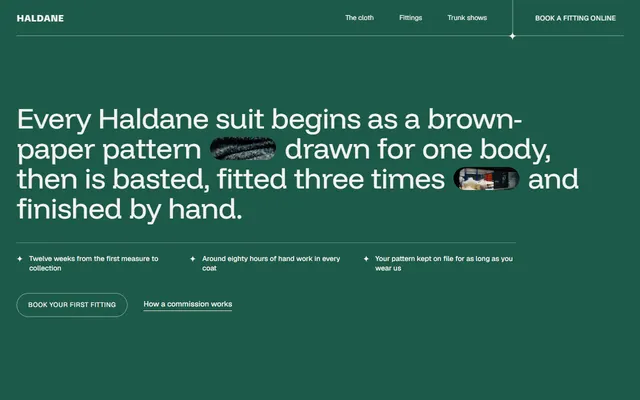
Bespoke tailor: a cloth library, three fittings over twelve weeks, a price list and a fitting request form.
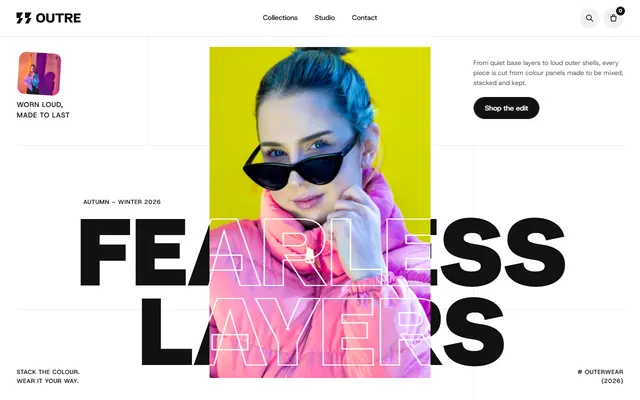
Outerwear label: a two-line title with a portrait panel, four collection looks with prices and new arrivals.
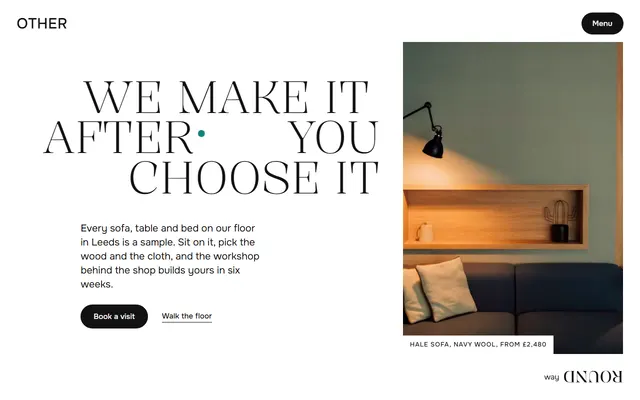
Furniture shop or maker: sample rooms with prices, a wood chooser, how it is built, order stages, a visit form.
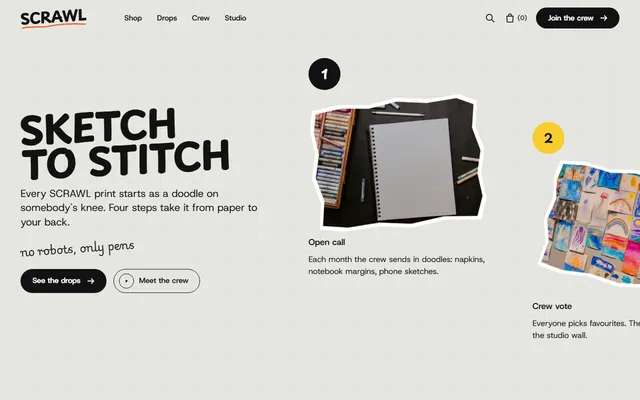
Streetwear label: a sideways process strip, a crew wall, a drop calendar and a contact poster.
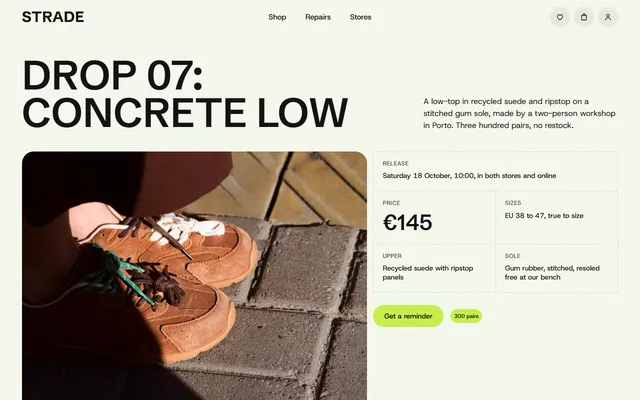
Streetwear shop: a single product drop with specs and a price, a lookbook that runs sideways and store hours.
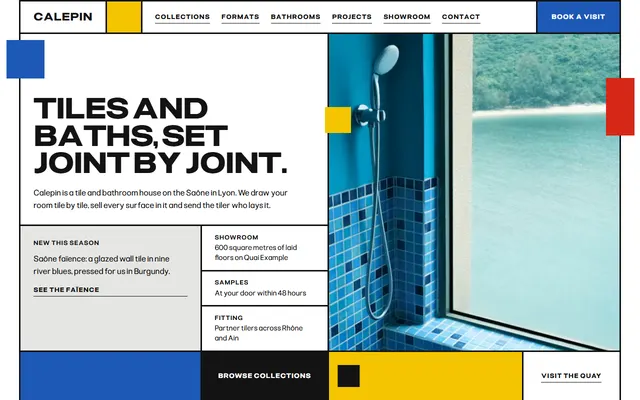
Bathroom or tile showroom: tile collections, formats, a fittings sheet, process, projects and a plan request form.
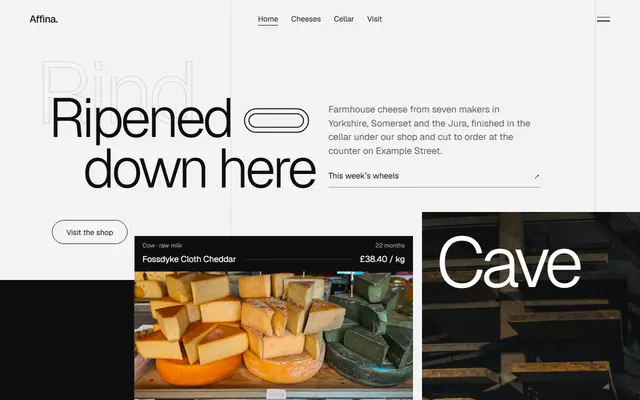
Cheese shop for cheesemongers and delis: counter, cellar, tastings, club.
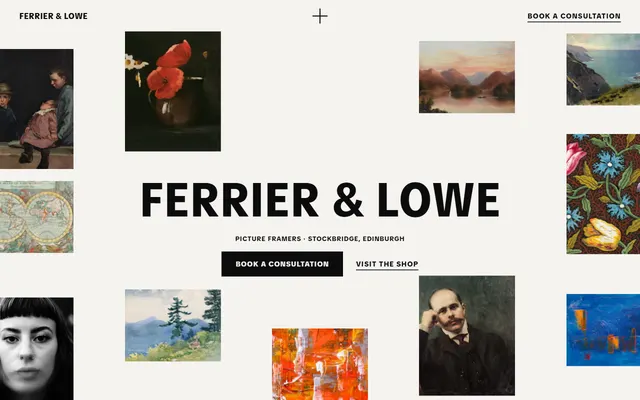
Picture framer: a wall of framed work, mounts, mouldings, glass, workshop steps and a print room.