What comes with the furniture store website template
- index.html: the pure HTML and CSS version, one single HTML file, 122 KB.
- index.gsap.html: the same design built with GSAP, ScrollTrigger and Lenis, for scroll motion in every browser, Firefox included.
- AGENTS.md: what a coding agent must keep and what to replace, so Claude Code, Codex or Cursor edit it without breaking the scenes.
- DESIGN.md: every colour, font, spacing and motion rule of this furniture store website design.
- PROMPTS.md: the agent prompt and the design prompt below.
- CREDITS.md and LICENSE.md: the photos and fonts with their licenses, and the 8B license.
- Updates to this template, at no extra cost.
Yours to edit: one index.html with no build step, so you or a coding agent can change the words, prices and photos and upload it to any static host. Not a coder? Describe your business in one sentence to 8B's AI website builder and it designs a new site for you, with more pages when you need them. Designing is free; publishing with hosting is $9 a month, billed yearly. It also works inside Claude and ChatGPT.
Premium template · $39, one-time license · Made by 8B, an AI website builder · Updated November 2026 · Plain text: other-way-round.md
About this furniture store website template
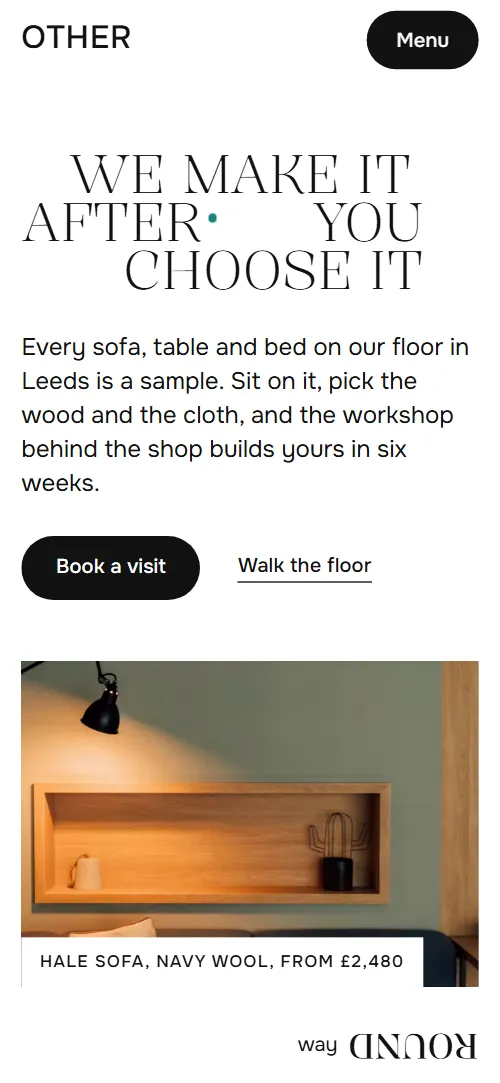
Furniture store website template for a shop that builds each piece after the customer chooses it: one HTML file with five rooms of sample pieces and their prices, a chooser for four woods, the layers of a sofa, three rules, a six-week order timeline, a buy-back offer, opening hours and a visit form. The first screen holds a framed photo of a finished sofa that turns over to show a maker at work while an ink ground spreads in behind it, and the shop's name is split across two corners of every screen. It is a single HTML file in pure HTML and CSS, and a GSAP version of the same page comes with it.
At a glance, November 2026. One 122 KB index.html: a single HTML file in pure HTML and CSS with a few lines of built-in JavaScript, 12 sections, 26 Unsplash photos, Kalnia and Onest. A GSAP build of the same page, 100 KB, comes with it.
It suits a furniture maker with a showroom, a made-to-order sofa or table workshop, an upholsterer or a joinery shop that sells a few ranges and builds to the customer's size. Furniture store websites mostly need the same things in one scroll: what you sell and for how much, what it is made of, how long it takes, and where to come and sit on it. This page gives each its own section, and it ends with a buy-back offer and a showroom block that give a local furniture business something to say beyond the catalogue.
The demo business is Other Way Round, an invented furniture shop in Leeds with its workshop behind the showroom wall. Every name, price, wood, piece and opening hour is demo copy to replace. The five rooms are sofas, tables, chairs, beds and storage, each with one sample and a starting price, so a shop in another city or with other ranges swaps in its own rooms, woods and lead time, and a seven-room floor needs the layout and scene adjusted.
If you would rather not edit HTML at all, 8B, the AI website builder designs a site from one sentence about your business, with more pages when you need them. This template is for people who want this exact design in their own hands: one index.html with its CSS and its motion inside, which you or a coding agent can edit and host anywhere.
Good for:
What a furniture store website needs
Furniture shop websites that bring people to the showroom answer the same questions in the first minute. Here is how this template covers each of them.
- What you sell, by room. Five rooms of sample pieces, each with a photo, a short description, a starting price and an enquiry link.
- What it is made of. A chooser for four woods with a note and a price difference each, and a section that shows the frame, springs, padding and cover of a sofa.
- How long it takes. A six-week timeline with four stages, a photo for each and a bar that fills week by week.
- Why trust the shop. Three rules, a buy-back offer with its terms, a ten-year frame guarantee line and six answered questions.
- Where and when to visit. A showroom section with a photo and the address, opening hours, directions and parking.
- A way to get in touch. A request form with the piece you are looking for and the day you could come, beside the phone, email and address.
What it does not have is a cart, stock levels or a product search: it sells by visit and by enquiry. For online ordering, link the enquiry links to your shop or checkout and keep this page as the story and the showroom.
Furniture store website design and motion
Palette
#ffffff page ground of the first screen, the woods, weeks, contact and storage room, and the text on the dark grounds#121212 text, buttons, the ink ground that spreads in the opening, the sofas room and the showroom section#ece4da beige ground of the floor intro, the sofa layers, the questions and the footer, and the behind-photo tone of frames#c8d8ea pale blue ground of the tables room and the Three rules section#db5c59 coral ground of the chairs room and the buy-back section#6a6964 mid grey ground of the beds room#12857e the one small accent: the dot in the first heading and the filled week bar#5b5650 quiet text: wood notes, week labels, form labels and the legal line#b8b1a8 secondary text on ink: menu details, the workshop facts and the showroom blocksFonts
- Kalnia: the light serif capitals of every headline, the giant room, rule and footer words, whose width grows on scroll in the Three rules section
- Onest: body text, buttons, navigation, captions, questions and form fields
The page changes ground as it goes: white for the first screen, ink for the second, beige for the floor intro, then a row of colour-blocked rooms in ink, pale blue, coral, mid grey and white, then white, beige, pale blue, white and beige again, a coral buy-back section, an ink showroom, a white contact section and a beige footer. Headlines are light serif capitals broken across lines with a wide gap in one line of each, against a small plain sans for text. The wordmark is split: OTHER sits in the top-left corner and way with an upside-down ROUND in the bottom-right corner, both in ink on every ground. On phones the rooms still run sideways one to a screen, and the sections stack into single columns.
The brief behind the page treats the shop's idea as a turn: the opening photo turns over to its workshop side, the wood panel turns to the wood you pick, the footer card turns over, and ROUND ends the page upside down. Buttons turn their label over on hover and links redraw their underline from the right, so the interface says the same thing the headlines do. A small teal dot slides through the gap in the first heading and the week bar fills in the same teal.
What is on the furniture store website page
- NavigationOTHER held in the top-left corner and way with an upside-down ROUND in the bottom-right corner of every screen, a Menu button that opens the section list with the phone, email and address
OTHER and way ROUND slide into their corners on load; Menu opens a list of six sections with the phone, email and address.
- We make it after you choose itTwo screens: We make it after you choose it beside a framed sofa photo that turns over to a workshop photo, then The other side of the shop on an ink ground with the workshop facts
On load the heading lines arrive from alternating sides, the photo frame opens from the bottom and the photo pans slowly up and down while the teal dot slides through the gap in the second line. On scroll the framed column turns over from the finished sofa to a maker at work, the first heading's lines drift apart sideways, the ink ground spreads in from the right, and the second heading's lines slide in from opposite sides as the wood photo rises.
- Walk the floorWalk the floor: an intro panel and five colour-blocked rooms on a sideways track, each with a giant room word, a photo, one sample with its price and an enquiry link
The five rooms lie in a row and scroll carries them sideways while the page stays held. Each giant room word slides in ahead of its room, and detail photos in the chairs and storage rooms sweep in over the room edge faster than the rooms move.
- One frame, four woodsOne frame, four woods: a grain panel and a list of ash, oak, cherry and walnut with a price note each; choosing one turns the panel to that wood
The heading arrives line by line and the grain panel turns over as it comes into view. Choosing a wood in the list turns the panel over to show that wood, using the radio buttons alone.
- What's under the coverWhat's under the cover: four layer photos (frame, springs, padding, cover) with captions
The four layer photos start as one tilted stack below the row and fly out to their own places as the row scrolls in, the cover first and the frame last, each caption fading up as its layer lands.
- Three rules we keepThree rules we keep: SOLID, SLOW and MENDABLE as giant words on a pale blue ground, each with a note
SOLID, SLOW and MENDABLE each start narrow on the width axis and shifted to one side, then widen to full width as they drift into place, their notes sliding the other way.
- Six weeks, in orderSix weeks, in order: four stages (Choose, Draw, Build, Deliver) with a photo each and a bar of six week segments
Each stage's photo is held while the next rises from below over it, settling from a slight zoom, and the bar of six week segments fills to the week of the stage in view.
- Asked on the floorSix questions as native disclosures beside the heading Asked on the floor
The heading arrives line by line; the questions open and close without any script and their plus marks turn.
- When you're done, we buy it backWhen you're done, we buy it back, on a coral ground: terms, a collection button and a returned chair beside a re-made one
The heading arrives line by line and, as the section scrolls in, the re-made chair wipes in over the returned one from the right edge while the returned chair drifts a little to the left.
- Come and sit on everythingCome and sit on everything, on an ink ground: a sideways band of the place name and a showroom photo with address, hours, directions and parking in four corners
The place-name band rests until it reaches the middle of the screen and then drifts sideways. The showroom photo zooms out from a detail to the whole room while the address, hours, directions and parking blocks rise from the photo's centre out to its four corners.
- Book a visit or a callBook a visit or a call: phone, email, address and a request form
The heading arrives line by line; the form itself never moves.
- FooterA featured pair of chairs on a card, links, contacts, the full wordmark across the width with ROUND upside down, and legal links
The featured card turns over as it arrives, OTHER WAY slides in from the left and ROUND turns over from upright into its upside-down resting place.
Before you publish the furniture store website site
- Replace social preview image, favicon, phone number, email address and contact form (sends nothing yet) and the invented demo facts (names, prices, areas, quotes). AGENTS.md lists them.
- Book a visit button on the first screen lead to
#contactnow; point them to your appointment page, or keep #contact once the form is connected. - OTHER wordmark in the top-left corner lead to
#openingnow; point them to keep as it is. - Walk the floor link on the first screen and the Menu list, footer links lead to
#floor, #woods, #underside, #weeks, #buyback, #showroomnow; point them to keep as they are. - Ask about the Hale, Long Acre, Lark, Low bed and Ledger links in the five rooms lead to
#contactnow; point them to an enquiry page per piece, or keep #contact. - Arrange a collection button in the buy-back section lead to
#contactnow; point them to your collection request page or a form for returns. - Reserve a sitting link on the footer card lead to
#contactnow; point them to your booking page for showroom visits. - Privacy, Terms of sale and Cookies links in the footer lead to
privacy.html, terms.html, cookies.html (pages the template does not contain)now; point them to your own legal pages. - Phone and email links in the menu, contact section and footer lead to
tel:+441130000000 and hello@otherwayround.examplenow; point them to your shop's number and email, in the link and in the visible text. - Scroll-driven animation, including the sideways run of the five rooms, runs when the browser supports it (Chrome, Edge and Safari today; Firefox does not yet) and the visitor has not asked for reduced motion. Otherwise the rooms stack in a column and every section shows its finished layout; the GSAP build, index.gsap.html, also plays the scroll motion in Firefox.
- The visit form sends nothing: connect it to a form service or your booking system. There is no thank-you line after sending; add one or send the visitor to a thank-you page.
- The layout is built for five rooms, four woods, four sofa layers, three rules and four order stages (six week segments): a different count needs its layout and scene adjusted.
- The footer links to privacy, terms and cookies pages the template does not contain, and the wood prices, delivery charge, deposit, buy-back terms and opening hours are for the invented Leeds shop: replace them with your own.
Questions about this furniture store website template
What do I get for $39?
The furniture store website template as a single HTML file, index.html, in pure HTML and CSS, a GSAP build of the same page as index.gsap.html, a DESIGN.md with every colour, font and motion rule, an AGENTS.md for coding agents, the agent prompt and the design prompt from this page, and CREDITS.md for the photos and fonts. Updates to this template are included.
Can I use this furniture template for client sites?
Yes. One purchase lets you build as many sites as you like with it, for yourself or for clients, and change anything. What it does not allow is selling or giving away the template itself, as a template, theme or kit, or putting its source in a public repository.
Can customers order or pay on the page?
No. The page sells by visit: each piece has an enquiry link and the contact section has a request form with the piece, the day and a message. The form sends nothing until you connect a form service such as Formspree or Netlify Forms, or your own booking system, and the pure HTML and CSS version shows no thank-you line after sending, so point it at a thank-you page or add one. For online orders, link the enquiry links to your shop or checkout.
How do I change the pieces, woods and prices?
Each of the five rooms holds one sample with a name, a description and a starting price: replace that text and the room photo, and the second detail photo in the chairs and storage rooms. The four woods are a list of radio buttons and four photos, in that order; replace the names, notes and price differences and the photos, keeping four. The sofa layers, the three rules and the four order stages keep their counts unless you also adjust their scenes.
Will it work with Claude Code, Codex or Cursor?
Yes. Put index.html and AGENTS.md in your project and give the agent the prompt that comes with the template. AGENTS.md says which attributes the scroll motion reads, what to keep and what to replace, so the agent changes copy, prices, photos and colours without breaking the scenes.
What do visitors see in Firefox or with reduced motion?
Firefox does not support scroll-driven animations yet, so it shows every section in its finished layout, with the rooms stacked in a column, as does any browser when the visitor asks for reduced motion. If the scroll motion must also play in Firefox, use the GSAP build, index.gsap.html, which loads GSAP, ScrollTrigger and Lenis from a CDN.
More templates for shops, makers and home businesses
Other designs for businesses that sell things for the home or make them by hand.
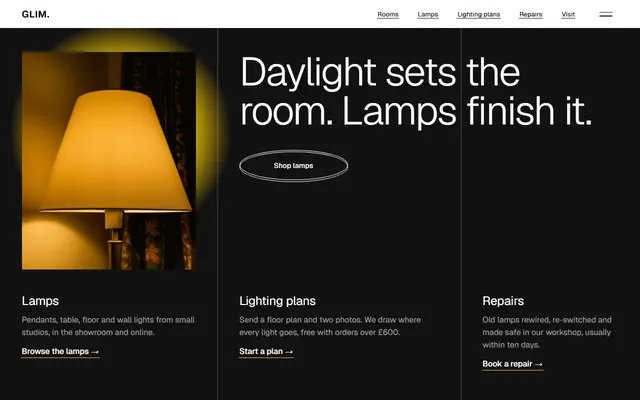
Lamp shop and showroom: six rooms on a sideways track, six lamp types, a lighting plan and a contact form.
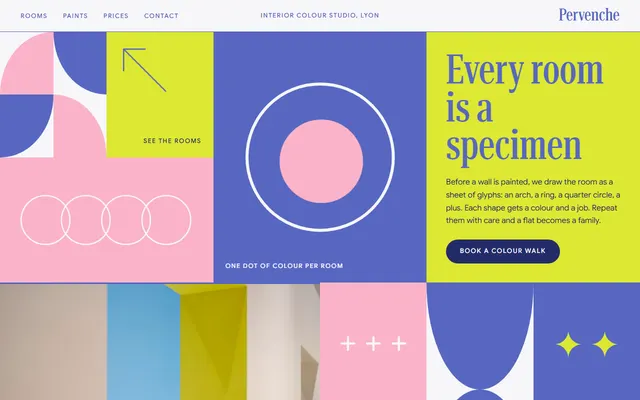
Interior colour studio: a mosaic of tiles, a glossary, six projects, a price list and a contact form.

Vintage clothing shop: pieces with tags, garment stories, what you buy, mending and opening hours.
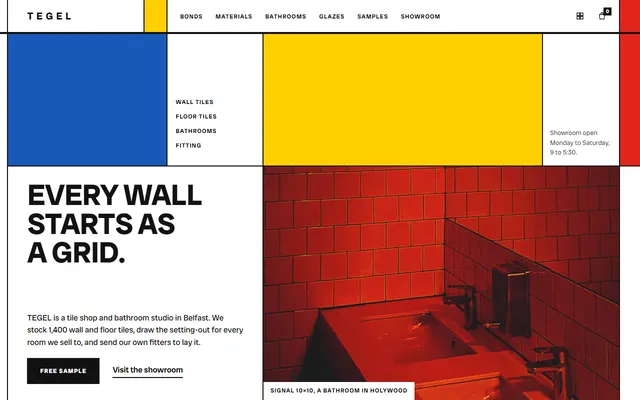
Tile shop: three tile bonds, six materials, finished bathrooms and a free-sample form.
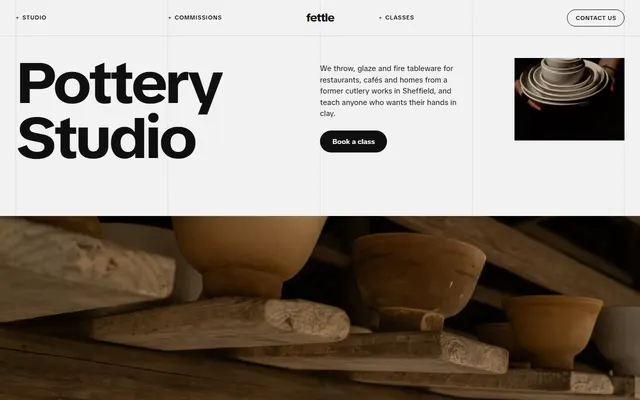
Pottery studio: commissions, a six-step process, four glazes, classes and a small shop.
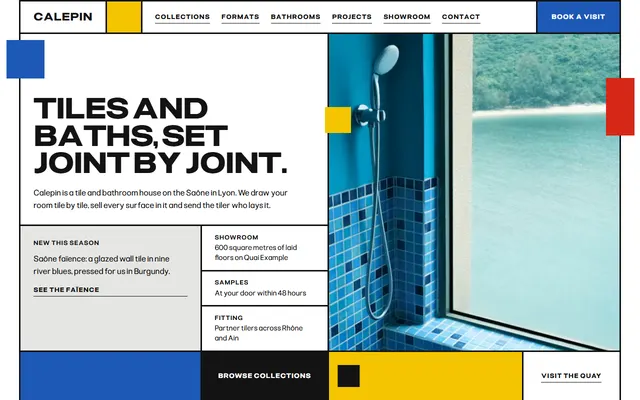
Bathroom or tile showroom: tile collections, formats, a fittings sheet, process, projects and a plan request form.
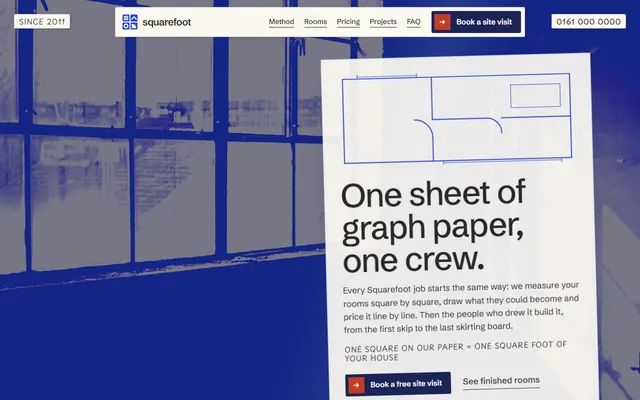
Home renovation firm: a four-stage method, six services as rooms of a floor plan and three prices.

Picture framer: a wall of framed work, mounts, mouldings, glass, workshop steps and a print room.