What comes with the walking tour website template
- index.html: the pure HTML and CSS version, one single HTML file, 108 KB.
- index.gsap.html: the same design built with GSAP, ScrollTrigger and Lenis, for scroll motion in every browser, Firefox included.
- AGENTS.md: what a coding agent must keep and what to replace, so Claude Code, Codex or Cursor edit it without breaking the scenes.
- DESIGN.md: every colour, font, spacing and motion rule of this walking tour website design.
- PROMPTS.md: the agent prompt and the design prompt below.
- CREDITS.md and LICENSE.md: the photos and fonts with their licenses, and the 8B license.
- Updates to this template, at no extra cost.
Yours to edit: one index.html with no build step, so you or a coding agent can change the words, prices and photos and upload it to any static host. Not a coder? Describe your business in one sentence to 8B's AI website builder and it designs a new site for you, with more pages when you need them. Designing is free; publishing with hosting is $9 a month, billed yearly. It also works inside Claude and ChatGPT.
Premium template · $39, one-time license · Made by 8B, an AI website builder · Updated November 2026 · Plain text: passo.md
About this walking tour website template
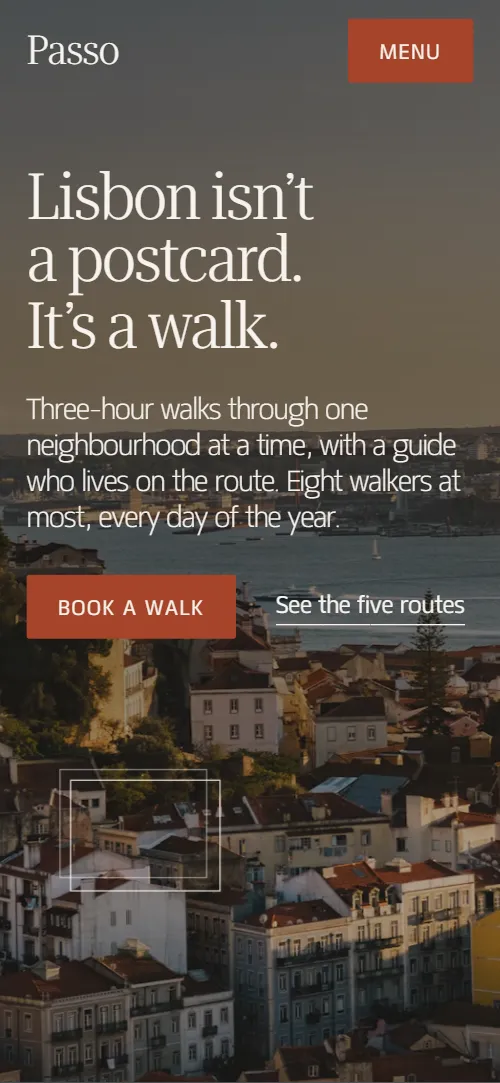
Walking tour website template for a small company or an independent guide: one HTML file with five neighbourhood routes (time, distance, meeting point and price), the five stages of a walk, effort levels, local guides, the table where each walk ends, walkers' notes, questions and a booking request form. It opens on a golden-hour view of the city that is held in place while a staircase of five detail photos climbs over it, under a heading set as a negation and its answer. It is a single HTML file in pure HTML and CSS, and a GSAP version of the same page comes with it.
At a glance, November 2026. One 108 KB index.html: a single HTML file in pure HTML and CSS with a few lines of built-in JavaScript, 12 sections, 22 Unsplash photos, Matangi and Roboto Serif. A GSAP build of the same page, 91 KB, comes with it.
It suits a walking tour company, a food or history tour for small groups, an independent guide with a few fixed routes, or any experience sold by route, time and price. Walking tour websites mostly need four things on one scroll: the routes with when and where they start, how hard they are, who leads them and how to book, and this page gives each its own section. A walking tour website built from it also carries what makes a small group different from a coach party: a limit of eight walkers, guides who live on the route and a table at the end.
The demo business is Passo, an invented company in Lisbon. Every route, meeting point, price, guide, tasca and note is demo copy to replace. The routes show time, distance with steps, meeting point and price, so a guide in any city fills in its own streets; prices are in euros and the Portuguese licence number in the footer is a placeholder, which you change to your own market's currency and rules.
If you would rather not edit HTML at all, 8B, the AI website builder designs a site from one sentence about your business, with more pages when you need them. This template is for people who want this exact design in their own hands: one index.html with its CSS and its motion inside, which you or a coding agent can edit and host anywhere, next to the booking system you already use.
Good for:
What a walking tour website needs
Walking tour websites that fill their walks answer the same questions quickly. Here is how this template covers each of them.
- Routes with when, where and how much. Five routes, each with a photo, three traits, a description, the start time and length, the distance with the steps, the meeting point and the price.
- How hard it is. Three effort levels, from under 60 steps to about 340, name which routes belong to each, and every route has a gentler version.
- What a walk is like and what is included. Five stages with elapsed times, from coffee at the fountain at 0:00 to the table at 2:30, and the five family tascas that host that table, with a line about vegetarian, vegan and gluten-free plates.
- Who leads it. Four guides with a portrait, their route, a line about them and the languages they speak.
- Proof from walkers. Eight notes with the walker's name, city and route.
- Answers about rain, children and cancelling. Six questions as native details elements, covering fitness, rain, children, food, private walks and cancelling.
- A way to book. A request form with route, date and walkers beside the phone, email, office and hours. Connect the form before you go live.
What it does not have is a calendar of free places, online payment or a booking engine: it takes a request and you confirm by email or phone, or you link the Book buttons to the platform you already use.
Walking tour website design and motion
Palette
#ebe6df warm stone: the page ground#1e1b17 near-black: text, hairlines and the dark sections#e2d6c5 sand: the grounds of the walkers' notes and the booking section#f6f3ee paper: cards, the booking form card, the guides and questions grounds and text on dark grounds#a5442a terracotta, the one accent: buttons, the slope field and the step timesFonts
- Roboto Serif: the light, narrow two-line headings, route and guide names and the walkers' quotes
- Matangi: body text, captions, labels, navigation, buttons and form fields
A warm stone page with sand and near-black sections and one terracotta accent for the buttons and times. Every content section opens with a two-line heading in a light, narrow serif, often a negation on the first line and its answer on the second. Routes sit on a dark ground as photo and text rows with a small facts list; the pace section is a staircase climbing to the right; effort levels and walker notes are paper cards on stone and sand, guides and questions sit on a paper ground; the booking section sets a short list of contacts beside a form on a paper card. On phones the opening row of detail photos is shorter, the pace steps stack with a growing indent, the guides line up two by two and the photo stage of the routes sits above its text.
The idea behind the page is a pace, not a schedule: Lisbon seen between the sights, one neighbourhood at a time. So the opening view is held while the next screen climbs over it like steps, a thin viewfinder frame searches the view, a hairline window opens inside one route photo onto the next route, and the evening reverses the opening, with strips falling away like steps going down to a dusk view.
What is on the walking tour website page
- NavigationHeader with the wordmark, a Lisbon on foot tag, three links and Book a walk, and a full-screen menu on phones
The header sits over the opening photo, turns into a stone bar as you scroll and hides on the way down, coming back when you scroll up.
- Lisbon isn’t a postcard. It’s a walk.Two screens: a golden-hour view of Lisbon with the couplet Lisbon isn't a postcard. It's a walk., then a stone sheet with five detail photos, a statement and three promises
On load the photo settles, the two heading lines rise and the buttons fade up; a thin viewfinder frame glides between details of the view while the photo drifts slowly sideways. On scroll the view grows and darkens, the text drifts up and five detail photos climb over it as a staircase, then settle into a level row at the top of the stone sheet, and its two heading lines slide into place.
- One city. Five ways to walk it.Five neighbourhood routes, each with a photo, three traits, a description, time, distance, meeting point and price
The heading lines slide in from opposite sides. As you move from one route to the next, a hairline window opens on a detail of the current photo, shows the next route and widens to fill the photo, while the current photo zooms toward it.
- Three hours isn’t a schedule. It’s a pace.A wide photo of walkers and the five stages of one walk with elapsed times from 0:00 to 2:30
The heading lines slide in from opposite sides, the wide photo starts close on a detail inside a hairline frame and widens, and the five steps rise into a staircase, the later ones from lower down.
- Lisbon is steep. Our pace isn’t.Three effort levels, Gentle, Steady and Steep, as paper cards with a photo, the steps and which routes
The heading lines slide in from opposite sides. A terracotta slope field rises steeply behind the three cards, which are tilted with it; as you read, the field levels into a flat band and the cards settle level.
- Guides, not narrators. They live on the route.Four local guides with portrait, route, a line about them and their languages
The heading lines slide in from opposite sides. The four portraits start overlapping at the centre at different sizes, each in a hairline frame, then separate into a line-up as the names and lines settle under them.
- Every walk ends at a table. Families set them.What the table at the end of each walk includes and the five family tascas, with two photos
The heading lines slide in from opposite sides and both photos start close on a detail inside a hairline frame and widen.
- We don’t ask for stars. We read the notes.Eight walkers' notes with name, city and route in two rows
The heading lines slide in from opposite sides. The two rows of notes drift in opposite directions as the section crosses the screen, each by its own overflow, so every note passes through view.
- Questions before the climb. Answers on the way.Six questions as native details: fitness, rain, children, food, private walks and cancelling
The heading lines slide in from opposite sides; the six questions open and close as plain details elements.
- You’ve read enough. Now walk.Full-bleed dusk view with the couplet You've read enough. Now walk., a Book a walk button and a line about dates
Five strips made from the opening's five detail photos cover the dusk view and fall away one after another from left to right, like steps going down, uncovering the view and the closing heading.
- Tell us when you land. We’ll tell you where to meet.Booking request form with route, date, walkers, name, email and a message, beside the phone, email, office and hours
The heading lines slide in from opposite sides and the four contact lines rise into a staircase.
- FooterFooter with the wordmark, a line about the company, three link columns, social links, legal links and the company line
Before you publish the walking tour website site
- Replace social preview image, favicon, phone number, email address, contact form (sends nothing yet) and social media links and the invented demo facts (names, prices, areas, quotes). AGENTS.md lists them.
- Book a walk in the header, the menu, the opening and the evening, and the Book link under each of the five routes lead to
#booknow; point them to keep them once the booking form is connected. - See the five routes in the opening, the brand, the header and menu links and the footer links lead to
#routes, #opening on the brand, #guides and #questions in the header and menu, and #routes, #hills, #pace, #guides, #table and #questions in the footernow; point them to keep them. - Booking terms and Privacy in the footer lead to
#book, the booking section, because the template contains no terms or privacy pagenow; point them to your own terms and privacy pages. - Instagram and YouTube links in the footer lead to
the networks' home pagesnow; point them to your own profiles, or remove them. - Scroll-driven animation runs when the browser supports it (Chrome, Edge and Safari today; Firefox does not yet) and the visitor has not asked for reduced motion. Otherwise each section shows its finished layout; the GSAP build, index.gsap.html, also plays the scroll motion in Firefox.
- The booking form sends nothing and has no calendar or payment: connect it to a form service or your booking system. Without a page script there is no thank-you line after sending; add one or send the visitor to a thank-you page.
- It is one page: Booking terms and Privacy point to the booking section because the template contains no such pages.
- The opening row is built for five detail photos, which the evening strips reuse, and the pace staircase for five steps; the notes sit in two rows of four. A different count there needs its layout adjusted.
Questions about this walking tour website template
What do I get for $39?
The walking tour website template as a single HTML file, index.html, in pure HTML and CSS, a GSAP build of the same page as index.gsap.html, a DESIGN.md with every colour, font and motion rule, an AGENTS.md for coding agents, the agent prompt and the design prompt from this page, and CREDITS.md for the photos and fonts. Updates to this template are included.
Can I use this walking tour template for client sites?
Yes. One purchase lets you build as many sites as you like with it, for your own company or for clients, and change anything. What it does not allow is selling or giving away the template itself, as a template, theme or kit, or putting its source in a public repository.
How do I add, change or remove routes and prices?
Each route is one block of HTML with a photo, a name, three traits, a description, four facts and a booking link, and the route list in the booking form is a select with one option per route. With Claude Code, Codex or Cursor you say it in a sentence, such as change Alfama to 09:00 and add a Sintra day trip at 55 euros, and the agent edits the blocks; by hand you copy a block and change the words. The photo stage takes any number of routes, but the effort levels, the guides and the tascas name routes too, so ask the agent to update those lines as well. If you want a site with more pages that you edit without code, 8B's AI website builder makes one from a sentence about your tours.
Does the booking form take bookings and payments?
It collects a request: route, date, number of walkers from one to eight, name, email and a message. It sends nothing until you connect a form service such as Formspree or Netlify Forms, or your booking system, and it has no calendar of free places and no payment step. The pure HTML and CSS version shows no thank-you line after sending, so point the form at a thank-you page or add one. If your tours are sold through a booking platform, link the Book buttons to it.
Will it work with Claude Code, Codex or Cursor?
Yes. Put index.html and AGENTS.md in your project and give the agent the prompt that comes with the template. AGENTS.md says which attributes the scroll motion reads, what to keep and what to replace, so the agent swaps routes, prices, guides and photos without breaking the scenes.
What do visitors see in Firefox or with reduced motion?
Firefox does not support scroll-driven animations yet, so it shows every section in its finished layout, as does any browser when the visitor asks for reduced motion. If the scroll motion must also play in Firefox, use the GSAP build, index.gsap.html, which loads GSAP, ScrollTrigger and Lenis from a CDN.
More templates for travel, tours and hospitality
Other designs for businesses that take people somewhere.
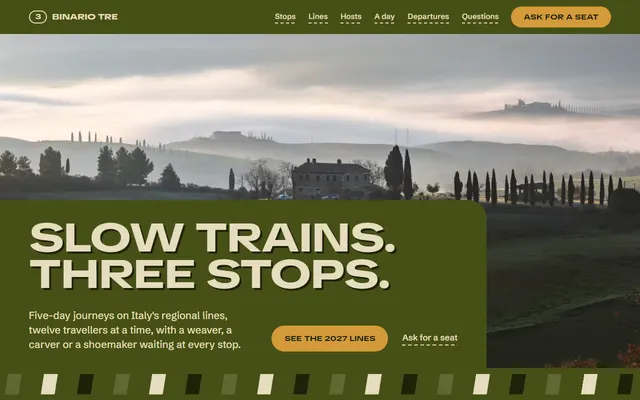
Slow-travel tour operator: a route with three stops, journeys with prices, hosts, departures and an enquiry form.
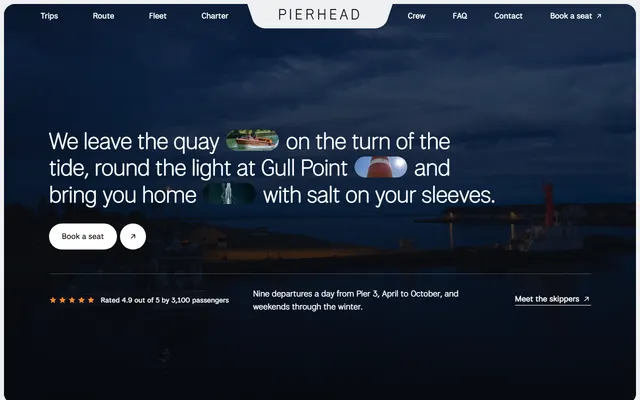
Harbour boat firm: three trips with fares and times, places along the route, skippers and private charter.
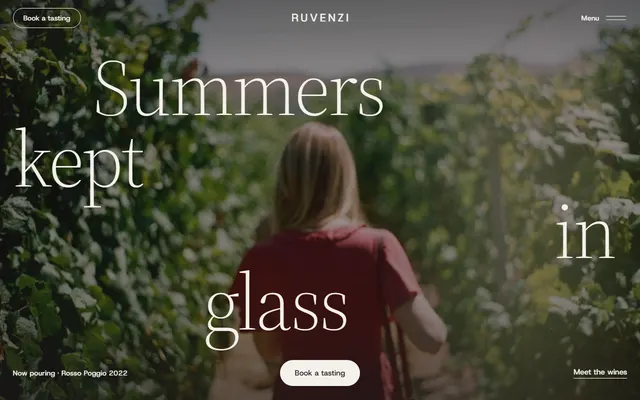
Family winery: the family, three plots, five wines with prices, tastings and a visit request form.
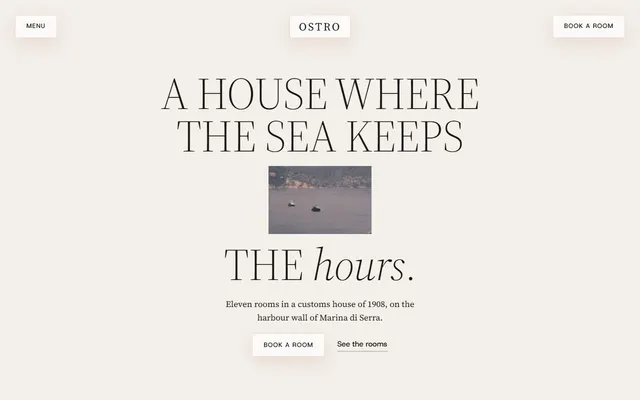
Harbour hotel: three kinds of room with prices, an hour-by-hour day, outings and an enquiry form.
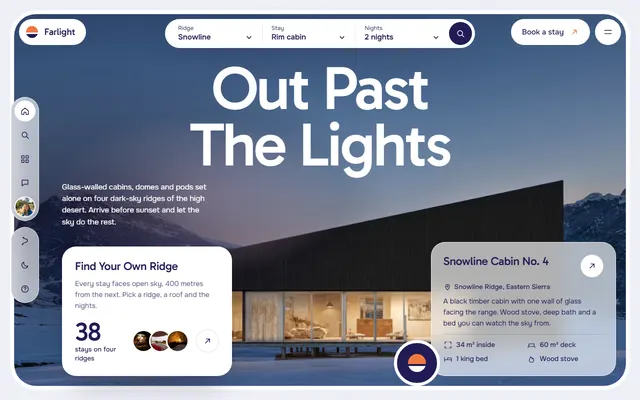
Glamping business: ridges and stays, one night in five stages, hosts and a booking request form.
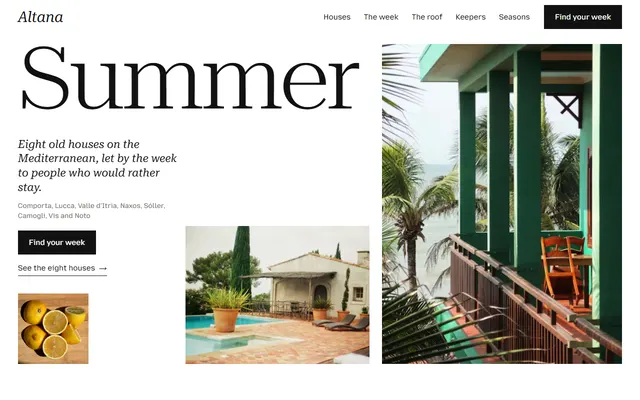
Holiday home rental: eight houses with weekly prices, a week timetable, seasons, keepers and an enquiry form.
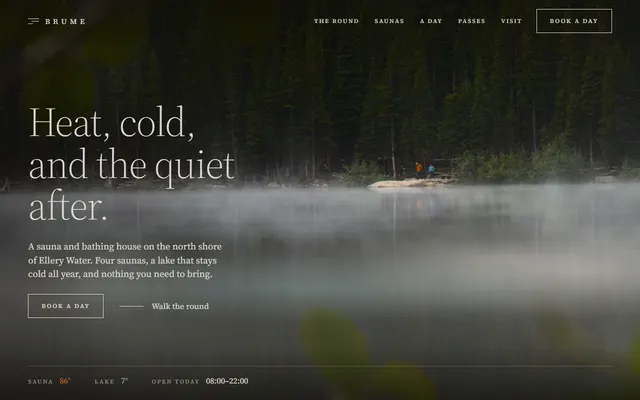
Sauna for a bathhouse or day spa: timed passes.
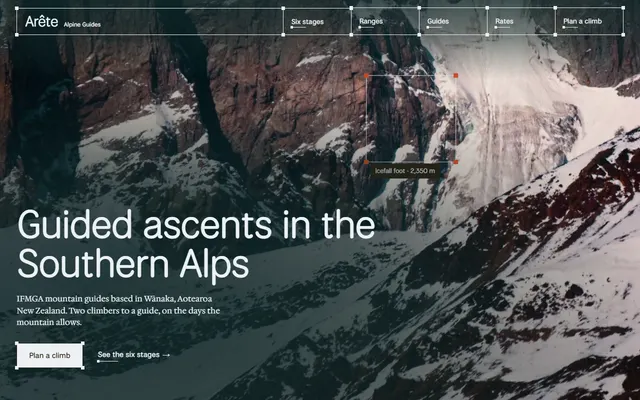
Mountain guiding company: six climb stages, three ranges, kit lists, guides and a rate table.