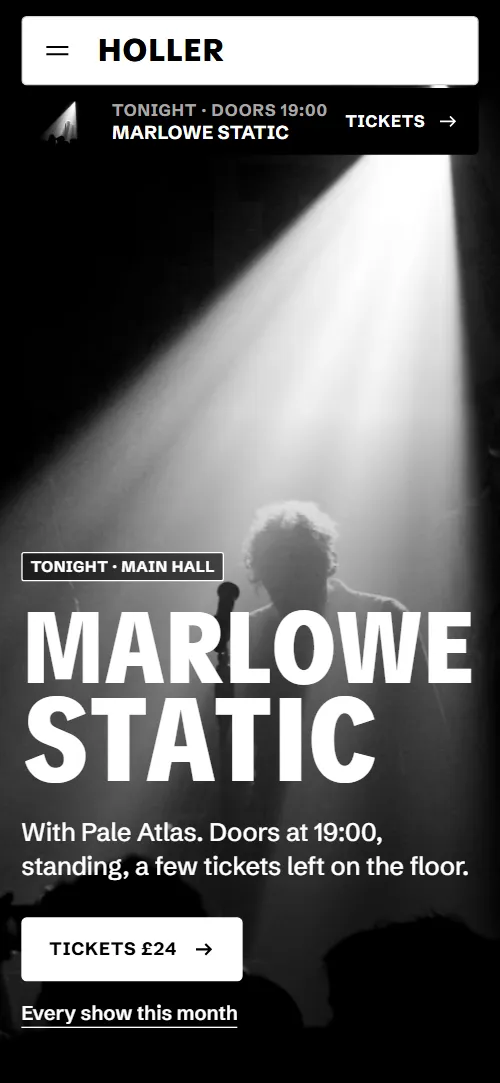
What comes with the music venue website template
- index.html: the pure HTML and CSS version, one single HTML file, 109 KB.
- index.gsap.html: the same design built with GSAP, ScrollTrigger and Lenis, for scroll motion in every browser, Firefox included.
- AGENTS.md: what a coding agent must keep and what to replace, so Claude Code, Codex or Cursor edit it without breaking the scenes.
- DESIGN.md: every colour, font, spacing and motion rule of this music venue website design.
- PROMPTS.md: the agent prompt and the design prompt below.
- CREDITS.md and LICENSE.md: the photos and fonts with their licenses, and the 8B license.
- Updates to this template, at no extra cost.
Yours to edit: one index.html with no build step, so you or a coding agent can change the words, prices and photos and upload it to any static host. Not a coder? Describe your business in one sentence to 8B's AI website builder and it designs a new site for you, with more pages when you need them. Designing is free; publishing with hosting is $9 a month, billed yearly. It also works inside Claude and ChatGPT.
Premium template · $39, one-time license · Made by 8B, an AI website builder · Updated November 2026 · Plain text: holler.md
About this music venue website template
Music venue website template for a live music hall or gig venue: one HTML file with tonight's running order, seven upcoming nights as a typographic list with ticket tags, two rooms, hall hire set-ups, four weekly nights, a members list and the box office details. It opens on a full-bleed poster of tonight's act that contracts into a column beside the running order, and each act name in the listings swells from condensed to full width as it crosses the middle of the screen. It is a single HTML file in pure HTML and CSS, and a GSAP version of the same page comes with it.
At a glance, November 2026. One 109 KB index.html: a single HTML file in pure HTML and CSS with a few lines of built-in JavaScript, 12 sections, 28 Unsplash photos, Schibsted Grotesk and TikTok Sans. A GSAP build of the same page, 104 KB, comes with it.
It suits a live music venue, a concert hall, a club with a stage, an arts centre with a hall for hire or a promoter with a handful of headline nights. Music venue websites mostly need four things on one scroll: what is on tonight, the nights coming up with price and sold-out state, how the rooms and the box office work, and a way to hire the space, and this page gives each its own section. It also adds what makes a room worth visiting: fair ticket rules, a wall of acts who played there before they were known and weekly nights that do not depend on a touring band.
The demo business is Holler, an invented live music hall in a former rope works in Bristol. Every act, date, price, time, travel time and address is demo copy to replace. The listing rows hold a date, a photo, an act name, a tag, a genre and room and a price, so a venue in any city fills in its own nights; the prices are in pounds and the rules (14+ with an adult, a one pound fee) are the demo's, which you change to your own.
If you would rather not edit HTML at all, 8B, the AI website builder designs a site from one sentence about your venue, with more pages when you need them. This template is for people who want this exact design in their own hands: one index.html with its CSS and its motion inside, which you or a coding agent can edit and host anywhere, next to the ticket seller you already use.
Good for:
What a music venue website needs
Music venue websites that sell out rooms answer the same questions quickly. Here is how this template covers each of them.
- What is on tonight. The first screen is a poster of tonight's act with the room, doors time and ticket price, and the screen after it is the running order from doors to curfew.
- The nights coming up, with price and state. Seven rows with date, photo, act, an outlined tag (on sale, few left, sold out), genre, room, price and a tickets link.
- Ticket rules that build trust. Three plain statements: face value or nothing, one fee shown first, one ticket in ten held back for under 25s.
- The rooms and what they hold. The Main Hall with 1,100 standing and the Back Room with 180, each shown from soundcheck to the stage.
- Hall hire. Three set-ups with capacities and a photo each, and an Ask about a date link.
- Regular nights and a members list. Four weekly nights with day, room, time and price, and a list sign-up with three perks.
- How to get there and what to expect. The address set huge, box office hours, an access note, four ways to get there with minutes and six questions about age, bags, access, re-entry, names on tickets and volume.
What it does not have is a ticket checkout, a calendar feed or an admin panel: the Tickets buttons link to your ticket seller, and the sign-up form needs connecting to your mailing list. It is built for a venue that shows a few weeks of nights at a time.
Music venue website design and motion
Palette
#ffffff page ground, the floating navigation card and text on the black sections#000000 text, the ticket dock, the menu overlay and the dark sections#f2f2f2 the light grey grounds of the fair-ticket rules, the wall of names and the questions#5b5b5b secondary text such as genres, supports and small printFonts
- TikTok Sans: the heavy condensed uppercase headings, act names, the wordmark, the running-order times and the typed email in the sign-up field
- Schibsted Grotesk: body text, captions, tags, navigation, buttons and the form label
A white page with black sections for contrast and light grey panels. The headings are heavy condensed uppercase and the body is a neutral grotesque. A floating white card holds the wordmark and links, with a black ticket dock under it. The listings are rows: date, a small photo pill, the act name across most of the row, an outlined tag, then price and link. The two rooms run as side-by-side photo reels, the hire section pairs one frame with three set-ups, and the weekly nights are wide panels on a sideways track. The address is set huge across two lines, and the footer opens with the wordmark across the full width. On phones the rows stack, the reels stay side by side and the weekly panels, one screen wide, still slide sideways as you scroll.
The idea behind the page is volume: Holler means a shout, so type gets louder. The act names start condensed and dim and swell to full width and full black as each row crosses the middle of the screen, like a level meter, and the heading of most sections arrives light and settles heavy. The second idea is the window in the type: small photo pills open inside lines of text in the fair-ticket rules, the wall of names and the address, and the O of the footer wordmark is a round photo window.
What is on the music venue website page
- NavigationFloating white card with the Holler wordmark, Listings and Visit links and a Menu button, a black ticket dock under it with tonight's act, and a full-screen menu with the section links, phone, email and address
The floating card stays in place; the black ticket dock under it tucks away as you scroll down and returns when you scroll up. The Menu button opens a full-screen overlay.
- Marlowe StaticTwo screens: a full-bleed poster of tonight's act with doors and ticket price, then Tonight, in order, a four-line running order from doors to curfew beside a photo column
On load the name lines rise, the label and buttons slide in and the photo settles from slightly larger; the photo then drifts slowly and the two name lines breathe in width in turn. On scroll the poster contracts into a rounded column on the right (a band at the top on phones) while its caption travels into the column, and the running order rises row by row on white beside it.
- On saleSeven upcoming nights as rows with date, photo pill, act name, outlined tag (on sale, few left, sold out), genre and room, price and a tickets link
Each act name is condensed and dimmed until its row crosses the middle of the screen, then swells to full width and full black and quiets again as it leaves, so the list reads like a level meter. The heading arrives light and settles heavy.
- Fair ticketsThree fair-ticket rules set as big statements, each with an inline photo pill: face value, one fee shown first, ten for under 25s
The heading arrives light and settles heavy, and the three photo pills inside the statements open from a vertical slit to full width while the photo settles from a slight zoom.
- Two rooms, one doorMain Hall and Back Room side by side, each with its capacity and a reel of three photos from soundcheck to the stage
The stage holds while the two reels run in opposite directions, the Main Hall reel up and the Back Room reel down, so both rooms go from soundcheck to doors to the stage together.
- Hire the hallHire the hall: a photo frame beside three set-ups (standing 1,100, long tables 420, rows 600) and an Ask about a date link
The frame holds while each set-up's photo fades in over the last and its entry in the list lights up, from standing to long tables to rows. The heading arrives light and settles heavy.
- First played hereA dense wall of seventeen acts who played the Back Room before they were known, each with the year
The heading arrives light and settles heavy and the photo pill in the run of names opens from a slit.
- Every weekFour weekly nights (Open Stage, Low Light, Late Shift, Matinee) as wide panels on a sideways track with day, room, time and price
The stage holds while the track slides sideways through the week, from Tuesday to Sunday, and each arriving night's day name trails behind its panel and settles as the panel arrives. The heading arrives light and settles heavy.
- The ListThe List: a free email sign-up on a dark crowd photo with three perks, 48 hour presale, no fee once a month and a birthday guest-list place
The heading arrives light and settles heavy over the darkened crowd photo.
- Find usThe address set huge across two lines with a photo pill of the yard, box office hours, phone, email, access note and four ways to get there with minutes
The two address lines start wide and shifted sideways in opposite directions, then narrow and slide into a flush-left block while the photo pill of the yard opens from a slit.
- Before you comeSix questions in two columns: age, bags, step-free access, re-entry, changing a name on a ticket and volume
The heading arrives light and settles heavy, and each question fills from a central slit on hover.
- FooterThe HOLLER wordmark across the full width with its O a photo window, link cards for shows, venue and box office, four social links and the company line
As the footer comes in, the O of the HOLLER wordmark opens from a slit to a full round window while the photo inside settles.
Before you publish the music venue website site
- Replace social preview image, favicon, phone number, email address, contact form (sends nothing yet) and social media links and the invented demo facts (names, prices, areas, quotes). AGENTS.md lists them.
- Tickets links on the nights, the Tickets buttons of the opening and the ticket dock lead to
#visit (the box office section) for the nights, #members for the sold-out night's Waiting list, #order (the running order) for the dock and the poster's button, #listings for the button under the running ordernow; point them to your ticketing page for each night, such as the link from your ticket seller. - Ask about a date in the hire section lead to
mailto:hire@holler.examplenow; point them to your hire address or an enquiry page. - Phone and email links in the menu, the box office and the footer lead to
tel:+441170000000 and mailto:boxoffice@holler.examplenow; point them to your own number and address. - Access email in the box office text lead to
mailto:access@holler.examplenow; point them to your access address. - Instagram, TikTok, YouTube and Spotify in the footer lead to
the networks' home pagesnow; point them to your own profiles, or remove them. - Section links in the menu, the header and the footer lead to
#tonight, #listings, #rooms, #hire, #nights, #members, #visit and #faq on the same pagenow; point them to keep them. - Scroll-driven animation runs when the browser supports it (Chrome, Edge and Safari today; Firefox does not yet) and the visitor has not asked for reduced motion. Otherwise each section shows its finished layout; the GSAP build, index.gsap.html, also plays the scroll motion in Firefox. The GSAP build loads GSAP 3.13.0 from a CDN.
- The List form sends nothing and shows no thank-you line: connect it to your mailing list or a form service, or send the visitor to a thank-you page.
- The page has no ticketing: the Tickets links on the nights point to the box office section, the sold-out night's Waiting list to The List, and the poster's and the dock's Tickets to the running order. Link each night to your ticket seller. The listings and the weekly track take any number of nights; the two reels are built for three photos each and the hire scene for three set-ups, so a different count there needs the scene adjusted.
- The nights, acts, prices, times, travel times and the Bristol address are demo content for one invented venue: replace them with your own.
Questions about this music venue website template
What do I get for $39?
The music venue website template as a single HTML file, index.html, in pure HTML and CSS, a GSAP build of the same page as index.gsap.html, a DESIGN.md with every colour, font and motion rule, an AGENTS.md for coding agents, the agent prompt and the design prompt from this page, and CREDITS.md for the photos and fonts. Updates to this template are included.
Can I use this music venue template for client sites?
Yes. One purchase lets you build as many sites as you like with it, for your own venue or for clients, and change anything. What it does not allow is selling or giving away the template itself, as a template, theme or kit, or putting its source in a public repository.
How do I sell tickets with it?
Each night is one row with a date, an act, a tag, a price and a Tickets link. The template has no checkout: the Tickets link on each night points to the box office section, and you point it at your ticket seller's page for that night, such as an Eventbrite, DICE, Ticketweb or Skiddle link. With Claude Code, Codex or Cursor you say it in a sentence, such as link every Tickets button to its event page and mark Saturday as sold out, and the agent edits the rows. The three tags (on sale, few left, sold out) are plain text you change by hand.
How do I add, change or remove nights?
Copy a listing row and change the date, the act, the photo, the tag, the genre and room and the price, or ask a coding agent to do it. The list has seven nights, and the volume effect works on however many rows are there; the weekly track also takes any number of nights, while the two room reels are built for three photos each and the hire section for three set-ups, so a different count there needs its scene adjusted. There is no calendar feed or admin panel: if your programme changes every day, keep the full calendar with your ticket seller and show the next nights here.
Will it work with Claude Code, Codex or Cursor?
Yes. Put index.html and AGENTS.md in your project and give the agent the prompt that comes with the template. AGENTS.md says which attributes the scroll motion reads, what to keep and what to replace, so the agent swaps acts, dates, prices, rooms and photos without breaking the scenes.
What do visitors see in Firefox or with reduced motion?
Firefox does not support scroll-driven animations yet, so it shows every section in its finished layout, as does any browser when the visitor asks for reduced motion. If the scroll motion must also play in Firefox, use the GSAP build, index.gsap.html, which loads GSAP, ScrollTrigger and Lenis from a CDN.
More templates for nights out and live shows
Other designs for venues and events.
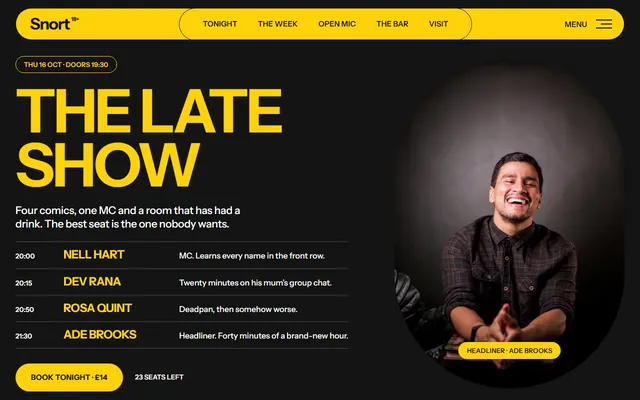
Comedy club in a railway arch: tonight's line-up, a seven-night programme, house rules and an open-mic sign-up.
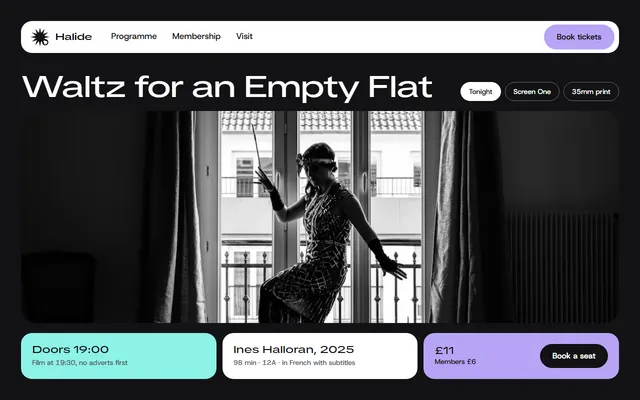
Independent cinema: tonight's film, a six-day programme, two rooms, a bar menu and a membership ticket.
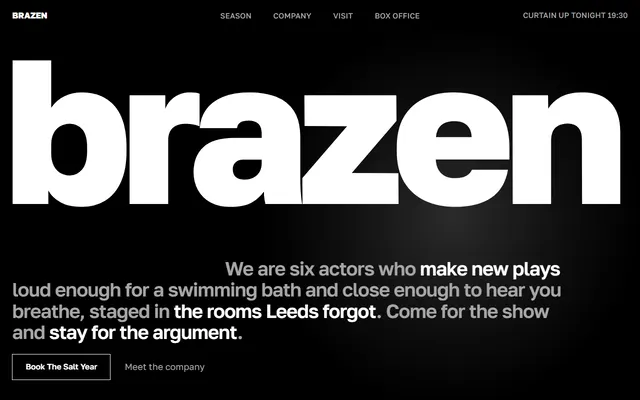
Theater company: current show, season board, company, rehearsal weeks, venues and box office.
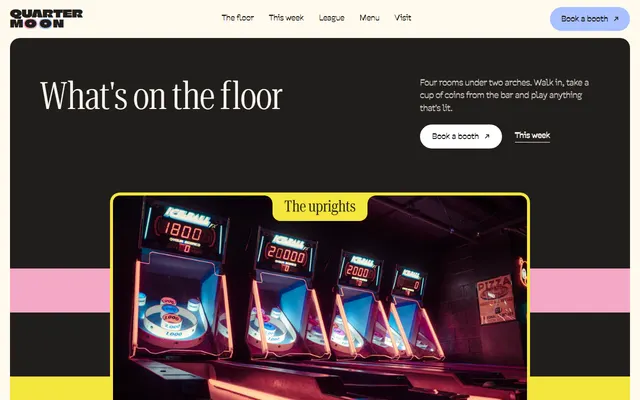
Arcade bar: the floor, this week's events, a league board, private hire and a booking form.
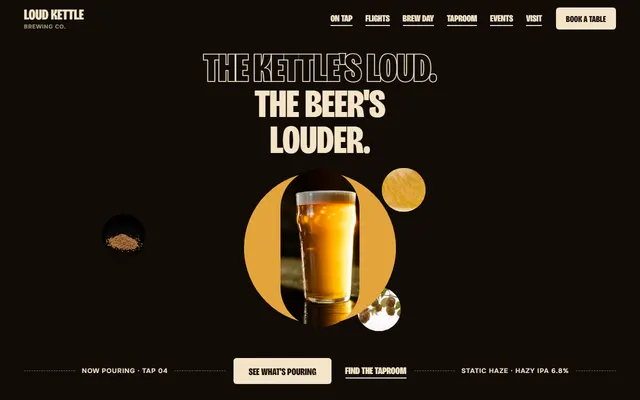
Craft brewery taproom: a tap list, events and a booking form on a near-black ground with loud condensed capitals.
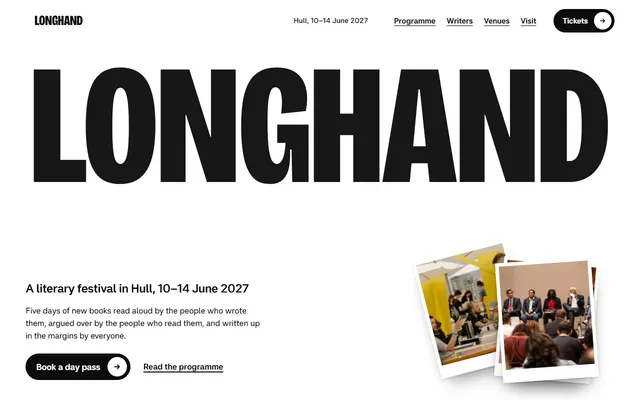
Literary festival: five-day programme, featured writers, prize shortlist, venues and passes.
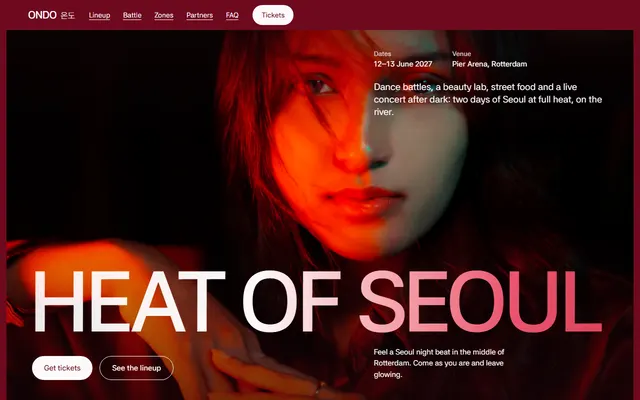
Two-day festival: lineup, four zones, a food board, a photo wall and three passes.
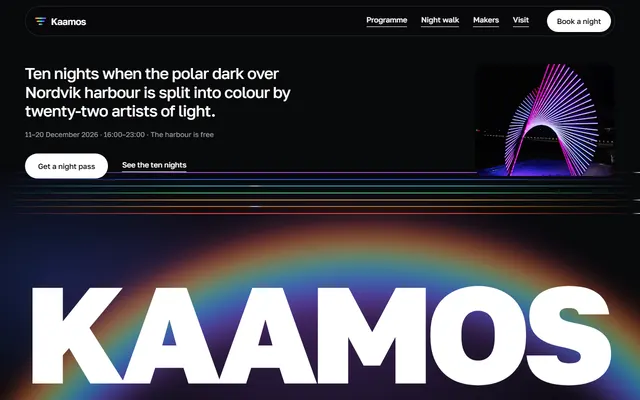
Light festival: ten nights programme, night walk route, makers, passes and an office form.