What comes with the bike shop website template
- index.html: the pure HTML and CSS version, one single HTML file, 118 KB.
- index.gsap.html: the same design built with GSAP, ScrollTrigger and Lenis, for scroll motion in every browser, Firefox included.
- AGENTS.md: what a coding agent must keep and what to replace, so Claude Code, Codex or Cursor edit it without breaking the scenes.
- DESIGN.md: every colour, font, spacing and motion rule of this bike shop website design.
- PROMPTS.md: the agent prompt and the design prompt below.
- CREDITS.md and LICENSE.md: the photos and fonts with their licenses, and the 8B license.
- Updates to this template, at no extra cost.
Yours to edit: one index.html with no build step, so you or a coding agent can change the words, prices and photos and upload it to any static host. Not a coder? Describe your business in one sentence to 8B's AI website builder and it designs a new site for you, with more pages when you need them. Designing is free; publishing with hosting is $9 a month, billed yearly. It also works inside Claude and ChatGPT.
Premium template · $39, one-time license · Made by 8B, an AI website builder · Updated November 2026 · Plain text: fettle-bicycles.md
About this bike shop website template
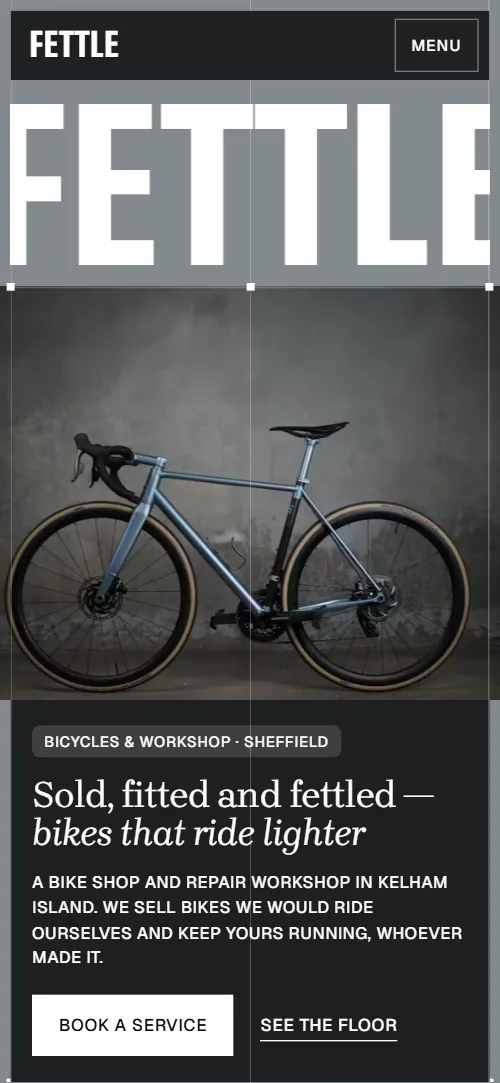
Bike shop website template for an independent shop that sells bikes and repairs them: one HTML file with three bikes on the floor with specs and prices, the four steps of a full service, three workshop jobs with a price list, the mechanics, a repair log, questions, a Saturday group ride and a visit section with hours. It opens on a studio photo of a gravel bike with the shop's wordmark cropped inside a grid cell, and as you scroll the photo is cut along four columns that lift away like parts coming out of a jig. It is a single HTML file in pure HTML and CSS, and a GSAP version of the same page comes with it.
At a glance, November 2026. One 118 KB index.html: a single HTML file in pure HTML and CSS with a few lines of built-in JavaScript, 12 sections, 21 Unsplash photos, Brygada 1918, Geist and Instrument Sans. A GSAP build of the same page, 105 KB, comes with it.
It suits an independent bicycle shop, a repair workshop with a price list, a cycle shop that runs a weekly ride, a bike fitter or a builder with a few bikes on the floor. Bike shop websites mostly need four things on one scroll: the bikes you stock with price and weight, what a service costs and how long it takes, who will work on the bike, and where and when to come in. This page gives each its own section, and adds what a good local shop shows: real repair jobs written the way they are written on the ticket, and a ride that anyone can join.
The demo business is invented, a three-person shop in Sheffield, and every bike, price, name, review and address is demo copy to replace. The bike cards show type, specs, weight and price, and the workshop tickets show a price, a turnaround and a list of tasks, so a shop in any city or country fills in its own stock and its own prices; the sums are in pounds and the Cycle to Work answer is British, so change both to your own market.
If you would rather not edit HTML at all, 8B, the AI website builder designs a site from one sentence about your business, with more pages when you need them. This template is for people who want this exact design in their own hands: one index.html with its CSS and its motion inside, which you or a coding agent can edit and host anywhere, next to the booking tool or the shop system you already use.
Good for:
What a bike shop website needs
Bike shop websites that bring people through the door answer the same questions quickly. Here is how this template covers each of them.
- The bikes you have now. Three bikes on the floor, each with its type, three spec lines, weight and price, in a full-width photo with a card.
- What a service costs. Three job tickets, a Check at 25 pounds, a full service at 85 and an Overhaul at 165, each with a turnaround and a list of tasks, plus a list of nine single jobs with prices.
- Trust in the mechanics. Three people with portraits and a line on what each one does, and six short reviews from customers in named neighbourhoods.
- Proof that you fix real bikes. A track of six repair tickets, each with the bike, the complaint, the fix and the time it took.
- Answers to the counter questions. Six questions about booking, other brands, turnaround, test rides, Cycle to Work and work that goes wrong.
- A reason to come on a Saturday. A group ride section with the meeting point, distance, pace and cafe stop, and a link to join the list.
- Where and when. A visit sheet with address, a directions link, opening hours, phone and email.
What it does not have is an online shop, a stock feed, a booking calendar or a form: it is built for a shop that shows the bikes on its floor and takes bookings by phone or email, and a booking link or a form service can be added to its buttons.
Bike shop website design and motion
Palette
#848a8e steel grey: the ground of the opening, the bikes, the manifesto, the habits, the questions and the visit sheet#0b0c0d near black: the workshop, repair log, ride and footer sections, and small text on the grey ground#ffffff white: the giant words, headings, buttons, the grid lines and the job and repair tickets#1d1f21 dark charcoal: the opening card, the bike spec cards and the name captions of the people#a9aeb2 light grey: secondary text on the black sections and the charcoal cards#c8743f copper: the one accent, the true line under the manifesto and the hover fill of buttons and linksFonts
- Instrument Sans: the giant condensed uppercase words, the wordmark, the step words and the ticket prices
- Brygada 1918: the serif headings, names, quotes, reviews and bike prices, with one italic line in the opening heading
- Geist: short uppercase labels, body text, the single-job prices and buttons
A page-wide grid of four hairline columns with small square handles at the joints, drawn over photos and grounds, and content placed in its cells. Steel grey sections hold the opening, the bikes, the manifesto, the habits, the people, the questions and the visit sheet; black sections hold the workshop menu, the repair log, the ride and the footer. The opening is two screens, a full-bleed bike photo with the wordmark in a two-column cell and a card in the fourth column, then four steps one per column. Each bike is a full-width photo with a narrow spec card in a different column; the habits sit in a checkerboard of text and photo cells; the three people sit in a checkerboard with empty cells, portraits with charcoal name captions; the questions are rows with the question on the left half and the answer on the right half. On phones the grid drops to two columns, the steps sit two by two and the job tickets stack.
The idea behind the page is the jig, the frame that holds a bike part in place while it is worked on. The grid is drawn on everything, the opening photo is cut along it, the manifesto words are trued to two rows like a wheel in the truing stand, and the job tickets spread out into their columns. Giant condensed capitals are cropped by their cells, a serif carries the headings, and copper is kept back: it shows as a line drawn under the manifesto, the mark of a true wheel, and otherwise only when a button fills or a link underlines on hover.
What is on the bike shop website page
- NavigationHeader bar with four links around the wordmark, and a menu with six links, the address and phone
- Sold, fitted and fettled, bikes that ride lighterTwo screens: a studio photo of a gravel bike with the wordmark and a card with two buttons, then the four steps of a full service under a heading, price and workshop photo
On load the photo settles from slightly larger, the wordmark rises inside its cropped cell, the card slides up and the grid rules draw across. Then the wordmark drifts sideways inside its cell, back and forth, and the photo pans slowly. On scroll the photo is cut along its four columns and each column lifts away at its own rate, the wordmark riding with the first column and the card with the last one, so the grey second screen shows through; the four step words rise into their columns.
- On the floor this weekThree bikes on the floor, each a full-width photo with a card of specs, weight and price
Each bike photo starts enlarged on one part of the bike and pulls back to show the whole bike as the band rises to the middle of the screen, while its spec card climbs into place more slowly.
- A bike that fits rides lighterSix giant words, A BIKE THAT FITS RIDES LIGHTER, with a paragraph about fitting and a bike fit button
The six words start at different heights, like a buckled rim, and converge onto two rows as you scroll; a copper line then draws under the second row.
- Three habits of the workshopThree habits of the workshop in a text and photo checkerboard: fit, repair, parts
The heading lines settle onto one baseline one after another, the grid rule draws across and the three text cells snap into place beside their photos.
- The workshopBlack workshop section: giant heading, a quote, three job tickets with prices, a single-jobs price list and six reviews
The three job tickets start piled on top of each other, turned at different angles, and slide apart into their own columns as you scroll; on phones they fan down from the first one. The six reviews sit in one line that drifts sideways while the row crosses the screen.
- The people at the standsThe three people at the stands (head mechanic, fitter, builder) with portraits and what each one does
The rule draws across, the heading lines settle onto one baseline and each portrait with its name caption snaps into place.
- From the stand this weekA sideways track of six repair tickets with photo, bike, complaint, fix and time
The page holds still while the track of six repair tickets moves sideways across the grid as you scroll, one ticket after another.
- Asked at the counterSix questions in rows that open and close
The heading settles, the rules draw and each row snaps into place; the rows open and close without a script.
- The Saturday rideThe Saturday ride: a tall photo with meeting point, distance, pace and stop, and a link to join the list
The tall ride photo opens from a narrow slit in the middle to its two centre columns while the image settles from enlarged, and the four ride facts slide out from behind it to the outer columns; on phones the photo opens from a wider slit and the facts drop into two columns below.
- Come in and bring the bikeVisit sheet with address, directions link, opening hours, phone, email and a workshop wall photo
The rule draws across, the heading settles and the address and hours cells snap into place.
- FooterFooter with the wordmark cropped by the page edge, links, address, phone, email and the company line
Before you publish the bike shop website site
- Replace social preview image, favicon, phone number, email address and map and the invented demo facts (names, prices, areas, quotes). AGENTS.md lists them.
- Book a service, See the floor, Book a fettle, Book a test ride, Test ride, Book a fit, Walk in and the menu links lead to
#workshop, #floor, #visit and the other sections of the pagenow; point them to keep them, or point the booking buttons at your booking service. - Ring the workshop buttons, the Book a Fettle and Book an Overhaul links on the tickets, and the phone in the menu, the visit section and the footer lead to
a tel: link to a placeholder numbernow; point them to your workshop number. - Email us and the email address in the visit section and the footer lead to
a mailto: link to a placeholder addressnow; point them to your shop address. - Join the ride list lead to
a mailto: link to a placeholder addressnow; point them to your ride list address, a form or a group chat link. - Directions lead to
a Google Maps search for the placeholder addressnow; point them to your own address in the same link. - Privacy and Terms of service in the footer lead to
/privacy and /terms, pages the template does not containnow; point them to your own policy pages, or remove the links. - Scroll-driven animation runs when the browser supports it (Chrome, Edge and Safari today; Firefox does not yet) and the visitor has not asked for reduced motion. Otherwise each section shows its finished layout; the GSAP build, index.gsap.html, also plays the scroll motion in Firefox.
- There is no form: booking works through the phone number and email address in the page. Add a booking service or a form service if you want requests sent from the page.
- The footer links to /privacy and /terms, pages the template does not contain.
- The floor is built for three bikes, the workshop for three job tickets, the opening for four service steps and the manifesto for six words: a different count needs its layout and scene adjusted.
Questions about this bike shop website template
What do I get for $39?
The bike shop website template as a single HTML file, index.html, in pure HTML and CSS, a GSAP build of the same page as index.gsap.html, a DESIGN.md with every colour, font and motion rule, an AGENTS.md for coding agents, the agent prompt and the design prompt from this page, and CREDITS.md for the photos and fonts. Updates to this template are included.
Can I use this bike shop template for client sites?
Yes. One purchase lets you build as many sites as you like with it, for your own shop or for clients, and change anything. What it does not allow is selling or giving away the template itself, as a template, theme or kit, or putting its source in a public repository.
How do I change the bikes and the service prices?
Each bike is one block of HTML with a photo, a name, three spec lines and a price, and each workshop job is one ticket with a price, a turnaround and a list of tasks. With Claude Code, Codex or Cursor you say it in a sentence, such as add a gravel bike at 1,450 and move the Overhaul to 195, and the agent edits the blocks; by hand you change the words in place. There is no stock system or online shop: the page shows the bikes you have on the floor now, and each card button leads to the visit section.
Can customers book a service or a test ride on the page?
They can reach you from it. The Check is a walk-in, the full service and Overhaul ticket links and the Ring the workshop buttons call the shop, while the test ride buttons lead to the visit section with the address, hours, phone and email. There is no booking form or calendar, so nothing is sent from the page itself. If you want requests sent, add a booking link from your booking service to the buttons, or ask a coding agent to add a form and connect it to Formspree or Netlify Forms.
Will it work with Claude Code, Codex or Cursor?
Yes. Put index.html and AGENTS.md in your project and give the agent the prompt that comes with the template. AGENTS.md says which attributes the scroll motion reads, what to keep and what to replace, so the agent swaps bikes, prices, mechanics and photos without breaking the scenes.
What do visitors see in Firefox or with reduced motion?
Firefox does not support scroll-driven animations yet, so it shows every section in its finished layout, as does any browser when the visitor asks for reduced motion. If the scroll motion must also play in Firefox, use the GSAP build, index.gsap.html, which loads GSAP, ScrollTrigger and Lenis from a CDN.
More templates for bikes, trades and outdoor shops
Other designs for local shops and workshops.
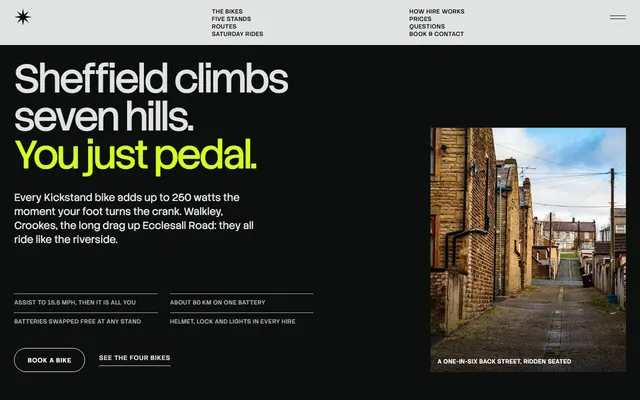
E-bike hire: four bikes shown one at a time, five stands, four routes, booking steps and a price table.
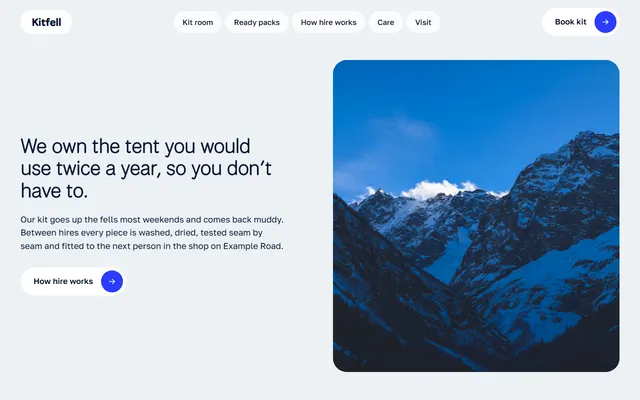
Outdoor gear hire: six shelves of kit with nightly prices, ready packs, hire steps and a fitting section.

Custom motorcycle workshop: recent builds, services, build process, prices and a quote form.

Plumbing and heating firm: services with prices, a fixed price board, how a visit goes and an emergency number.
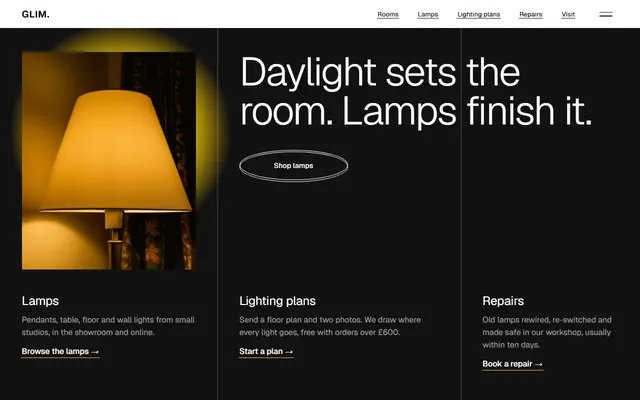
Lighting store for lamp shops: priced lamp list, repairs.

Bridal boutique: dress shapes with prices, appointments, alterations fittings, real weddings and a booking form.
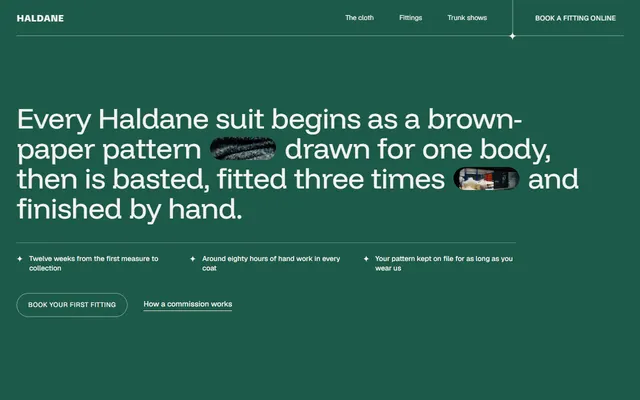
Tailor for bespoke tailors: cloth, fittings, prices, trunk shows.
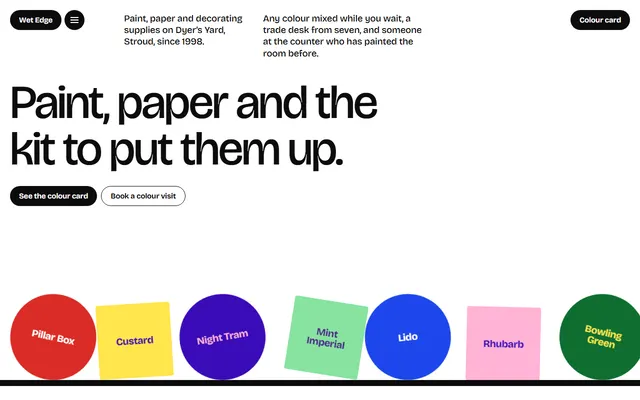
Paint and decorating shop: colour card, colour matching, finishes, tools, wallpaper and a trade desk.